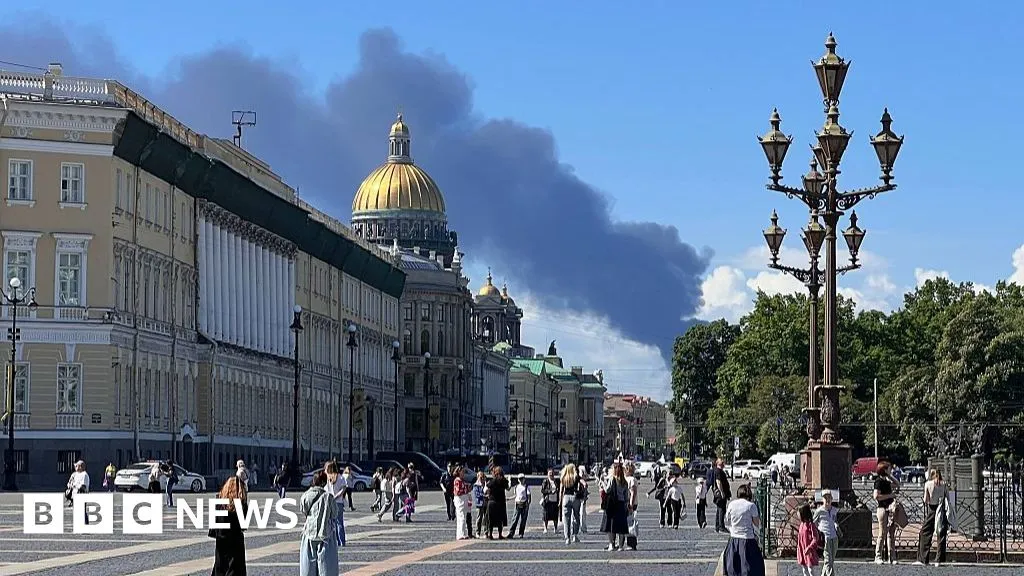
The recent St. Petersburg International Economic Forum (SPIEF) was conspicuously overshadowed by Ukrainian drone attacks targeting the city, marking a stark contrast between Russia's carefully curated image of economic resilience and the ongoing realities of the conflict. The forum, a flagship event designed to showcase Russia's economic strength and attract foreign investment, found itself juxtaposed with dramatic plumes of smoke from alleged drone strikes damaging local infrastructure. This disruption served as a potent visual reminder of the war's pervasive reach, even into the heart of Russia's second-largest city and a key economic hub.
The unexpected aerial intrusions occurred on both the opening and closing days of SPIEF 2026, forcing officials to acknowledge damage to "infrastructure" without specifying targets. For delegates arriving at the expo center, the visible smoke served as an immediate and unsettling backdrop to discussions on economic development. The event, intended to project an image of stability and progress, was thus inherently destabilized by the very conflict it sought to present itself as being insulated from.
Geopolitical Tensions and Diplomatic Standoffs
Amidst the forum's proceedings, Ukrainian President Volodymyr Zelensky's publication of an open letter to Vladimir Putin introduced another layer of geopolitical drama. The letter, which reportedly addressed Putin's age and Russian military setbacks while proposing peace talks in a neutral country, received a dismissive response from the Kremlin. Putin characterized the letter's tone as "rude" and rejected the offer for direct talks, reiterating his focus on the soldiers on the front lines and his commitment to continuing the war on his own terms. This response underscored Putin's unyielding stance and his apparent unwillingness to deviate from his strategic objectives, regardless of diplomatic overtures or the escalating conflict.
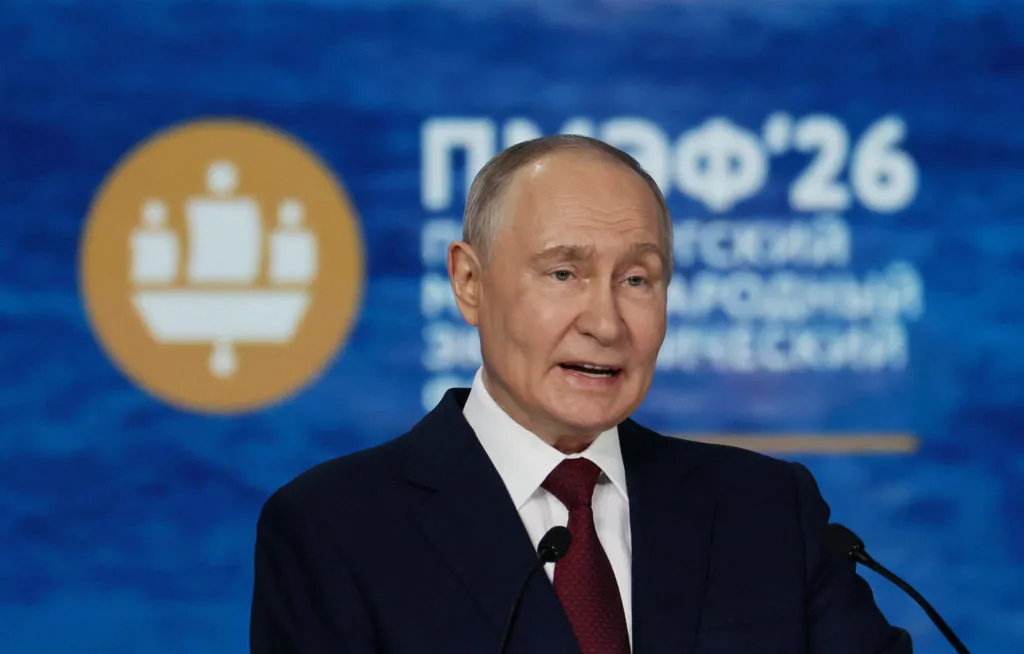
Inside the forum's congress hall, Putin projected an image of strength and unwavering conviction, emphasizing Russia's economic stability despite ongoing wars and sanctions. He claimed the economy was developing and that everything was stable, a narrative supported by applause from domestic entrepreneurs and friendly foreign dignitaries. However, this carefully constructed facade of control and confidence was constantly challenged by the external realities: significant battlefield losses in Ukraine and the increasing penetration of long-range Ukrainian drones deep into Russian territory.
Economic Realities and Stagnation
Discussions with Russian officials at the forum revealed a consistent adherence to the Kremlin's official line regarding the war. When questioned about the conflict's duration and potential end, officials like Alexander Zhukov, deputy speaker of the Duma, deferred to President Putin's statements, suggesting the situation needed to be resolved soon. Similarly, Vasily Anokhin, the governor of Smolensk region, when pressed about drone attacks, echoed the presidential sentiment, stating that "our enemies, unfortunately, are trying to hurt us." This coordinated messaging highlights the centralized control over public discourse surrounding the conflict.
Beyond the official pronouncements, the economic pressures on Russia are becoming increasingly apparent. While a full collapse has not materialized, the sustained conflict and international sanctions are exerting significant strain. Russian economists point to stagnation and decline in various sectors, with the war consuming vast human and financial resources. Anecdotal evidence from business owners in regions like Lipetsk region indicates struggles to remain operational, a sentiment starkly contrasted by the polished presentations at the St. Petersburg forum, which offered a more optimistic outlook.
Investment Climate and Unpredictable Perceptions
Kirill Dmitriev, President Putin's special envoy on foreign investment, acknowledged that interest rates were somewhat high, suggesting a need for lower rates to stimulate investment. However, he also highlighted Russia's economic resilience over the past five years, a development he claimed defied Western analysts' predictions. Despite economic challenges, some Russian businesses are identifying opportunities, particularly in the domestic tourism sector. Businessman German Galperin noted that sanctions and changed international attitudes are prompting Russians to explore domestic travel, fostering the development of new tourist centers within Russia.
The presence of figures like Rodney Mims Cook Jr., described by Russia as leading an official US delegation, was trumpeted by the Kremlin as a sign of renewed engagement. However, this was met with public disavowal from the US State Department, which stated ignorance of any high-level official delegation. This highlights the Kremlin's efforts to leverage any perceived international interaction for propaganda purposes, often met with skepticism by Western governments. The overall perception of Russia's economic and political stability remains a complex interplay between its internal narrative of resilience and the external pressures exerted by war and sanctions, further complicated by the unpredictable nature of drone attacks reaching deep into its territory.
Impact Analysis
The St. Petersburg International Economic Forum's recent staging, marred by Ukrainian drone attacks, underscores the evolving nature of the Russia-Ukraine conflict. It demonstrates Ukraine's increasing capacity to project power deep within Russian territory, challenging Russia's claims of security and stability. For Russia, the incident highlights the persistent vulnerability of its infrastructure and the difficulty of maintaining an image of economic prosperity while engaged in a protracted war. The juxtaposition of the forum's objectives with the reality of the drone attacks serves as a potent symbol of the ongoing challenges Russia faces, both militarily and economically, impacting its ability to attract credible foreign investment and project an image of unwavering strength to the international community.