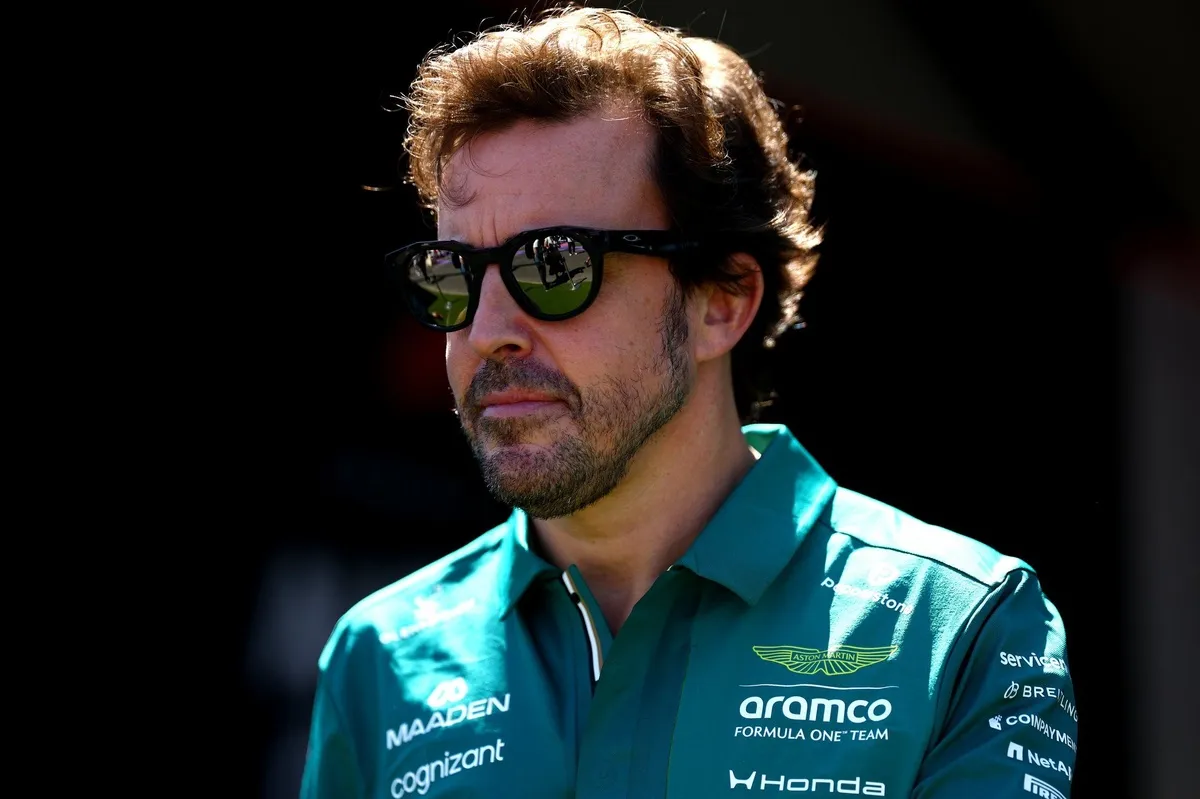
Aston Martin is navigating a delicate public relations challenge following initial reports that their new Formula 1 car's running time might be limited due to extreme vibrations. These vibrations were initially attributed to the new Honda power unit, potentially causing damage to both the car's systems and the driver, with fears of long-term health implications. Team principal Adrian Newey suggested drivers might be restricted to around 25 laps during the Australian Grand Prix, a statement that has since been softened by the team and clarified by lead driver Fernando Alonso.
Alonso has emphasized that the issue is not one of pain or impaired control but rather an unusual characteristic of the car's operation. He stated that the high adrenaline of racing would allow him to complete a full three-hour race if a competitive situation demanded it, suggesting the current limitations are more of a technical inconvenience than a direct physical threat under race conditions. However, he acknowledged the unusual nature of the vibrations and stressed the necessity of finding a permanent solution, indicating that while immediate race endurance might not be severely compromised in a competitive scenario, the underlying issue requires addressing for sustained performance and driver well-being.
Addressing Aston Martin's F1 Car Vibrations and Honda Partnership Dynamics
The initial reports suggested that vibrations originating from the new Honda power unit were not only affecting the car's components, specifically the uniquely integrated two-element energy store within the chassis, but also posing a risk to the drivers. This led to speculation about potential nerve damage and the need for significantly shortened stints on track. The situation is particularly sensitive given the high expectations surrounding Aston Martin's collaboration with Honda, a partnership that followed Honda's challenging return to Formula 1 with McLaren in 2015.
Fernando Alonso himself has been instrumental in managing the narrative. While admitting to a feeling of numbness in his hands or feet after approximately 20-25 minutes of driving due to the vibrations, he has consistently maintained a diplomatic tone. This contrasts sharply with his previous public comments about Honda's power unit during his time at McLaren. Now, Alonso expresses strong faith in Honda's ability to resolve the technical issues, drawing parallels to their past successes in overcoming performance challenges. He believes the team will ultimately develop a competitive engine, underscoring the collaborative effort underway to find a resolution.
Technical Challenges and the Path to a Solution
The pre-season testing phase for Aston Martin was marked by the late arrival of the AMR26 car and a concerning lack of reliability, with frequent breakdowns limiting on-track time. Early explanations focused on the engine vibrations impacting the energy store. However, the subsequent revelation about the potential for nerve damage due to these vibrations brought a new level of scrutiny and potential embarrassment for Honda.
Aston Martin is clearly invested in preserving a positive relationship with Honda, aiming to avoid the public recriminations that characterized the McLaren-Honda era. While some solutions have been tested and implemented, which may have improved the energy store's robustness, the core issue of engine vibrations and the inability to achieve maximum revs reportedly remain unidentified at their source. This suggests that the team's efforts to manage the public perception might be a temporary measure, deferring the full disclosure of the technical hurdles ahead.
Driver Endurance and Performance Expectations
Alonso's assertion that he could drive for three hours if fighting for a win highlights the mental fortitude and adaptability of F1 drivers. The adrenaline and focus required during a race can indeed mask discomfort. However, the underlying technical problem cannot be ignored. The vibrations are an unusual phenomenon that, as Alonso stated, “shouldn't be there,” and the long-term consequences of continued exposure are unknown.
The team's technical director, Adrian Newey, has historically been at the forefront of innovative car design. His involvement, alongside the capabilities of Honda, had set high expectations for Aston Martin. The current challenges, however, present a significant test for the team's engineering prowess and their ability to integrate new technology effectively. The focus remains on identifying the root cause of the vibrations and implementing a robust solution that ensures both driver safety and the car's optimal performance throughout the demanding F1 season.