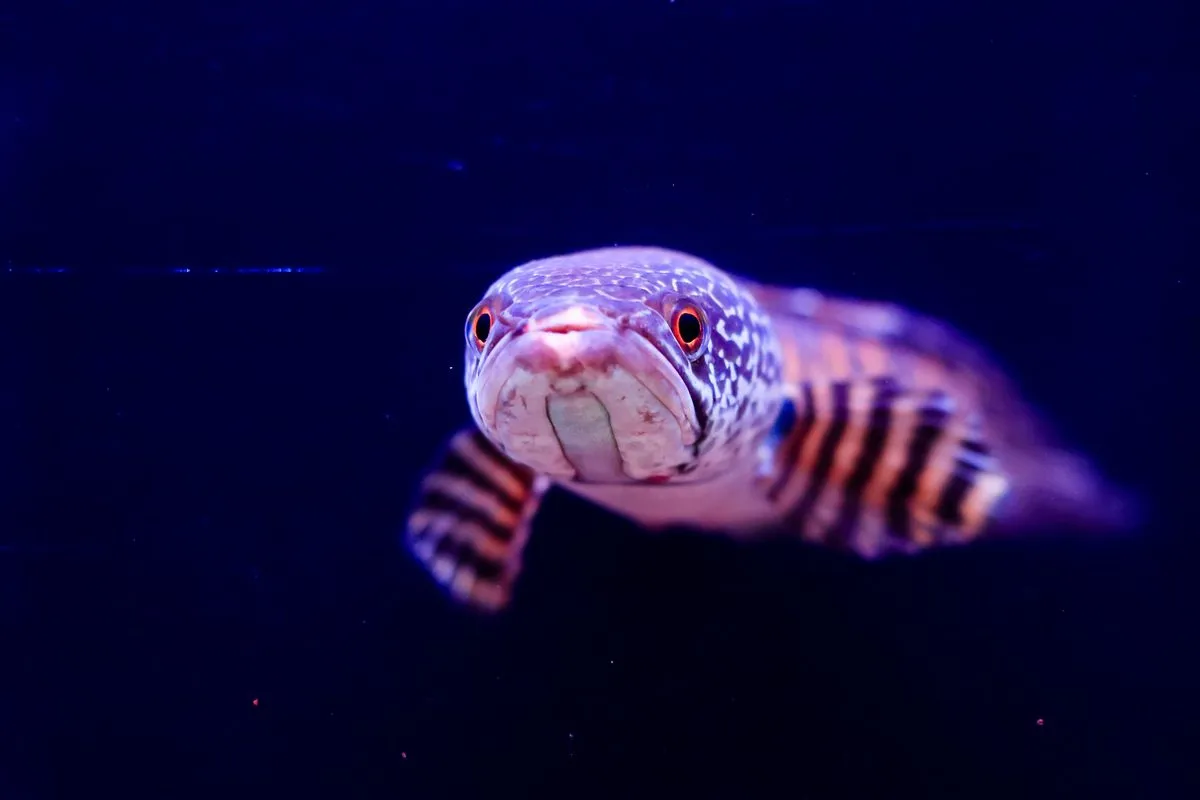
The giant snakehead, scientifically known as Channa micropeltes, is a formidable freshwater fish that commands respect within its native Southeast Asian habitat. While not reaching the colossal sizes of some other giant freshwater species, adults can attain an impressive weight of up to 30 kilograms and a length of 1.5 meters. Its slender, powerful body, propelled by a large tail, allows for rapid bursts of speed. This agility enables the giant snakehead to effectively ambush prey and defend itself against potential predators, including humans, that venture into its territory.
A key to the giant snakehead's ecological success is its remarkable physiological adaptations. Possessing a suprabranchial chamber located behind its gills, this organ functions as an accessory lung, allowing the fish to extract oxygen directly from gulps of air taken at the water's surface. This capability enables the snakehead to thrive in oxygen-depleted aquatic environments and even survive for extended periods out of water. Furthermore, the strategic placement of its pelvic fins near its pectoral fins provides stability when on land, facilitating a unique, serpentine movement. Its dorsal and anal fins extend almost the entire length of its body, contributing to its powerful propulsion and control.
Physiological Adaptations and Morphology
The adult giant snakehead exhibits a striking coloration. Its upper body features a mottled pattern of dark hues with subtle greens and pinks, which can appear iridescent under sunlight. This dark, camouflaged upper section is sharply demarcated from its pale belly by a distinct, thick dark stripe running along its flank. This coloration provides effective camouflage in its varied freshwater habitats, aiding in both hunting and predator avoidance. The species is closely related to the Malabar snakehead (Channa diplogramma), a species that was taxonomically separated in 2011 and is now considered vulnerable in parts of India where it is found.
The invasive success of Channa micropeltes outside its native range is largely attributed to accidental releases and illegal introductions by aquarists. Its adaptability, particularly its ability to breathe atmospheric air, makes it well-suited for aquarium life, provided adequate water temperatures are maintained. However, this trait also contributes to its resilience when introduced into new, potentially challenging environments. The species' physiology allows it to exploit a wide range of freshwater systems, from rivers and lakes to swamps and agricultural canals.
Predatory Behavior and Diet
Giant snakeheads are renowned for their voracious appetite and indiscriminate predatory nature. They possess a wide gape and are equipped with razor-sharp teeth, enabling them to tackle a diverse array of prey. Their hunting strategy often involves a swift, lunging ambush, capable of biting prey in half during the initial attack. They are known to consume creatures up to one-third of their own body length. Their diet is extensive, encompassing fish, amphibians, crustaceans, waterbirds, and even small mammals that come within reach.
This predatory efficiency means that when the giant snakehead establishes itself in a new ecosystem, it can exert significant pressure on native fish populations and other aquatic fauna. Its ability to rapidly process prey and its broad dietary range allow it to outcompete many native predators. The species' aggressive feeding behavior makes it a significant concern for biodiversity conservation in areas where it is introduced.
Defensive Capabilities and Human Encounters
While typically defensive rather than actively aggressive towards humans, giant snakeheads can exhibit formidable protective behavior, particularly when guarding their eggs and young. Both male and female snakeheads are known to fiercely defend their territory and offspring, often by charging at perceived threats. Reports from divers describe being rammed with such force that air has been expelled from their lungs. While anecdotal, there are accounts of serious injuries, including lacerations from bites that can require medical attention and are prone to infection.
The potential danger posed by the giant snakehead is recognized by authorities. The U.S. Geological Survey, for instance, has issued public advisories regarding encounters with this species, as it has been documented in at least six U.S. states as a non-native species. Invasive populations in regions like Sri Lanka and Taiwan have also raised concerns about their impact on local ecosystems. Caution is therefore advised for individuals who frequent waters where this species may be present.
Impact Analysis
The proliferation of the giant snakehead outside its native range presents a multifaceted challenge. Ecologically, its introduction into new freshwater systems can disrupt native food webs and lead to declines in indigenous species due to intense predation. Economically, it can impact fisheries, both commercial and recreational, by preying on commercially valuable fish or competing with them for resources. Its aggressive nature and potential to cause injury also pose a risk to human safety, requiring public awareness and management strategies. For aquarium enthusiasts, the species' suitability must be weighed against the risks of accidental release and the ecological consequences that can follow.