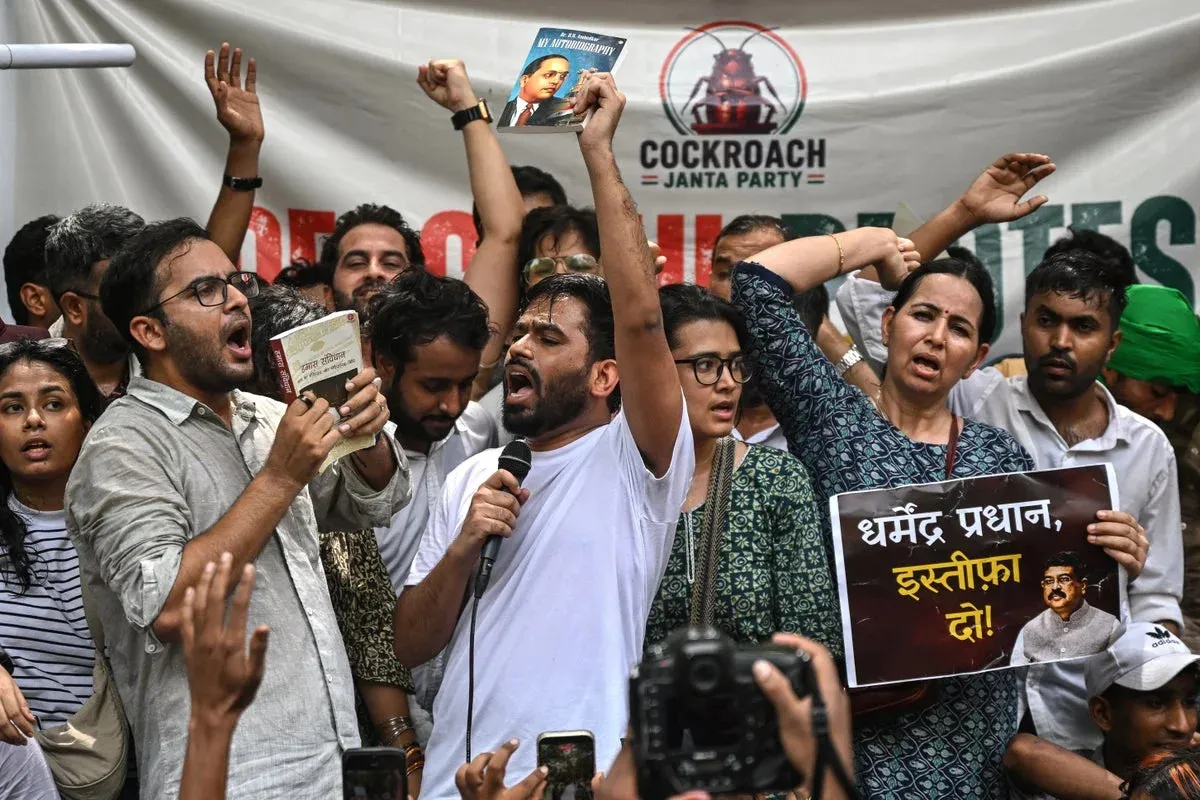
Hundreds of supporters of the "Cockroach Janata Party" (CJP), an online phenomenon that has captured the attention of millions across India, convened in the nation's capital for their first major real-world demonstration on Saturday. This protest at Jantar Mantar in New Delhi marks a significant transition for the movement, moving beyond its dominant social media presence into a tangible display of its growing influence and an early test of its organizational capacity.
The gathering, largely composed of young Indians, signifies the movement's initial foray into conventional street politics. After weeks of dominating social media feeds and generating considerable news coverage, the protest aimed to translate its substantial online following into a broader grassroots support base. This mobilization comes amidst palpable frustration among young Indians concerning education, employment, and economic prospects.
The Rise of the CJP and Its Delhi Demonstration
Abhijeet Dipke, the founder of the CJP movement, returned to the capital from the United States specifically to participate in the demonstration. The protest was held at Jantar Mantar, a traditional site for public gatherings and protests in New Delhi. Police presence was noted, with steel barricades erected at the airport's arrivals terminal, reflecting the anticipated scale of the event and potential security concerns.
Organizers of the CJP utilized social media extensively to rally supporters for the Saturday march. A primary demand voiced by participants was the resignation of Indian Education Minister Dharmendra Pradhan. This demand escalated from a controversy surrounding an exam irregularity in May, which quickly broadened into a wider outlet for expressing widespread discontent with India's education system and the limited job opportunities available to graduates.
From Online Slogan to Street Protest
The CJP's core message, amplified through social media, included rallying cries such as, "Cockroaches are coming, Dharmendra Pradhan is going!" The organizing principles encouraged participants to bring the Indian national flag and a book, symbolically representing the right to education and the pursuit of equal opportunity for all citizens. Organizers also placed a strong emphasis on maintaining a peaceful demonstration, urging attendees to avoid any confrontations with law enforcement.
The movement's official account on X (formerly Twitter) articulated the shift in strategy, posting on Friday, "Time to turn this tiny joke into a revolution." This statement underscored the ambition to transcend its origins as a satirical online entity and evolve into a more impactful political force, leveraging its widespread digital appeal for tangible real-world action.
The "Cockroach" Metaphor and Its Significance
The Cockroach Janata Party emerged only three weeks prior to the protest, rapidly becoming an unexpected platform for expressing discontent among individuals who proudly identify as "cockroaches." This self-appellation gained traction following remarks by India's Chief Justice Surya Kant, who likened critics and some unemployed youth to cockroaches during a court hearing in May. This comment, intended critically, inadvertently sparked a backlash and galvanized frustrated young Indians.
Dipke, identified as a political communications strategist and a student at Boston University, ingeniously transformed this perceived insult into the foundation for a parody political party. Within a mere week of launching its website and social media profiles, the CJP's Instagram page garnered an astonishing following of over 15 million users. The party has effectively reclaimed and repurposed the "cockroach" as a symbol of resilience, endurance, and a potent vehicle for political articulation.
Satire, Disillusionment, and Political Criticism
The CJP's campaign has skillfully blended self-deprecating humor with sharp political criticism through videos and memes that satirize issues such as unemployment, corruption, and perceived political dysfunction. These online materials have achieved millions of views, resonating deeply with a disillusioned populace. Parody CJP accounts have adopted the cockroach as their central political symbol, employing memes, mock campaign slogans, and satirical commentary to engage their audience.
The underlying sentiment conveyed by the movement's tongue-in-cheek messaging critiques the current administration. CJP supporters contend that ordinary Indians, especially the youth, are facing diminishing opportunities under Prime Minister Narendra Modi's government. This sentiment is particularly pronounced among India's large youth demographic, which constitutes over a quarter of the population but grapples with limited job prospects, rising unemployment rates, and a growing sense of disillusionment with traditional political structures.
Broader Context and Future Challenges
The CJP's surge in popularity reflects a wider trend observed across South Asia, where youth-led movements originating on social media have played a pivotal role in significant anti-government protests. Similar dynamics have been observed in Sri Lanka, Bangladesh, and Nepal, highlighting the growing power of digital platforms in mobilizing political dissent.
However, the movement faces considerable challenges. Indian authorities, particularly under Prime Minister Modi's leadership, have demonstrated a pattern of responding to and, in some cases, suppressing protests against the government. This includes past crackdowns on demonstrations against controversial legislation and extended farmer protests. Concerns have been raised by critics regarding a broader pattern of suppressing dissent through legal actions against organizers and arrests of activists.
Impact Analysis
The emergence of the Cockroach Janata Party and its transition from online satire to a physical protest signifies a novel form of political engagement in India. It highlights the potent influence of social media in channeling youth discontent into organized action, particularly concerning critical issues like education and employment. The CJP's success, measured by its rapid online growth and significant street turnout, underscores a deeper societal frustration that traditional political discourse may not be adequately addressing. The movement's ability to mobilize large numbers of young people suggests a potential shift in the political landscape, challenging established narratives and potentially influencing future electoral dynamics if it can sustain momentum and translate online popularity into lasting political capital.