In a significant move to bolster its artificial intelligence infrastructure, Nvidia has entered into a multi-year co-development agreement with South Korean memory giant SK Hynix. This strategic partnership is designed to accelerate the design and manufacturing of next-generation High Bandwidth Memory (HBM) chips, crucial components for powering Nvidia's most advanced AI accelerators, including the upcoming Vera Rubin platform. The deal underscores the escalating importance of memory as a critical, and often constraining, factor in the rapid expansion of AI capabilities worldwide.
The collaboration transcends a typical supply contract, positioning SK Hynix as an integral partner in the development process for what Nvidia terms "AI factories" – vast data center clusters engineered for intensive AI training and inference. This deepens the relationship beyond standard vendor qualifications and highlights Nvidia's proactive strategy to preemptively secure its supply chain for cutting-edge memory solutions years in advance, addressing what industry leaders have identified as one of the most significant bottlenecks in AI development.
Strategic Partnership for Next-Generation AI Memory
The core of the Nvidia-SK Hynix agreement focuses on the co-development of memory technologies tailored for the demands of future AI hardware. This includes memory specifically engineered for Nvidia's Vera Rubin accelerator platform, which is set to enter full production in the third quarter of 2026. Vera Rubin is a powerhouse, integrating Vera central processing units and Rubin graphics cores, augmented by terabytes of HBM4 memory per server system. It promises substantial performance gains over its predecessor, the Blackwell platform, with a reported 3.5x increase in training performance and a five-fold boost in inference capabilities.
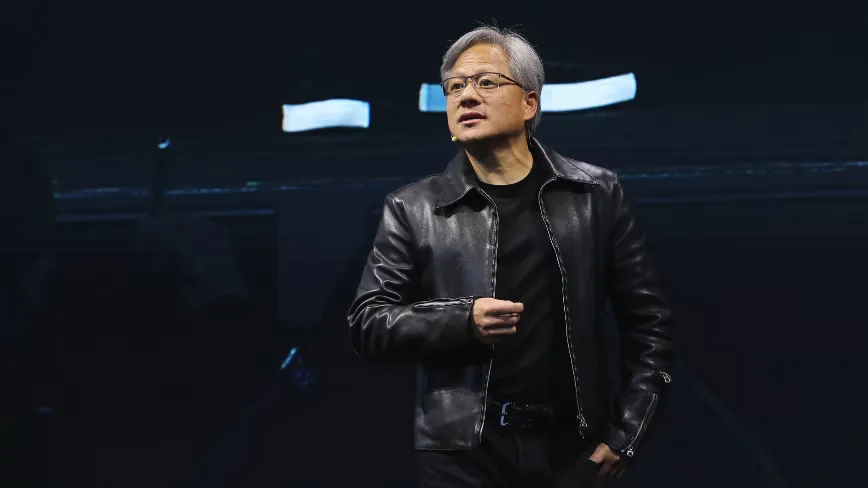
This co-development pact signifies a long-term commitment, enabling SK Hynix to plan capacity expansions and solidify its market share in the high-stakes HBM sector. Nvidia CEO Jensen Huang emphasized the collaborative nature of the venture, stating, "Together, we will co-develop the next generation of memory for AI factories and support the accelerating global expansion of AI infrastructure." The implications extend to infrastructure advancements and physical AI applications, positioning this partnership as a cornerstone for future AI advancements.
The HBM4 Landscape and Market Dynamics
Nvidia has confirmed that SK Hynix, along with competitors Samsung and Micron, are cleared to supply HBM4 for the Vera Rubin platform. However, the explicit co-development agreement with SK Hynix provides the South Korean firm with a distinct advantage. Industry analysts project that SK Hynix will likely secure between 60% and 70% of the HBM4 volume for Vera Rubin, with Samsung capturing an estimated 25% to 30%, and Micron supplying the remainder. This preferential arrangement bolsters SK Hynix's leading position in the HBM market.
The competition within the HBM market is intensifying, driven by surging demand and escalating prices. All three major memory manufacturers are engaged in a race to deliver advanced solutions, including 16-layer HBM stacks, which Nvidia has reportedly requested for delivery as early as late 2026. This technological race, coupled with the strategic supply commitments, is crucial for Nvidia's ability to scale its AI offerings and meet growing global demand.
Nvidia's Expanding Ecosystem in South Korea
The partnership with SK Hynix was a prominent announcement during Nvidia CEO Jensen Huang's recent visit to South Korea. This visit also saw Nvidia forging other key alliances. SK Telecom announced plans to establish a new gigawatt-scale AI cloud infrastructure powered by Nvidia's technology, with its first data center scheduled to go live early next year. Furthermore, Naver, South Korea's leading internet platform, will leverage Nvidia's AI models to enhance its data center capacity and construct additional large-scale AI factories.
Doosan Group is also set to integrate Nvidia's physical AI technology to enhance its industrial robotics operations. These collaborations highlight Nvidia's strategy of building comprehensive AI ecosystems within specific countries, mirroring its approach in other Asian tech hubs like Taipei. By focusing on memory, cloud infrastructure, and industrial applications, Nvidia is systematically strengthening its presence and influence across the global AI landscape, country by country.
Addressing the Memory Bottleneck in AI
While the compute demands of AI are widely discussed, the critical role of memory often receives less attention. The memory wall, where the speed and capacity of memory chips limit overall system performance, presents a significant challenge. Each configuration of Nvidia's Vera Rubin NVL72, for instance, integrates 36 CPUs and 72 GPUs, requiring substantial amounts of HBM4 memory. Advanced packaging technologies, such as TSMC's CoWoS process that integrates GPUs with HBM, are essential but also represent a potential bottleneck.
The scarcity of memory supply, rather than silicon fabrication capacity, has emerged as the primary limiting factor in Nvidia's ability to deliver its high-end AI systems. Industry analysts, including those at TrendForce, describe the current situation as a "memory supercycle," with HBM capacity expected to remain constrained through at least 2028, and possibly until 2030. Nvidia's strategic co-development deal with SK Hynix is therefore not just about securing volume; it is fundamentally about ensuring the very availability of the memory required to drive the next generation of artificial intelligence.
Impact Analysis
This multi-year agreement between Nvidia and SK Hynix solidifies SK Hynix's leading position in the rapidly growing HBM market, potentially creating a more pronounced bifurcation between market leaders and competitors. For Nvidia, the deal mitigates a critical supply chain risk, ensuring access to essential memory components for its next-generation AI accelerators. This strategic move could accelerate the deployment of advanced AI infrastructure globally, as the industry tackles the pervasive memory bottleneck. The long-term implications may include increased pricing stability for HBM and a more predictable supply chain for AI hardware manufacturers, although it could also present challenges for competitors seeking to gain market share in this specialized segment.