Battery standby time is a critical performance metric quantifying the duration a battery-powered device can remain operational in a quiescent state, characterized by minimal power consumption and absence of active user interaction or high-demand processes. This metric is primarily associated with portable electronics, telecommunications equipment, and systems designed for extended operational readiness. It is distinct from active use time, which measures how long a device functions under typical or maximal load conditions. Standby time is governed by the device's power management architecture, the quiescent current draw of its internal components (e.g., microprocessors, memory, communication modules), the efficiency of power-saving modes (e.g., sleep states, deep sleep), and the overall capacity of the battery. Precise measurement and optimization of standby time are paramount for user experience, particularly in devices like smartphones, laptops, and IoT sensors where prolonged operational periods between charges are expected.
The underlying physical and electrical phenomena influencing battery standby time are multifaceted. At a component level, even in standby, transistors leak current, and integrated circuits maintain a low-power 'listening' state for incoming signals or periodic wake-up events. Network modules (Wi-Fi, cellular, Bluetooth) also contribute significantly through periodic beaconing, network scanning, and maintaining established connections, albeit at reduced power. Battery self-discharge, an intrinsic electrochemical process, further depletes charge over time independent of device activity. Therefore, maximizing standby time involves a synergistic approach: designing highly efficient low-power components, implementing sophisticated dynamic voltage and frequency scaling (DVFS), optimizing firmware for aggressive power gating of unused peripherals, and selecting battery chemistries with low self-discharge rates and high energy density. The definition and testing methodologies for standby time are often subject to industry standards to ensure comparability across different devices and manufacturers.
Mechanism of Power Consumption in Standby Mode
Quiescent Current Draw
Quiescent current (Iq) represents the minimal current a device or its components draw when in an inactive or standby state. This includes leakage currents through transistors, the operational current of low-power clocks and timers, and background processes required to maintain system state or responsiveness. For modern System-on-Chips (SoCs), Iq can be in the microampere (µA) range, but the aggregate Iq of all active components, including memory, wireless transceivers, and sensor hubs, can increase this significantly. Optimizing Iq is a primary focus in power-aware design, often involving process node selection, transistor architecture (e.g., High-k/Metal-Gate), and careful power domain management.
Peripheral Power States
Modern electronic devices utilize a hierarchical power management system where individual peripherals and sub-systems can be put into various low-power states. This includes clock gating (disabling clocks to inactive modules), power gating (completely cutting off power to idle blocks), and specialized low-power modes for components like Wi-Fi, Bluetooth, and cellular modems. For instance, a smartphone's cellular modem might periodically wake up to scan for network signals or respond to paging messages, consuming power only during these brief intervals rather than maintaining a full-power connection.
Wireless Transceiver Activity
Wireless communication modules are significant contributors to standby power drain. Even when not actively transmitting or receiving data, these modules often engage in periodic activities such as scanning for available networks, maintaining synchronization with base stations (cellular), or responding to wake-on-wireless LAN (WoWLAN) signals. The power consumed during these 'idle' or 'listening' periods is a key factor in standby time. Techniques like discontinuous reception (DRX) in cellular networks and synchronized beacon listening in Wi-Fi are employed to minimize this drain.
Battery Self-Discharge
All batteries experience a degree of self-discharge, an electrochemical process where the battery loses charge over time even when not connected to a load. The rate of self-discharge depends on the battery chemistry, temperature, and state of charge. For Lithium-ion batteries, a common technology in portable devices, self-discharge rates are typically low (e.g., 1-3% per month at room temperature), but this still contributes to the total power loss during extended standby periods.
Industry Standards and Measurement Methodologies
Standardized testing for battery standby time is crucial for comparing devices and managing consumer expectations. However, a universally agreed-upon, single standard is complex due to the vast diversity of devices and usage patterns. Manufacturers often define their own standby time specifications based on specific test conditions, which can lead to ambiguity.
Common Test Scenarios
Typical standby tests involve charging the device to 100%, placing it in a defined standby mode (e.g., with Wi-Fi and cellular enabled but no active connections, screen off, minimal background apps), and measuring the time until the battery depletes to a predefined low-power threshold (e.g., 5% or until shutdown). Variations include simulating periodic network checks, receiving occasional calls or messages, or specific low-power network configurations.
Relevant Standards (Indirectly)
While direct 'standby time' standards are rare, methodologies for measuring component power consumption and defining low-power states are influenced by bodies like the IEEE (for Wi-Fi power saving), 3GPP (for cellular DRX modes), and energy efficiency standards like Energy Star, which indirectly drive improvements in standby power management for various electronics.
Evolution and Technological Advancements
Early Mobile Devices
In the era of early mobile phones, standby time was often measured in days, with simpler functionalities and less power-hungry displays and processors. These devices primarily focused on voice communication and basic messaging, with minimal background processes.
Smartphone Era and Beyond
The advent of smartphones, with their complex operating systems, high-resolution displays, multiple wireless radios, and vast application ecosystems, dramatically reduced practical standby times. Manufacturers responded with advanced power management integrated circuits (PMICs), heterogeneous computing architectures (using low-power cores for background tasks), and sophisticated software-driven power-saving modes. The push for Extended Battery Life (EBL) in consumer electronics has led to continuous innovation in low-power silicon design and battery technology.
Emerging Technologies
For Internet of Things (IoT) devices, extremely long standby times (months or even years) are often a requirement. This necessitates ultra-low-power microcontrollers, specialized low-power wireless protocols (e.g., LoRaWAN, NB-IoT), and energy harvesting techniques. Devices designed for these applications often employ deep sleep modes that involve powering down almost all components and only waking up periodically via an external interrupt or timer.
Practical Implementation and Optimization
Hardware Design Considerations
Optimizing standby time begins at the hardware design stage. This includes selecting SoCs with integrated low-power cores, power-efficient memory controllers, and efficient PMICs. The choice of display technology (e.g., transflective LCDs or e-paper for some applications) and the inclusion of dedicated power management controllers are also critical.
Software and Firmware Optimization
Firmware and operating system developers play a crucial role. This involves implementing aggressive sleep state management, intelligent scheduling of background tasks, disabling unused peripherals, and optimizing wireless stack power states (e.g., DRX, power-save mode for Wi-Fi). Dynamic Voltage and Frequency Scaling (DVFS) is employed to reduce clock speeds and operating voltages when full performance is not required.
Battery Technology and Management
Advancements in battery chemistry, such as higher energy density Lithium-ion variants and solid-state batteries, contribute to longer standby times by providing more energy in the same volume or weight. Battery Management Systems (BMS) also play a role by accurately estimating State of Charge (SoC) and State of Health (SoH), allowing for more precise power management strategies and preventing premature shutdown.
Performance Metrics and Benchmarking
Key Metrics
Beyond raw standby time duration, related metrics include:
- Quiescent Current (Iq): Measured in µA or mA, representing power draw in the deepest sleep state.
- Wake-up Latency: The time taken for a device to transition from a deep sleep state to an active, fully functional state.
- Power Consumption Profiles: Detailed breakdowns of power draw across different components and operating modes.
Benchmarking Challenges
Benchmarking standby time is challenging due to the variability of real-world conditions and the difficulty in replicating specific user behaviors. Manufacturers often use simplified, controlled environments that may not reflect actual usage. Independent testing labs attempt to standardize conditions, but device-specific optimizations and proprietary power management features can still lead to discrepancies.
| Device Type | Typical Standby Time (Days) | Primary Power Drain Factors | Optimization Focus |
|---|---|---|---|
| Basic Feature Phone | 7-30+ | Minimal background apps, cellular radio (paging) | Battery capacity, cellular standby efficiency |
| Modern Smartphone | 0.5-3 | Screen-off power, Wi-Fi/Cellular idle, background sync | Software power management, SoC low-power states |
| Laptop (Sleep Mode) | 1-7 | RAM refresh, peripheral wake events, battery self-discharge | NVMe/SSD power states, advanced sleep states (S0ix) |
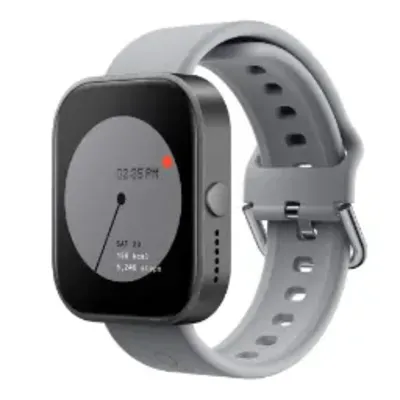
| Wearable Smartwatch | 1-7 | Display (even passive), sensors, Bluetooth connectivity | Ultra-low-power displays, efficient sensor polling |
| IoT Sensor Node (e.g., LoRaWAN) | 365+ | Periodic transmission/reception, MCU sleep current | Deep sleep modes, ultra-low-power MCUs, optimized radio duty cycle |
Future Outlook
The pursuit of extended battery standby time remains a core objective in consumer electronics and industrial applications. Future advancements will likely stem from breakthroughs in battery chemistries (e.g., solid-state batteries offering higher energy density and faster charging), more aggressive power management enabled by AI and machine learning to dynamically predict and optimize power states, and the continued integration of ultra-low-power processing cores and components. The proliferation of energy harvesting technologies may also reduce reliance on primary battery charging for certain low-power devices, effectively extending their operational 'standby' life indefinitely. Further standardization in testing methodologies will be critical to provide consumers with accurate and comparable performance data.