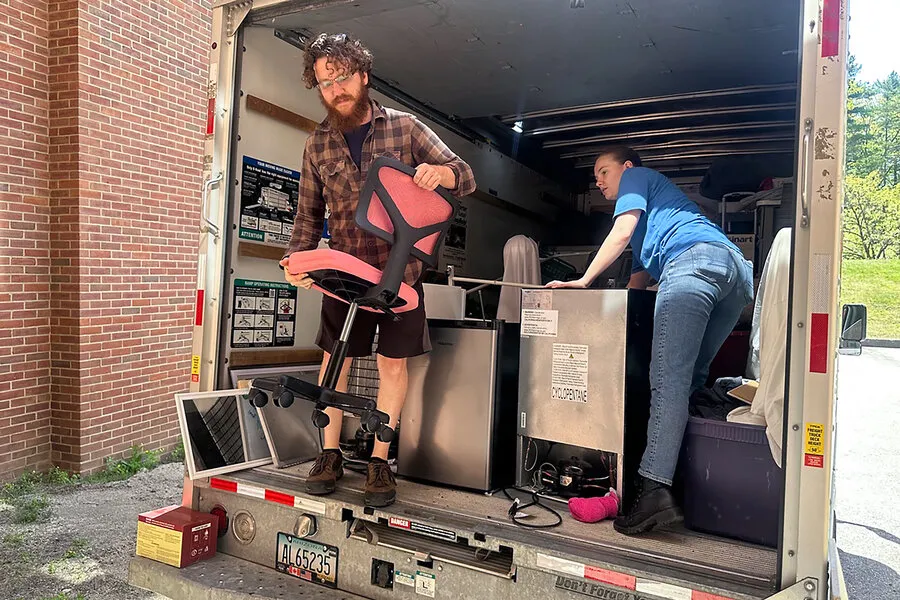
As college campuses nationwide prepare for the end of the academic year, a significant environmental challenge emerges: the immense volume of discarded items left behind by departing students. This annual 'move-out' period often results in curbside accumulations of furniture, electronics, clothing, and household goods, many of which are still perfectly usable. Recognizing this substantial waste stream, a growing number of universities and student-led organizations are implementing comprehensive reuse and recycling programs designed to divert these items from landfills and provide them with a second life.
These initiatives, often referred to as 'green move-outs' or 'dump-and-run' programs, have gained considerable traction over the past decade. They represent a shift from a purely disposal-focused approach to one that prioritizes resource recovery and community benefit. By establishing systematic collection, sorting, and redistribution networks, these programs not only address the immediate environmental impact of student departures but also foster a culture of sustainability and resourcefulness within higher education institutions.
The Rise of Campus Reuse Programs
The concept of repurposing discarded student belongings gained significant momentum from initiatives like the Post-Landfill Action Network (PLAN), founded by Alex Freid. What began as a personal observation during a college move-out in 2010 quickly evolved into a national nonprofit. Freid identified the vast quantities of usable items being discarded simply due to the inconvenience of transport or storage. This led to the development of structured programs that collect these items, refurbish them if necessary, and make them available to other students or donate them to local charities.
Campus reuse programs operate on diverse models. Some are directly managed by university administration, integrating sustainability goals into campus operations. Others are student-run ventures, driven by grassroots enthusiasm and a commitment to environmental action. Regardless of their organizational structure, these programs share a common objective: to minimize waste generated during student transitions. The success of these programs is often measured by the volume of materials diverted from landfills, the funds raised through resale events, and the increased awareness of sustainable practices among the student body.
The sheer volume of discarded items during college move-outs can be staggering. Items ranging from mini-fridges and futons to clothing, books, and unopened food products often fill dumpsters and line streets. This trend is exacerbated by the affordability of cheap goods, fast fashion, and the desire among students for new decor each academic year, fueled by social media trends. Without organized intervention, these perfectly functional items are destined for the landfill, contributing to environmental pollution and resource depletion.
Organizations like PLAN provide essential toolkits and guidance to institutions looking to establish or enhance their own green move-out programs. Their resources offer a roadmap for logistical planning, volunteer coordination, and outreach, enabling universities to create effective systems for waste diversion. This collaborative approach has allowed for the replication of successful models across hundreds of campuses, demonstrating the scalability and adaptability of campus reuse initiatives.
Operational Models and Impact
Green move-out programs often involve a multi-stage process. Students are encouraged to donate items they no longer need as they leave their dorms or apartments. These donations are collected by volunteers or staff and transported to a central sorting facility. Here, items are inspected, cleaned, and categorized. Usable goods are then stored for resale to incoming students at significantly reduced prices, while items not suitable for resale are either donated to local charities or further processed for recycling.
The financial aspect of these programs is also noteworthy. Tag sales and thrift stores operated by these initiatives generate revenue that is reinvested into program operations, sustainability education, or charitable causes. For instance, the University of New Hampshire's Trash 2 Treasure program, an early adopter, generated substantial funds from its initial tag sales, demonstrating the economic viability of waste diversion. Similarly, the University of Massachusetts Amherst's New2U program uses proceeds to support its ongoing operations and expand its reach.
Challenges and Innovations in Waste Diversion
Despite the growing success of these programs, challenges remain. Coordinating logistics across large campuses, managing volunteer efforts, and securing adequate storage space require significant planning and resources. Furthermore, changing student mindsets to prioritize reuse over disposal is an ongoing educational effort. The transient nature of student populations also means that consistent training and recruitment of new volunteers and leaders are crucial for program continuity.
Innovations in the field include partnerships with local charities, extending program operations beyond move-out week to year-round thrift stores, and developing specialized recycling streams for items like mattresses and textiles. Some universities are also exploring technology-based solutions to streamline donation tracking and sales. The ultimate goal is to integrate these reuse practices into the fabric of campus life, making sustainable disposal the norm rather than the exception.
Community and Environmental Benefits
The benefits of campus reuse programs extend beyond waste reduction. They provide affordable goods for students, helping to alleviate the financial burden of setting up a dorm room or apartment. Donations to local charities support community welfare and provide essential items to those in need. Moreover, these programs play a vital role in environmental education, raising awareness about consumption patterns and the importance of a circular economy. By training students to be agents of change, these initiatives contribute to a generation more conscious of its environmental footprint.
Impact Analysis
The proliferation of campus reuse programs signifies a broader cultural shift towards sustainability and waste reduction. As more institutions adopt and refine these models, the collective impact on reducing landfill waste and conserving resources is substantial. These initiatives not only address a specific environmental challenge posed by student populations but also serve as scalable models for waste management in other community settings. The focus on student engagement and education further amplifies their influence, fostering long-term behavioral change and promoting a more circular economy.