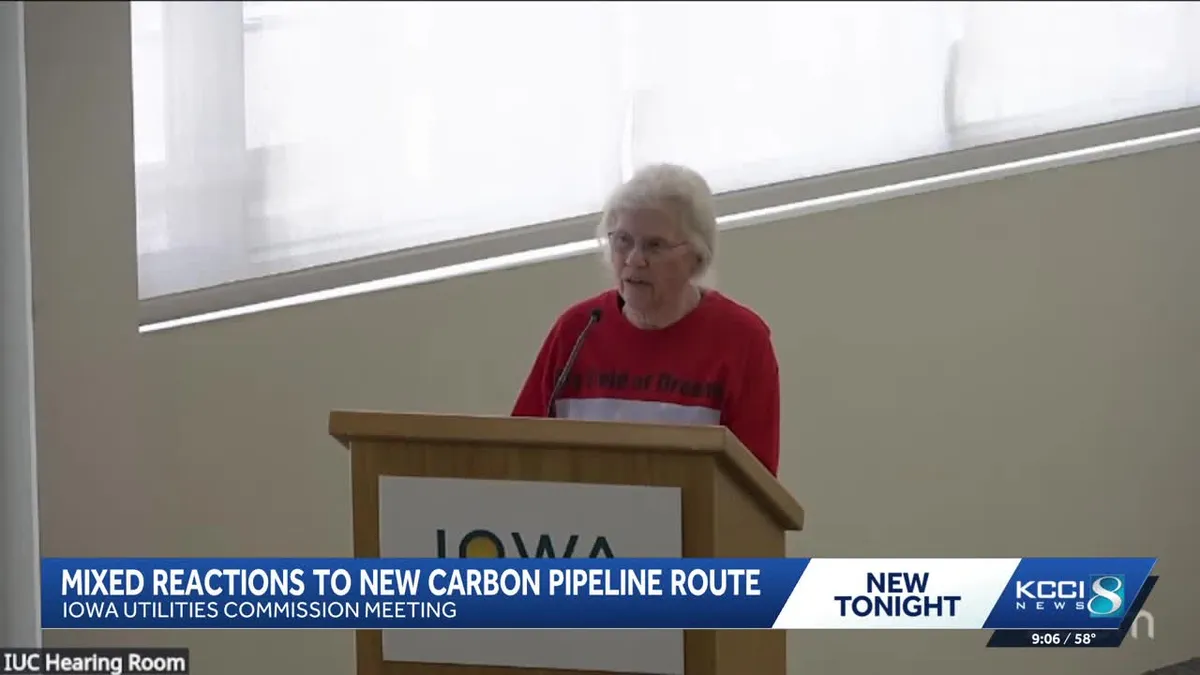
Tensions are rising in Iowa as a significant number of landowners are urging state regulators to reject proposed changes to the Summit Carbon Solutions pipeline project. This opposition comes at a critical juncture, with the pipeline company and various agricultural organizations actively advocating for the project's approval. The core of the dispute centers on eminent domain and the long-term implications for agricultural land use and property rights across the state. Landowners involved have voiced concerns about the potential disruption to their farming operations, the long-term impact on soil health, and the fairness of the compensation offered for easements.
Summit Carbon Solutions is proposing a carbon capture pipeline, designed to transport captured carbon dioxide from ethanol plants to a sequestration site in North Dakota. While proponents highlight the project's potential economic benefits, including job creation and support for the state's ethanol industry, a growing coalition of landowners argues that the current proposals do not adequately address their concerns. Regulatory bodies, such as the Iowa Utilities Board, are now tasked with weighing the economic development arguments against the property rights and environmental considerations raised by the affected landowners.
Summit Carbon Pipeline Project Details and Opposition
The Summit Carbon Solutions pipeline is a proposed 2,000-mile network spanning five states, with a significant portion traversing Iowa. Its primary objective is to capture carbon dioxide emissions from Midwest ethanol production facilities and transport them for underground injection and storage in Mountrail County, North Dakota. The project aims to reduce the carbon footprint of the biofuel industry, potentially opening up new markets and providing economic incentives for ethanol producers.
 However, the project has faced substantial resistance from many Iowa landowners who argue that the pipeline's route and the process of land acquisition through eminent domain are problematic. These landowners are concerned about the permanent nature of carbon sequestration easements, which they believe will permanently divide their properties, disrupt drainage, and impact agricultural productivity. They argue that the current legal framework heavily favors the pipeline company, particularly in cases where agreements cannot be reached voluntarily, leading to involuntary land acquisition.
Eminent Domain Concerns and Landowner Rights
A central point of contention is the use of eminent domain to secure easements for the pipeline. While eminent domain is a legal tool that allows governments and authorized private entities to acquire private property for public use upon payment of just compensation, many Iowa landowners feel it is being misused for a private, commercial venture rather than a true public necessity. They are petitioning the Iowa Utilities Board to deny permits or to significantly alter the pipeline's route to avoid or minimize impacts on their properties.
 The landowners' legal teams and advocacy groups have submitted formal requests to the Iowa Utilities Board, urging a thorough review of the project's environmental impact and the fairness of the eminent domain process. They are calling for greater transparency and a more equitable negotiation process, emphasizing that their land is their livelihood and that the pipeline's construction and operation pose irreversible risks to their agricultural operations and the value of their land.
Agricultural Groups Advocate for Pipeline Approval
Conversely, several key agricultural organizations in Iowa have publicly endorsed the Summit Carbon Solutions project. Groups such as the Iowa Renewable Fuels Association and the Iowa Farm Bureau Federation have expressed support, citing the project's potential to bolster the state's robust ethanol industry. They argue that carbon capture technology is crucial for the long-term sustainability and profitability of ethanol production, which is a significant economic driver in Iowa.
 These organizations contend that the pipeline will help ethanol plants meet potential future carbon reduction mandates and enhance the marketability of Iowa's biofuels. They have also emphasized the economic benefits, including direct investment, job creation during construction, and ongoing operational support for rural communities. Their advocacy efforts are focused on persuading regulators and the public of the project's net positive impact on Iowa's agricultural economy.
Regulatory Review and Future Implications
The Iowa Utilities Board is currently reviewing Summit Carbon Solutions' permit applications. This review process involves public hearings, expert testimony, and detailed analysis of the environmental, economic, and social impacts of the proposed pipeline. The board's decision will hinge on its assessment of whether the project serves the public interest, considering the conflicting views of landowners and agricultural stakeholders.
 The outcome of this regulatory process could set a precedent for future carbon capture pipeline projects in Iowa and other agricultural states. It highlights the complex balance between advancing clean energy technologies, supporting established industries like agriculture, and protecting the rights and land of private citizens. The decisions made now will have long-lasting effects on land use, environmental policy, and the economic landscape of rural America.
Impact Analysis
The ongoing debate over the Summit Carbon Solutions pipeline in Iowa underscores a broader national conversation about the role of carbon capture technology in climate change mitigation and its integration with existing agricultural economies. For landowners, the situation represents a critical challenge to property rights and the perceived fairness of infrastructure development processes. The decisions by the Iowa Utilities Board will not only affect the immediate parties involved but could also influence public perception and the feasibility of similar large-scale energy infrastructure projects across the country.
 The agricultural sector, a cornerstone of Iowa's economy, is at a crossroads, balancing the immediate economic benefits of ethanol production and potential new technologies against the long-term stewardship of the land and the rights of individual farmers. The outcome of this regulatory process will be closely watched by industry stakeholders, environmental groups, and affected communities nationwide, potentially shaping the future trajectory of both renewable fuels and carbon management strategies.