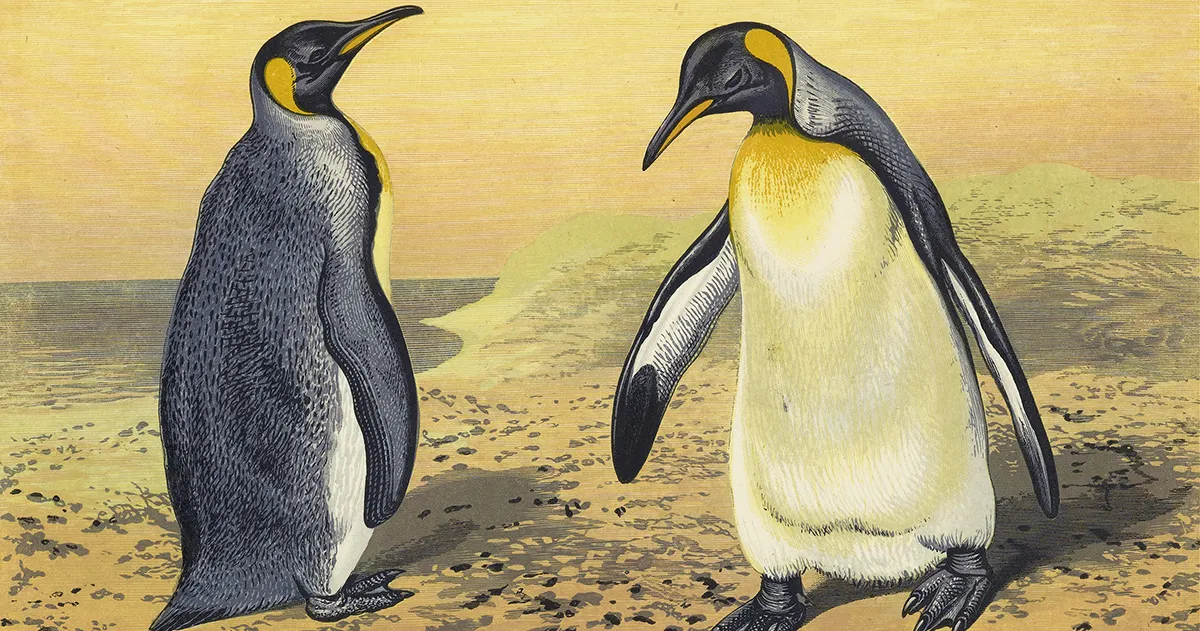
The profound challenges of separation and the inherent human struggle against the feeling of abandonment find an extraordinary parallel in the natural world, particularly in the life of the penguin. While human relationships often rely on spoken reassurances and tangible connections, the penguin's existence is a testament to an almost unfathomable level of faith, evolved over millennia to ensure the survival of its species. This deep-seated evolutionary mechanism allows them to endure prolonged periods of separation, a critical factor in their ability to reproduce and thrive in harsh environments.
This remarkable capacity for faith is most vividly demonstrated in the parenting rituals of species like the Emperor penguin. These birds mate for life and, in their demanding polar habitat, undertake a division of labor that requires immense trust and patience. The process of incubating a single egg and raising a chick necessitates extended absences for one parent to procure food, leaving the other to face extreme conditions alone. The successful continuation of the species hinges entirely on the unwavering belief that their partner will return, a biological imperative that underpins their very survival.
The Evolutionary Underpinnings of Avian Faith
The Emperor Penguin's Cycle of Separation and Trust
The reproductive cycle of the Emperor penguin exemplifies an evolutionary strategy deeply rooted in faith and endurance. These birds select mates with the intention of lifelong partnership. Each year, the female lays a single egg, which immediately becomes the male's responsibility to incubate. This demanding role requires the male to shield the egg, balancing it on his feet and keeping it warm within a specialized brood pouch, for up to two months. During this critical incubation period, the female embarks on a long and arduous journey to the sea, sometimes traveling over 100 miles across icy terrain, to feed and regain strength lost during egg development. Her absence can last for months, during which the male must subsist on his fat reserves, enduring frigid temperatures and fierce winds. The survival of the egg, and thus the next generation, depends entirely on the male's steadfast dedication and his implicit trust in the female's return.
This period of intense isolation and fasting for the male is a testament to evolved biological imperatives. To survive, males huddle together in dense formations known as 'testudo,' a living shield that conservizes heat and provides protection against the brutal Antarctic gales. This communal effort highlights a form of social reliance that complements individual perseverance. The male's stoic devotion is not merely instinctual; it is a finely tuned adaptation that has allowed his species to persist for millions of years. The immense evolutionary pressure to reproduce in such a challenging environment has instilled a behavioral pattern where separation is endured not as abandonment, but as a necessary phase in a shared commitment.
The Role of Vocalization in Reunion
The reunion between penguin mates is a poignant event, often facilitated by a remarkable reliance on vocal recognition. After months of separation, the female, having replenished her energy reserves from the sea, embarks on her return journey to the rookery. She navigates back, often arriving shortly after the chick has hatched and begun to cry for food. The male, though emaciated and weak, has sustained the chick using a nutrient-rich fluid produced from bile and stomach secretions. The critical moment of transfer occurs when the female locates her mate through distinctive calls. This vocal ceremony is crucial, as the male may have shifted position within the colony. Once recognition is established, the female takes over the care of the chick, and the male, finally free to feed, begins his own journey to the ocean. This intricate system of vocal cues ensures the continuity of parental care and highlights the sophisticated communication strategies that have evolved to support lifelong pair bonds in extreme conditions.
The male's ability to sustain the chick during his mate's absence, and the female's capacity to produce enough food from her reserves to keep the chick alive until the male's return, are further examples of specialized adaptations. This dual provisioning system ensures the chick receives nourishment throughout the demanding period of parental transition. The reliance on voice as a primary means of identification underscores the importance of individual recognition within the colony, preventing misidentification and ensuring the chick is fed by its biological parents. This complex interplay of behavior, physiology, and communication is a marvel of evolutionary engineering, demonstrating how faith and patience have been sculpted by natural selection into essential survival tools.
Evolutionary Significance and Broader Implications
Faith as an Evolutionary Adaptation
The concept of faith, often viewed through a spiritual or psychological lens, can also be understood as a potent evolutionary adaptation. In species like penguins, the 'faith' in a mate's return is not a matter of abstract belief but a deeply ingrained behavioral program essential for survival. This evolutionary advantage allows individuals to engage in necessary but risky behaviors, such as long foraging trips, with the assurance that reproductive duties will be met by their partner. Over generations, this propagated trait has contributed to the species' resilience and ability to occupy challenging ecological niches. The success of such strategies suggests that behaviors which promote long-term pair bonding and cooperative parental care, even at the cost of significant individual hardship and separation, are highly favored by natural selection.
Furthermore, this evolutionary perspective offers insights into the broader biological basis of social behaviors. The ability to withstand absence without perceiving it as final abandonment is a critical component of stable social structures in many species. This capacity to maintain bonds across temporal and spatial divides has profound implications for species that rely on cooperation for survival, such as those with complex parental care systems or those living in social groups. The penguin's remarkable display of faith serves as a powerful model for understanding how evolutionary pressures can shape behaviors that prioritize the continuity of the species through unwavering commitment and trust.
Patience and Perseverance in the Face of Adversity
The narrative of the penguin's reproductive strategy is intrinsically linked to the virtues of patience and perseverance. These are not merely passive states but active biological drivers that enable individuals to overcome extreme environmental challenges and prolonged periods of separation. The months spent fasting, incubating, or journeying for food require an extraordinary level of physiological and psychological resilience. This endurance is rewarded by the successful continuation of the lineage, demonstrating that in the evolutionary arena, patience is often the guardian of life and the engine that makes the improbable possible.
The evolutionary success of species like the penguin underscores a fundamental principle: that the tenacity of love and the faith it inspires can be more powerful than the forces of dissolution. By refusing to equate absence with abandonment, these creatures embody a profound biological testament to the enduring strength of commitment. This capacity to maintain hope and persevere through hardship, shaped by millions of years of evolution, allows life to persist and even flourish against formidable odds, offering a compelling biological parallel to the resilience observed in other complex life forms, including humans.
Impact Analysis
The study of penguin parenting behaviors offers a unique biological perspective on concepts like faith, patience, and commitment. By examining these traits as evolved adaptations, researchers can gain deeper insights into the biological underpinnings of social behavior and pair bonding. This understanding can have implications for conservation efforts, particularly for species facing environmental changes that disrupt mating and foraging patterns. Moreover, appreciating these natural models of perseverance can offer a valuable, albeit indirect, framework for understanding human psychological resilience in the face of separation and loss, highlighting the ancient and fundamental role of trust and enduring connection in the survival of species.