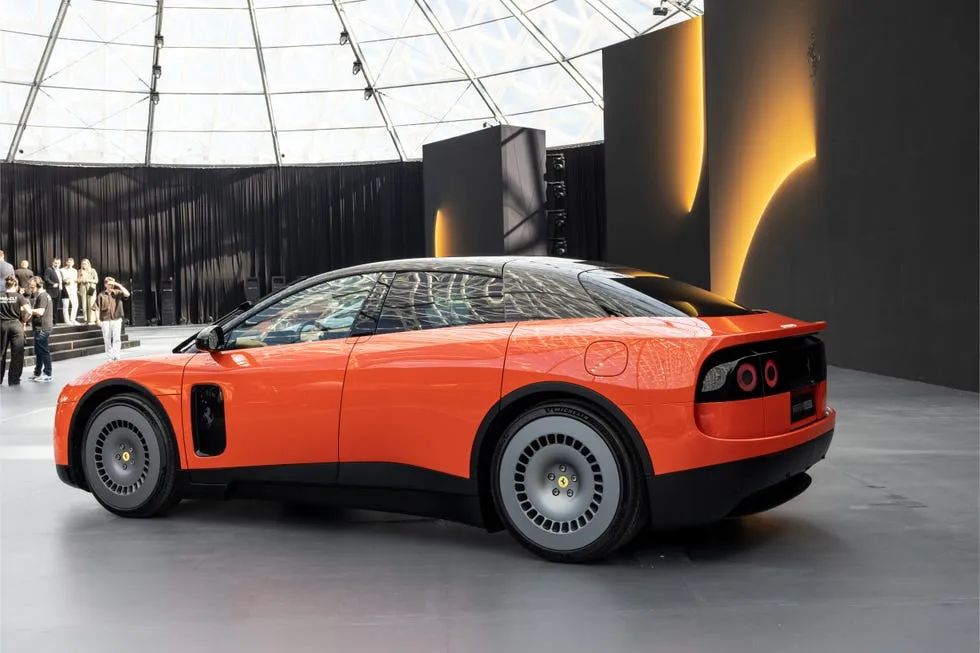
Ferrari has officially entered the all-electric vehicle (EV) arena with the unveiling of its first-ever battery-electric car, codenamed "Luce." Revealed in Rome, this groundbreaking model marks a significant departure for the iconic Italian marque, known for its V8 and V12 combustion engines. The Luce represents Ferrari's strategic pivot towards electrification, signaling a new era for the supercar manufacturer. This move is not merely about adopting new technology; it's about reinterpreting the essence of Ferrari performance and luxury within the framework of sustainable mobility. The design and engineering behind the Luce are expected to uphold the brand's legendary status while appealing to a new generation of environmentally conscious enthusiasts.
The introduction of the Luce signifies a pivotal moment in automotive history, as one of the most revered performance car brands embraces a future heavily influenced by electric powertrains. This strategic shift is driven by a confluence of factors, including tightening global emissions regulations, evolving consumer preferences, and the rapid advancements in EV technology. Ferrari's commitment to maintaining its performance pedigree while transitioning to electric power presents a unique engineering challenge, one that the company appears eager to tackle. The Luce is poised to be a benchmark for electric supercars, blending Italian design flair with cutting-edge electric performance.
Ferrari Luce: A New Design Philosophy
Exterior Design Language
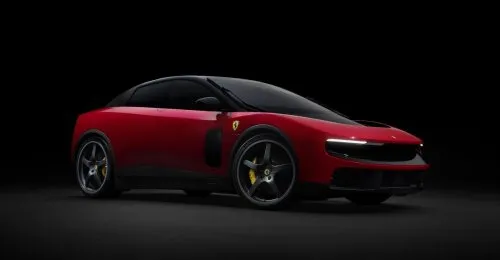
The Ferrari Luce presents a radical departure from the brand's traditionally aggressive and angular styling. Instead, it adopts a more fluid and aerodynamic form, emphasizing elegance and efficiency. Sources suggest a design that prioritizes smooth lines and integrated aerodynamic elements, likely drawing inspiration from modern hypercars and even concepts from other luxury automakers, but with a distinctly Ferrari character. The absence of a traditional combustion engine allows for greater design freedom, potentially leading to a lower profile and a more sculpted body. This new aesthetic aims to balance cutting-edge technology with timeless Italian design principles, ensuring the Luce is instantly recognizable as a Ferrari, albeit one from a new era.
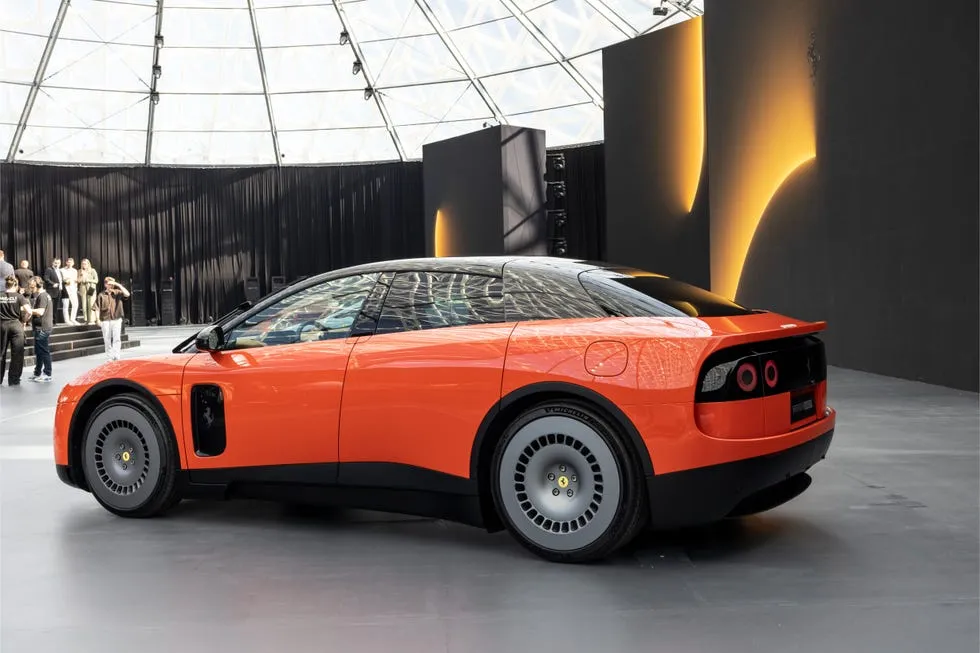 The focus on aerodynamics is paramount, with design cues likely aimed at maximizing downforce and minimizing drag. This could include a distinctive front fascia, sculpted side panels, and an integrated rear diffuser. The overall silhouette is expected to be sleek and dynamic, embodying speed and sophistication. The Luce’s design is a bold statement, showcasing Ferrari's willingness to innovate and push boundaries in aesthetics as much as in performance. The exterior details will likely be refined to offer a blend of visual aggression and aerodynamic efficiency, a hallmark of high-performance vehicles.
Interior and Technology Integration
Inside, the Ferrari Luce is anticipated to offer a luxurious and technologically advanced cabin. While specific details remain scarce, it is probable that the interior will feature a minimalist yet driver-focused design, integrating state-of-the-art digital displays and advanced driver-assistance systems. Ferrari is known for its meticulous attention to material quality and craftsmanship, so expect premium leather, Alcantara, and carbon fiber accents. The integration of Samsung's OLED technology for the dashboard suggests a futuristic interface, offering customizable information and intuitive controls. This technological leap aims to enhance the driving experience, providing seamless connectivity and access to vehicle functions.
The cockpit is designed to be an immersive environment, merging traditional luxury with cutting-edge digital interfaces. The use of advanced materials and a refined layout will ensure that the cabin complements the car's high-performance nature. 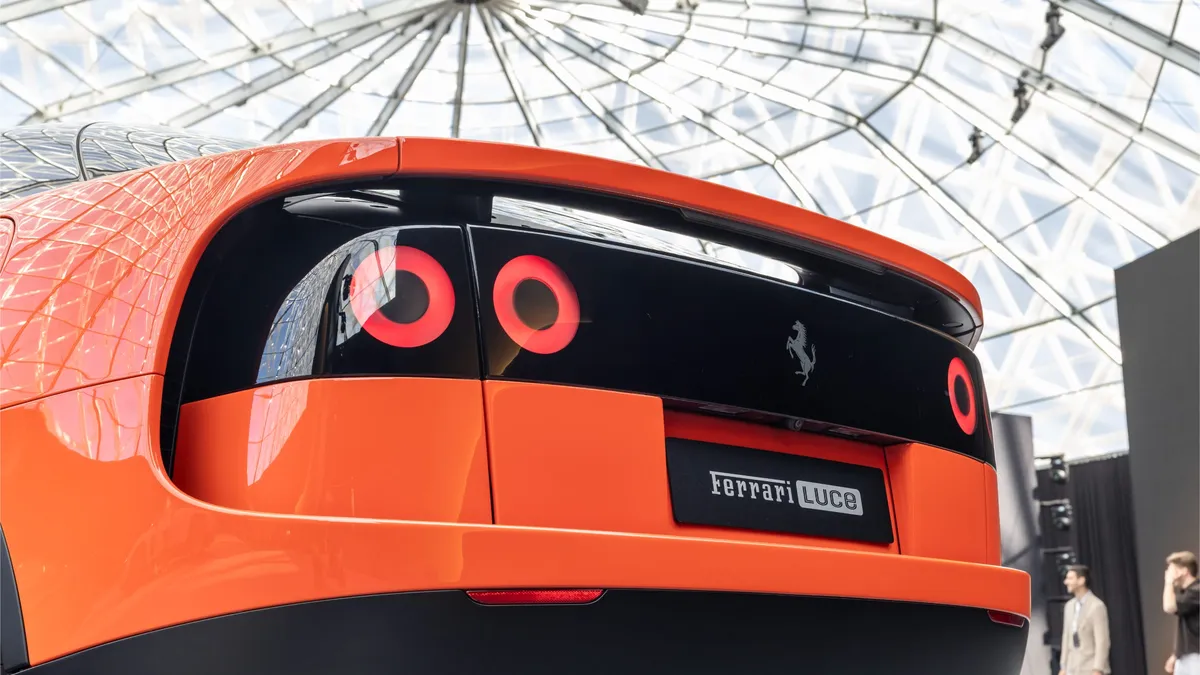 Ferrari's approach to interior design often balances form and function, ensuring that while the technology is advanced, it remains accessible and does not detract from the driving pleasure. The goal is to create an environment that is both exhilarating and comfortable, reflecting the dual nature of a high-performance grand tourer. The Luce's interior is expected to set a new standard for luxury electric vehicles, offering a bespoke experience that is quintessentially Ferrari.
Performance and Powertrain
Electric Powertrain Specifications
Ferrari has been discreet about the exact specifications of the Luce's electric powertrain, but industry expectations point towards a system designed to deliver performance figures commensurate with the Ferrari brand. This likely involves multiple high-performance electric motors, possibly an all-wheel-drive configuration, to provide instant torque and exceptional acceleration. Early reports suggest a battery system optimized for both range and rapid charging capabilities, addressing common concerns associated with electric supercars. The aim is to provide a driving experience that is not only electrifying in terms of speed but also offers a significant touring range.
 The powertrain development is critical to the Luce's success, requiring Ferrari to innovate significantly in battery management, thermal control, and motor efficiency. The company's deep expertise in motorsport and high-performance engineering is expected to be leveraged to create an electric powertrain that delivers exhilarating performance without compromising on reliability or the characteristic Ferrari driving dynamics. The challenge lies in translating the visceral thrill of a naturally aspirated or turbocharged Ferrari engine into the silent, instant surge of electric power, a task Ferrari is uniquely positioned to undertake.
Driving Dynamics and Handling
Maintaining Ferrari's legendary driving dynamics is a top priority for the Luce. Engineers are likely working to replicate the responsive steering, precise handling, and exhilarating feel that are synonymous with the Prancing Horse. This involves sophisticated chassis tuning, advanced suspension systems, and torque-vectoring technology enabled by the electric motors. The integration of electric powertrains presents opportunities to enhance handling through intelligent power distribution and a low center of gravity thanks to the battery placement. Ferrari's philosophy of making a car feel like an extension of the driver will undoubtedly be a guiding principle in the Luce's development.
 The development team is undoubtedly focusing on replicating the communicative steering and agile responsiveness that enthusiasts expect from a Ferrari. This may involve bespoke electric power steering systems and advanced stability control algorithms tailored for the unique characteristics of an electric drivetrain. The goal is to ensure that the Luce offers a compelling driving experience that is both thrilling and confidence-inspiring, allowing drivers to fully exploit its immense performance potential. The handling characteristics are expected to be sharp and precise, embodying the sporting DNA of Ferrari.
Market Positioning and Future Implications
Competition in the Electric Hypercar Segment
The Ferrari Luce enters a rapidly growing segment populated by high-performance electric vehicles from established luxury brands and specialized EV manufacturers. Competitors such as the Rimac Nevera, Pininfarina Battista, and potentially electric offerings from Porsche, Lamborghini, and McLaren, represent significant benchmarks. Ferrari's strategy with the Luce will likely focus on its brand prestige, exclusive ownership experience, and a unique blend of performance and Italian design that sets it apart. The challenge will be to convince traditional Ferrari buyers and attract new clientele to its electric offering without diluting the brand's core identity.
 The Luce's success will hinge on its ability to deliver a superior experience that justifies its premium positioning. This includes not only raw performance metrics but also the overall refinement, technological sophistication, and emotional appeal that are crucial to the Ferrari brand. The company's legacy in motorsport and luxury sports cars provides a strong foundation, but the electric hypercar market is highly competitive, demanding continuous innovation and a clear differentiation strategy. The Luce must prove that electric power can deliver the uncompromised Ferrari driving experience.
Ferrari's Electrification Strategy
The Luce is the vanguard of Ferrari's broader electrification strategy. While the company has historically resisted a full transition to electric power, the Luce's debut signals a clear commitment to integrating electrification across its future model lineup. This phased approach will likely see hybrid powertrains continue to play a role, with a gradual increase in full-electric models. Ferrari's strategy is carefully calibrated to balance technological advancement with the preservation of its brand values and performance heritage. The company aims to lead in the electrification of high-performance vehicles, ensuring that its future models remain at the pinnacle of automotive engineering and desirability.
This transition is not merely about compliance but about seizing opportunities to redefine automotive performance. Ferrari's investment in electrification technologies, battery development, and advanced manufacturing processes underscores its long-term vision. The Luce is more than just a car; it's a statement of intent, demonstrating Ferrari's adaptability and its unwavering pursuit of excellence in a rapidly evolving automotive landscape. The brand's ability to innovate while staying true to its heritage will be key to its continued success in the age of electric mobility.