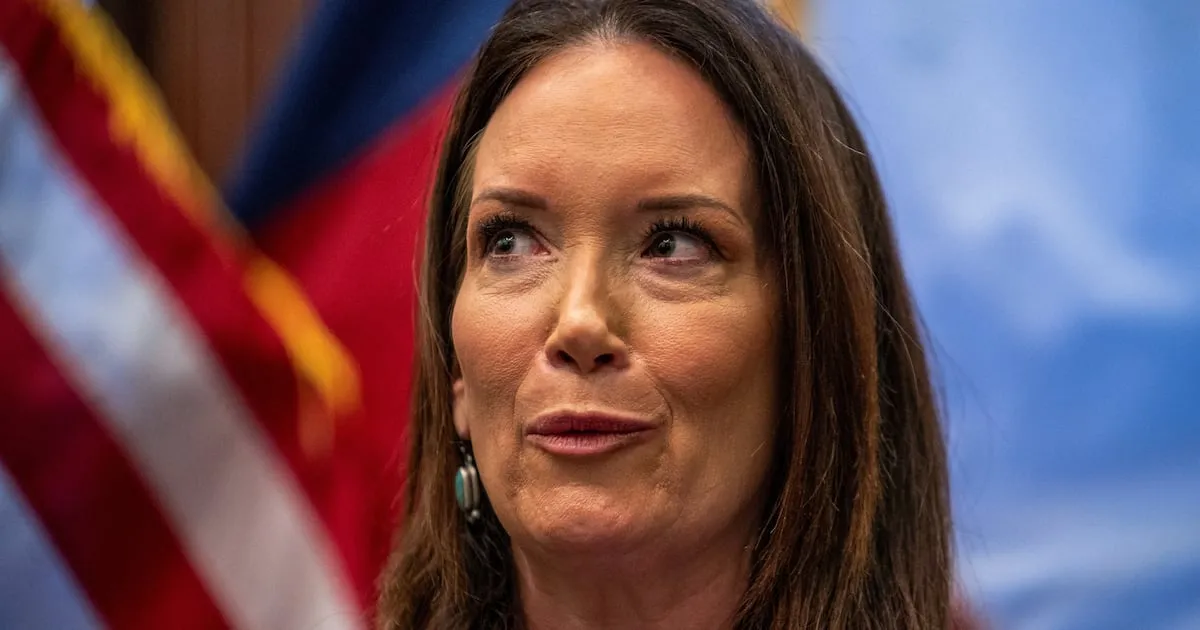
United States Agriculture Secretary Brooke Rollins recently asserted that the Trump administration has achieved significant milestones within the Department of Agriculture, projecting an imminent "golden age" for American farming. This optimistic outlook, however, has faced sharp criticism from political opponents and raised concerns among farming communities grappling with current economic realities. The secretary’s pronouncements, made during an interview on "Mornings with Maria," highlighted achievements in trade deals and market access, positioning these as pivotal for farmer prosperity and national food security.
These claims have been met with skepticism, particularly regarding the affordability of essential farming inputs. Senator Mazie Hirono of Hawaii publicly challenged Rollins’ narrative, pointing to the widespread inability of American farmers to afford fertilizer. She argued that the rising cost of such inputs directly translates to decreased food production and increased prices for consumers, fundamentally contradicting the notion of a "golden age." This exchange underscores a growing debate about the effectiveness of current agricultural policies and their tangible impact on the livelihoods of farmers.
Agricultural Trade and Economic Realities
Secretary Rollins detailed that her department has secured "18 new trade deals" over the past 15 months, which she described as instrumental in opening up agricultural markets. She further noted a reported increase in agricultural exports, stating that "Our trade ag exports are up over five percent this year, in this month, in March and April versus where they were at the same time last year." This assertion suggests a positive trend in international trade for U.S. agricultural products, potentially benefiting producers through expanded market access and increased demand.
However, the broader economic context for farmers presents a more complex picture. The high cost of essential resources, such as fertilizer, remains a critical issue. When farmers face elevated operational expenses, their profit margins diminish, potentially leading to reduced investment in their operations, decreased yields, or even the risk of insolvency. The affordability of these inputs is a direct determinant of a farm's economic viability and is crucial for ensuring a stable and affordable food supply for the nation.
Debate on Trade Policy and Farmer Support
The administration's trade strategy, as articulated by Secretary Rollins, emphasizes reducing over-reliance on any single foreign market, particularly China, citing national security implications. This strategic pivot aims to diversify export destinations and mitigate risks associated with geopolitical tensions or trade disputes. The pursuit of new trade agreements is presented as a means to achieve this diversification while simultaneously bolstering American agricultural exports and supporting the economic stability of farmers and ranchers.
Senator Hirono’s critique highlights a significant disconnect between the administration's stated successes and the on-the-ground challenges faced by many farmers. The ability to afford crucial inputs like fertilizer is a fundamental aspect of farm productivity and profitability. If a substantial portion of farmers cannot afford these essential materials, then the positive impact of trade deals may be significantly diluted, or even negated, for those most vulnerable. This raises questions about the equitable distribution of benefits derived from agricultural trade policies.
Broader Departmental Scrutiny
Beyond the economic discussions, Secretary Rollins herself has faced internal scrutiny. A lawsuit filed by the National Federation of Federal Employees accuses her of using her position to promote her personal Christian beliefs among USDA employees. The lawsuit alleges that Rollins has sent religious emails to a large number of USDA staff since assuming office. This situation adds another layer of controversy surrounding the leadership and practices within the Department of Agriculture, drawing attention to workplace conduct and the separation of personal beliefs from official duties.
The allegations of religious coercion, if substantiated, could have significant implications for employee morale, workplace inclusivity, and adherence to constitutional principles safeguarding religious freedom. Such internal issues can potentially distract from the department's core mission of supporting American agriculture and ensuring food security, further complicating the narrative of departmental achievements and future prospects.
Impact Analysis
The public exchange between Secretary Rollins and Senator Hirono underscores a critical juncture for American agriculture. While the administration promotes advancements in trade agreements and export growth as indicators of success, persistent challenges related to input costs and farmer affordability cast a shadow over these claims. The effectiveness of agricultural policy is ultimately measured by its ability to ensure the economic viability of farms across the nation, not just by the volume of international trade. A comprehensive approach is needed to address both market access and the fundamental costs of production to truly foster a prosperous future for American farmers.