Ants, renowned for their intricate social structures, construct monumental nests that can house millions of individuals. These subterranean metropolises feature elaborate tunnel networks connecting thousands of climate-controlled chambers, akin to sophisticated underground complexes. However, the most astonishing aspect of their existence lies in the 'fungus gardens' meticulously cultivated within these nests. This form of agriculture, dating back tens of millions of years, predates human farming by an enormous margin and showcases an advanced ecological strategy among insects.
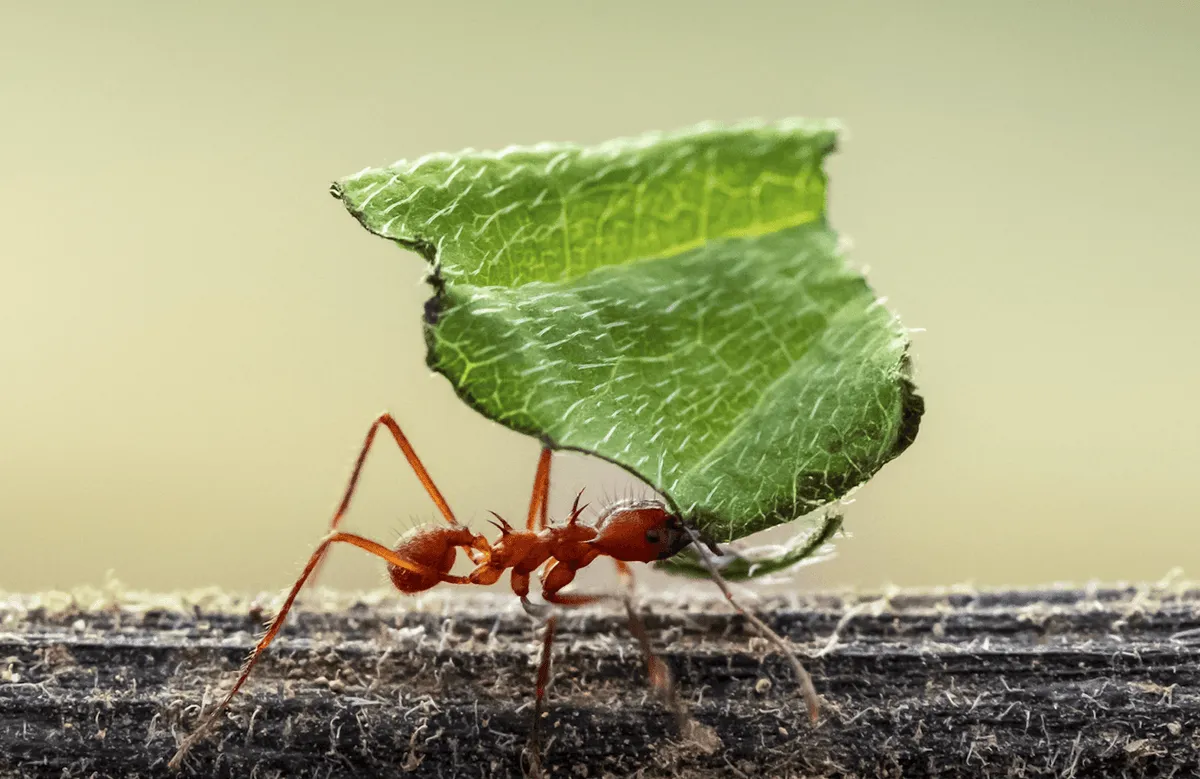
More than 200 ant species engage in fungal farming, a practice that involves chewing leaves into a pulp. This pulped material serves as a substrate, spread across designated garden areas to stimulate the growth of specific fungi. Initially, the queen ant undertakes this laborious task, fertilizing the nascent garden with her own fecal matter. As the colony expands, worker ants assume responsibility, accelerating the fungus’s growth until it becomes a vital and consistent food source. This symbiotic relationship highlights a remarkable evolutionary adaptation, turning simple organic matter into a sustainable food chain within the ant colony.
The Evolution and Scale of Ant Fungus Farming
Pioneering Agriculture in the Insect World
The practice of farming fungi by ants is not a recent development. A comprehensive study published in the journal Science in 2024 analyzed genetic data from numerous ant and fungal species, establishing an evolutionary timeline. This research revealed that ants began cultivating fungi approximately 66 million years ago, shortly after a significant asteroid impact event. This cataclysmic event, while devastating to the dinosaurs, created environmental conditions conducive to fungal proliferation, inadvertently setting ants on the path to agricultural innovation. For context, Homo sapiens initiated farming only about 12,000 years ago, underscoring the vast temporal depth of ant agriculture.
The discovery of this ancient agricultural practice reveals a sophisticated level of ecological management. Ants developed this strategy long before many terrestrial ecosystems fully recovered from the asteroid impact. The ability to cultivate a reliable food source from decaying organic matter provided a significant survival advantage, allowing ant colonies to thrive and diversify in the post-impact world. This enduring practice demonstrates the remarkable adaptability and evolutionary foresight of these insects.
Leafcutter Ants: Masters of Fungal Cultivation
Among the most prolific fungus farmers are leafcutter ants, belonging to the New World genus Atta. With 55 recognized species, the genus includes Atta laevigata, credited with constructing the largest known animal-built fungal farm. One remarkable colony of this species established a nest covering 67 square meters, comparable to a small apartment’s footprint. Within this extensive nest, researchers identified 1,920 distinct chambers, with 238 of these specifically dedicated to housing fungus gardens. The scale of these operations is truly staggering, demonstrating a highly organized and resource-intensive approach to food production.
To quantify the size of these underground networks, researchers employed a novel method: pouring concrete into an abandoned nest to create a cast of its internal structure. This cast revealed the intricate network of chambers and tunnels, although it did not fully capture the extent of the fungus farming system itself. While occupied nests are challenging to measure accurately, the central mound of a leafcutter ant nest can exceed 30 meters in diameter, with satellite mounds extending up to 80 meters in radius. Collectively, these structures can occupy an area roughly equivalent to two tennis courts, or 600 square meters, highlighting the immense scale of their subterranean agricultural endeavors.
Termites: Another Branch of Fungus Farming
Ants are not the sole insect group to practice fungal agriculture; termites also engage in similar methods. The number of fungus-farming termite species is roughly double that of ants, and their farming techniques are equally complex, if not more so. Termite workers consume decaying plant material, process it internally, and then excrete fecal pellets. These pellets form the basis of a 'fungus comb', onto which fungal spores, often from the genus Termitomyces, are meticulously deposited. Similar to ants, termites diligently tend to these combs, relying on them as a primary food source.
Termites exhibit a remarkable efficiency by consuming their fungus combs once the fungal crops are depleted. This practice ensures no resource is wasted, and the fecal material is recycled for subsequent harvests, creating a closed-loop system of nutrient cycling. This behavior further emphasizes the sophisticated and sustainable agricultural strategies employed by these social insects, mirroring advanced ecological management principles seen in other advanced civilizations, albeit on a much smaller, instinctual scale.
Impact Analysis
The discovery and detailed study of ant and termite fungus farming provide profound insights into the evolution of agriculture and social complexity in the animal kingdom. The fact that ants developed these sophisticated agricultural practices over 60 million years before humans suggests that complex food production strategies can arise independently through convergent evolution, driven by environmental pressures and opportunities. This ancient insect agriculture challenges our anthropocentric view of innovation and highlights nature's capacity for developing advanced solutions to survival. Understanding these biological systems can offer valuable lessons in resource management, sustainability, and efficient ecosystem engineering, potentially informing future human agricultural practices and our approach to ecological challenges.