For millennia, policymakers have grappled with inflation by attempting to control prices. This practice, exemplified by Diocletian's Edict on Maximum Prices in AD 301 and continued through the 20th century with prices and incomes policies, persists today. Recent political discourse, particularly concerning supermarket pricing, frequently invokes terms like "profiteering" and "price gouging." These accusations surfaced during the COVID-19 pandemic when essential items became scarce, and have been amplified in political campaigns, such as Kamala Harris's 2024 US presidential bid. In New York City, Mayor Zohran Mamdani has advocated for city-owned supermarkets to combat alleged "price gouging." Similarly, a Scottish National Party manifesto pledge for the 2026 elections proposed capping prices on 20-50 essential food items. Reports suggest the UK Government has also explored similar arrangements with supermarkets, offering regulatory relief in exchange for voluntary price caps on specific products.
The underlying sentiment behind labeling price increases as "profiteering" or "price gouging" suggests a belief that companies are unfairly exploiting market conditions—such as those arising from the pandemic, the energy crisis, or geopolitical conflicts like the war in Iran—to inflate profits. While "price gouging" lacks a precise technical definition in economics, it is often discussed in extreme scenarios, like post-disaster shortages where a single producer gains temporary monopoly power. Even in such dire circumstances, most economists argue against price caps, believing that allowing prices to rise naturally incentivizes rapid restoration of production and speeds recovery. Imposing caps, conversely, can disincentivize new investment and slow down the return to normal supply levels. However, proponents of intervention might concede a rationale for capping prices if it curtails genuine, temporary market power derived from extraordinary circumstances.
Economic Consequences of Price Controls in Competitive Markets
The Misapplication of "Price Gouging" in Retail
The assertion of "price gouging" or "profiteering" within the contemporary UK supermarket sector warrants scrutiny. Unlike rare crisis situations, the grocery industry has undergone numerous reviews, with concerns often focused on supermarkets wielding monopsony power to suppress prices paid to suppliers, such as farmers. However, no evidence of significant monopoly power among supermarkets themselves has emerged. In reality, the retail grocery market is characterized by intense competition. The availability of a vast array of products from around the globe, often at competitive prices, is a testament to the intricate and responsive nature of market economies. This system, driven by the decentralized decisions of countless economic agents reacting to price signals, is far too complex for any central authority to effectively replicate or manage.
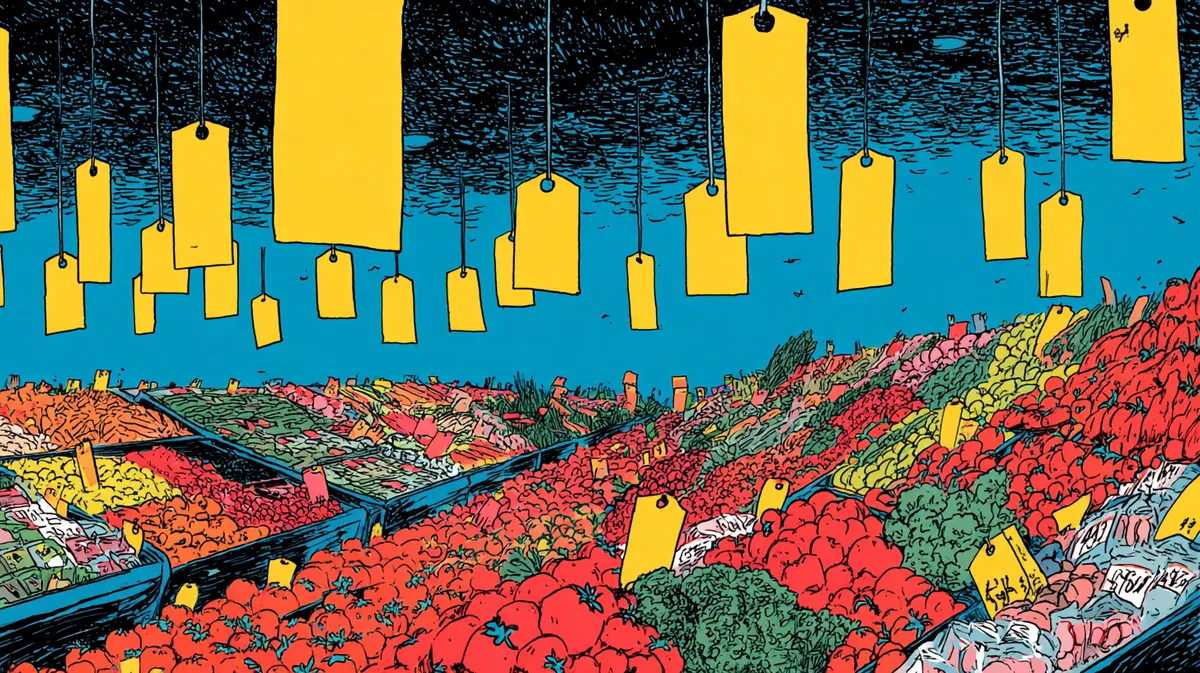
Implementing price caps on supermarket goods creates a fundamental economic distortion. When prices are artificially suppressed below their market value, these products become less profitable for retailers to stock. Simultaneously, consumers pay less than the inherent economic value of the goods. The predictable outcome is a depletion of stock as demand outstrips the limited, artificially priced supply. Consumers wishing to purchase these essential items will find them unavailable, a direct consequence of the intervention that undermines the very goal of ensuring access to affordable goods.
The Unintended Consequences of Price Caps
Proposals, such as those by the SNP, that suggest capping one product within a category and requiring the substitution of another at the capped price if the first sells out, effectively force businesses to operate at a loss. This transforms businesses into de facto charities, compelled to sell goods below their economic cost. Such a mandate would likely lead supermarkets to increase prices on other, non-capped items to maintain overall profitability. Consequently, shoppers might see the prices of items like biscuits or watermelons rise to compensate for artificially low bread or potato prices, resulting in the same inflationary pressure but with an inefficient cross-subsidy structure. If governments truly aim to prevent any price increases, they might be compelled to establish state-run supermarkets, operating at a perpetual loss, as seen in some initiatives like New York's.
Supermarkets operate in a highly competitive environment. Price increases typically reflect rising operational costs or heightened consumer demand for specific products. In a well-functioning market, increased demand for certain goods eventually stimulates greater production, leading to price stabilization or reduction over time. Attempting to set "socially optimal" prices for these goods represents a return to the flawed logic of central planning, a historical endeavor that has consistently failed due to the inability of any government body to possess the comprehensive knowledge required to set prices efficiently.
The Complexity of Market Pricing
The intricate web of supply and demand that determines prices in a market economy is a marvel of emergent order. Thousands of individual economic agents, responding to myriad price signals, interact in ways that are beyond the capacity of any centralized planning system to comprehend, let alone manage. Supermarkets, as key nodes in this network, possess a granular understanding of consumer preferences, supply chain dynamics, and operational costs that a government entity simply cannot replicate. 
When governments intervene by capping prices, they disrupt this finely tuned mechanism. The intention might be to alleviate consumer burden, but the actual result is often the creation of shortages, the distortion of market signals, and the disincentivization of production. This is because the price, in a market economy, serves as a critical piece of information. It signals scarcity, guides production decisions, and allocates resources efficiently. Removing or manipulating this signal leads to suboptimal outcomes, demonstrating that imposing artificial price limits is a strategy fraught with economic peril, best avoided by all but the most misguided or politically motivated actors.
Impact Analysis
The persistent temptation for governments to impose price controls on essential goods, particularly food, carries significant long-term economic implications. While seemingly a direct solution to consumer affordability issues, such policies fundamentally misunderstand the role of prices in a market economy. Prices are not merely a mechanism for exchange; they are vital information signals that coordinate economic activity. By capping prices, governments disrupt the natural flow of supply and demand, leading to unintended consequences such as shortages, reduced quality, and disincentives for investment and production. In agriculture and food retail, this can translate into reduced availability of products, impacts on farmer incomes, and a less resilient food supply chain overall. Furthermore, attempts to manage prices through mandates often lead to more complex regulations and potential cross-subsidization between products, creating market inefficiencies that can ultimately harm consumers more than the initial price rises they sought to address.