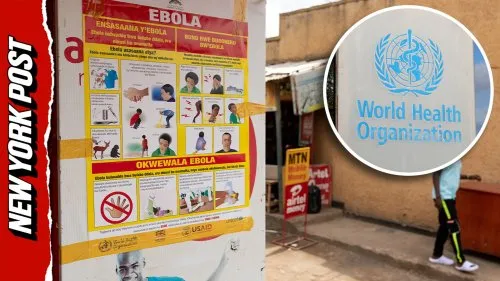
The World Health Organization (WHO) has issued a significant warning regarding the ongoing Ebola outbreak, which has spread across the Democratic Republic of Congo and Uganda. Officials express serious concern that the actual scale of the epidemic may be considerably larger than currently documented cases suggest. This assertion is based on preliminary epidemiological data and the challenging dynamics of disease surveillance in the affected regions. The organization has not shied away from its gravity, officially declaring the situation a public health emergency of international concern.
This declaration signifies that the WHO views the outbreak as an extraordinary event that poses a risk to public health beyond national borders and requires a coordinated international response. The urgency stems from the potential for rapid international spread and the need for immediate, concerted efforts to contain the virus. The joint outbreaks in the DRC and Uganda present a complex scenario, requiring tailored strategies for each locale while maintaining a unified global outlook on containment and prevention.
Ebola Outbreak Dynamics and International Concern
The declaration of a public health emergency by the WHO is a critical step in mobilizing international resources and attention. It underscores the interconnectedness of global health security and the imperative for swift, decisive action when faced with potentially devastating pathogens. The specific criteria for such a declaration typically involve assessing the severity of the disease, the potential for international spread, and the need for a coordinated international response to prevent further proliferation and mitigate its impact.
The current Ebola outbreak has been characterized by its rapid progression and the geographical spread across two neighboring countries. This dual-country involvement complicates containment efforts, requiring close collaboration between national health authorities, international aid organizations, and the WHO itself. The challenges inherent in remote and resource-limited areas, combined with the potential for community transmission, necessitate a robust and agile response mechanism to effectively track, treat, and prevent further cases.
Surveillance and Detection Challenges
One of the primary concerns highlighted by the WHO is the potential for undetected cases. This is often a reality in the early stages of an outbreak, especially in regions with limited healthcare infrastructure, remote populations, or where access to diagnostic services is difficult. Factors such as differing public health capacities between the DRC and Uganda, alongside potential gaps in reporting mechanisms, can contribute to an underestimation of the true prevalence of the virus.
Effective surveillance relies on a comprehensive network of health facilities, trained personnel, and accessible diagnostic tools. In areas grappling with ongoing conflict, displacement, or severe poverty, maintaining such a network is a monumental task. The WHO's warning emphasizes the need to strengthen these surveillance systems, ensuring that potential cases are identified and reported promptly, regardless of their geographical or socio-economic context. 
Global Health Security and Preparedness
The declaration of a public health emergency by the WHO is a call to action for the international community. It serves to alert governments, healthcare providers, and the public about the severity of the situation and the potential risks. Resources, expertise, and medical supplies are often mobilized following such a declaration to support affected countries in their containment efforts. This includes deploying rapid response teams, providing laboratory support, facilitating contact tracing, and supporting the safe burial of those who have succumbed to the virus.
Beyond immediate containment, the WHO's pronouncement also highlights the broader implications for global health security. It reinforces the importance of sustained investment in pandemic preparedness, resilient healthcare systems, and international cooperation. The lessons learned from previous Ebola outbreaks, such as those in West Africa, underscore the necessity of a proactive and coordinated approach to infectious disease threats. The involvement of the United Nations and other international bodies in coordinating relief efforts is crucial in addressing the multifaceted challenges posed by such outbreaks.
Collaborative Response and Future Implications
The coordinated response to the Ebola outbreak in the DRC and Uganda involves multiple layers of engagement. National health ministries are at the forefront, implementing surveillance, case management, and risk communication strategies tailored to their specific contexts. International partners, including the WHO, UNICEF, and various non-governmental organizations, provide critical technical support, funding, and logistical assistance. This collaborative framework is essential for sharing best practices, ensuring equitable access to resources, and avoiding duplication of efforts.
The long-term implications of this outbreak extend beyond the immediate health crisis. It underscores the ongoing threat posed by zoonotic diseases and the critical need for robust public health infrastructure globally. The experience gained from managing this outbreak will undoubtedly inform future preparedness strategies, potentially leading to enhanced surveillance technologies, improved diagnostic capabilities, and more effective public health interventions. 

Furthermore, the international response to this epidemic will be a test of global solidarity and the effectiveness of existing international health regulations. The WHO's role as a coordinator is paramount, ensuring that the response is evidence-based, ethically sound, and equitable. The focus remains on containing the virus, protecting vulnerable populations, and ultimately bringing the outbreak to an end while reinforcing global health resilience for future challenges.