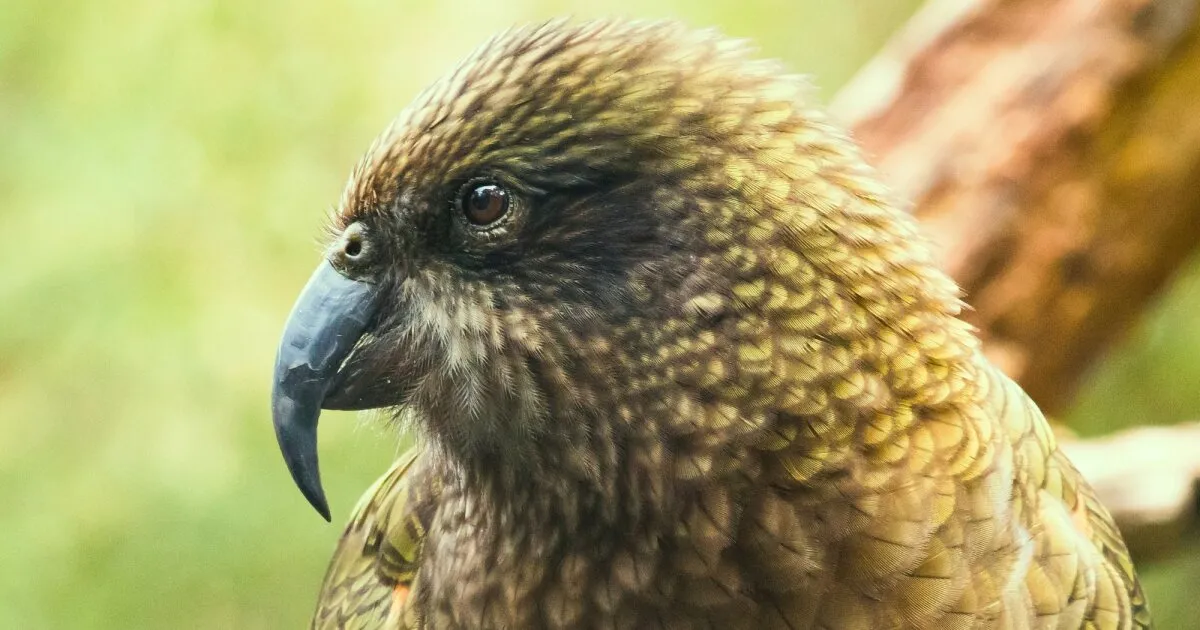
In a remarkable display of behavioral adaptation and ingenuity, a disabled kea parrot, identified as Bruce, has defied expectations by developing a unique jousting-like combat style to maintain his position as the alpha male within his social group. This behavior, observed in a study led by the University of Canterbury, highlights the extraordinary cognitive flexibility of these intelligent birds when faced with physical challenges. Kea, native to New Zealand's South Island, are renowned for their intelligence, curiosity, and often mischievous interactions with their environment, including human infrastructure.
Bruce, who is missing his upper beak, was found to be undefeated in dominance interactions with other male kea. Researchers documented that instead of engaging in typical biting behaviors, Bruce utilizes his exposed lower beak as a formidable weapon, employing a forward-thrusting motion akin to jousting. This innovative fighting strategy has enabled him to secure and maintain his alpha status, a feat that challenges conventional understanding of animal contest competition, where physical attributes and weaponry are typically decisive.
Ingenious Adaptation in Kea Behavior
The Science Behind Bruce's Jousting Prowess
The study, published in Current Biology, detailed how Bruce's missing upper beak, a significant disadvantage in typical parrot interactions, was overcome through behavioral innovation. Alex Grabham, the study's lead author, noted that Bruce's jousting technique was entirely novel. This strategy proved highly effective over a 30-day observation period, during which Bruce engaged in 36 dominance interactions with other males and emerged victorious in every instance. The findings suggest a profound level of cognitive problem-solving, allowing Bruce to not only compensate for his disability but to leverage it into a unique advantage within the social hierarchy.
Kea are known for their robust beaks, which are crucial for a wide range of activities, including climbing, foraging, manipulating objects, and self-grooming. The loss of a significant portion of this tool would typically present a severe impediment to survival and social standing. However, Bruce's adaptive strategy illustrates that in cognitively complex species, behavioral flexibility can be as, if not more, important than physical attributes in determining social success.
Social Dynamics and Benefits of Bruce's Strategy
Bruce's dominance extended beyond mere combat victories. Observations revealed that subordinate kea would yield to him at feeding stations, reinforcing his alpha status. Furthermore, these subordinate birds were observed grooming debris from the inside of Bruce's damaged beak, a behavior typically reserved for closely bonded individuals. This suggests that Bruce's unique position may have fostered unusual social bonds within the group.
The psychological implications of Bruce's success are also noteworthy. Researchers measured lower fecal glucocorticoid metabolite levels in Bruce compared to other males, indicating a potentially reduced stress level. This suggests that his innovative adaptation may have not only secured his social standing but also contributed to his overall well-being, making his life within the group paradoxically easier despite his physical impairment.
Broader Implications for Animal Behavior and Disability
The case of Bruce offers significant insights into the adaptability of intelligent animals and the meaning of disability in the animal kingdom. Professor Ximena Nelson emphasized that Bruce's success challenges traditional definitions of disability, demonstrating that physical limitations can be overcome through behavioral innovation, particularly in species with high cognitive abilities. This finding underscores the importance of considering behavior and physiology in combination when assessing an animal's capabilities and social standing.
Bruce's story is not an isolated incident of kea intelligence. He previously gained attention for being the first documented kea to use a tool for self-grooming, further cementing his reputation as an exceptionally resourceful individual. His triumph in maintaining alpha status through a self-invented combat style serves as a powerful testament to the evolutionary advantages of behavioral plasticity and cognitive flexibility in overcoming adversity.