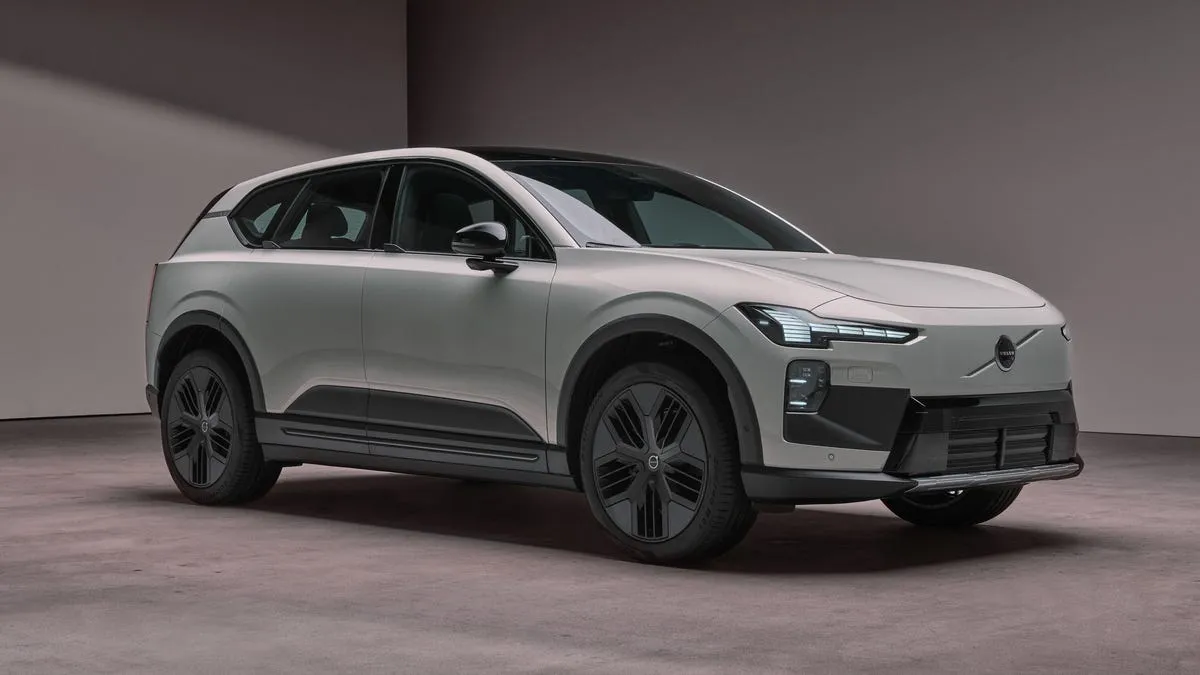
Volvo has officially commenced North American orders for its highly anticipated EX60 midsize electric SUV, marking a significant step in the brand's electrification strategy. Priced from $59,795 for the 2027 model, the EX60 aims to capture a substantial share of the competitive premium midsize SUV segment. The vehicle boasts an impressive estimated range of up to 400 miles, positioning it as a strong contender against established and emerging electric vehicle models. This launch is particularly crucial for Volvo, following recent challenges with its electric vehicle rollout, including the discontinuation of the EX30 in the US market and issues plaguing the flagship EX90.
The EX60's debut in North America signifies Volvo's renewed commitment to its EV ambitions, with the company emphasizing the vehicle's advanced technology, performance, and competitive market positioning. The strategic introduction of the EX60 addresses the core demand for practical, long-range electric SUVs, a segment that has seen rapid growth and innovation. With its blend of Scandinavian design, safety focus, and cutting-edge electric powertrain technology, Volvo seeks to reassert its presence and momentum in the increasingly crowded EV landscape.
Volvo EX60: Key Specifications and Features
Built on Volvo's new SPA3 platform, the EX60 integrates a dedicated electric architecture featuring cell-to-body construction, advanced in-house e-motors, and a state-of-the-art 800-volt electrical system. This architecture underpins the vehicle's impressive performance metrics, particularly its charging capabilities. The rear-wheel-drive P6 variant can achieve a 10-minute charge to add up to 155 miles of range, reaching 10% to 80% charge in approximately 16 minutes, with peak charging rates of 320 kilowatts. All-wheel-drive P10 and P12 models further enhance this, pushing peak charging rates to 370 kilowatts.
The range figures vary across the different configurations. The P6 rear-wheel-drive model offers an estimated 307 miles of range, while the P10 all-wheel-drive variant provides 322 miles. Topping the lineup is the P12 all-wheel-drive model, projected to deliver up to 400 miles on a single charge. These figures, pending final EPA certification, place the EX60 among the leaders in its class for electric range. A significant advancement is the EX60's adoption of the North American Charging Standard (NACS) port, granting native access to Tesla's extensive Supercharger network without the need for adapters. This integration is a strategic move, aligning with the broader industry shift towards NACS and simplifying charging for owners across the continent.
Powertrain Options and Trim Levels
Volvo is offering the EX60 in the US market with two primary powertrain choices: the P6 single-motor rear-wheel drive and the P10 dual-motor all-wheel drive. Each powertrain is available in two distinct trim levels: Plus and Ultra. The entry-level P6 Plus starts at $59,795 (including a $1,395 destination fee) and comes equipped with Volvo's Pilot Assist safety suite and a 21-speaker Bose audio system as standard features.
Stepping up to the P6 Ultra, priced at $66,395, introduces premium amenities such as ventilated Nappa leather seats and upholstery, an enhanced 28-speaker Bowers & Wilkins audio system, an electrochromic panoramic roof, and integrated heated second-row booster seats. The P10 AWD variants, offering increased power and efficiency, are priced starting at $62,145 for the Plus trim and $68,745 for the Ultra trim. Volvo has yet to announce pricing for the range-topping P12 AWD model, which will feature a potent 670 horsepower output and is slated for configuration at a later date.
Competitive Positioning and Market Strategy
The pricing strategy for the 2027 Volvo EX60 positions it competitively within the premium midsize electric SUV segment. With starting prices that undercut key rivals such as the BMW iX3 (starting at $62,850) and the Audi Q6 e-tron (starting at $65,795), Volvo aims to offer compelling value. The expected pricing for the electric Mercedes-Benz GLC is also anticipated to be in a similar range, further highlighting the EX60's aggressive market entry.
Volvo's approach focuses on delivering a robust combination of range, charging speed, advanced technology, and premium features at a more accessible price point compared to some competitors. This strategy is crucial for regaining market traction after previous EV program setbacks. The ability to connect seamlessly with the Supercharger network via its NACS port also presents a significant practical advantage for consumers. The EX60 is now available for configuration on Volvo's official website, with initial customer deliveries expected to commence later this year.
Impact Analysis
The successful launch and market reception of the Volvo EX60 could significantly influence the dynamics of the premium midsize electric SUV segment. If the vehicle meets its projected range and charging performance targets and proves reliable, it could revitalize Volvo's electric vehicle momentum and challenge established players like BMW, Audi, and Mercedes-Benz. The integration of the NACS port is a forward-thinking move that could set a precedent for other automakers looking to leverage the expanding charging infrastructure. The competitive pricing, coupled with Volvo's reputation for safety and design, may attract a broader consumer base to electric vehicles, contributing to the overall growth and adoption rate of EVs in North America.