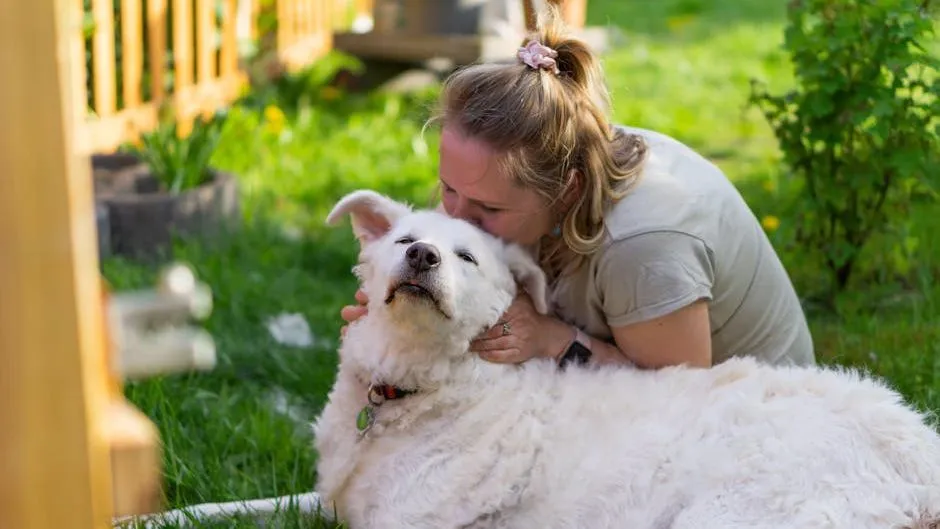
There's an almost intuitive understanding that develops between humans and their canine companions, particularly during times of emotional vulnerability. Many dog owners have observed their pets exhibiting a heightened sense of awareness when the household atmosphere grows still, marked by the dog's closer proximity, resting its chin on a knee, and gazing with what feels like profound intention. This nuanced behavior, often perceived as mere habit, holds a deeper scientific significance. Emerging research into the human-dog bond reveals that the emotional connection is not static; it actively shifts, deepens, and responds to an individual's internal emotional landscape. When humans experience periods of isolation or social withdrawal, studies suggest that the bond with their canine companions intensifies, becoming more deliberate and psychologically meaningful.
This heightened connection is not solely based on anthropomorphic interpretation. A growing body of scientific evidence points to a tangible, biochemical basis for a dog's perceived intuition. This biological undercurrent provides a compelling explanation for why a dog might seem to 'just know' when its owner is experiencing hardship, even in the absence of overt emotional displays. The following sections delve into the scientific findings that illuminate these fascinating dynamics.
The Science of Canine Empathy and Emotional Detection
The notion that dogs possess an innate ability to sense human emotional states is increasingly supported by scientific research, moving beyond anecdotal observations to explore the underlying physiological mechanisms. A significant study conducted at the University of Bristol provided compelling evidence that dogs can detect stress through olfactory cues. Specifically, they found that dogs can identify elevated levels of the stress hormone cortisol present in human sweat. This implies that a dog's awareness of distress does not depend on visible cues like crying or facial expressions; it can be triggered by subtler physiological changes in their owner's scent profile.
Beyond mere detection, research indicates that dogs not only smell stress but also react to it emotionally, a phenomenon termed 'emotional contagion.' This empathetic response is believed to initiate the behavioral shifts many owners recognize, such as increased attentiveness and proximity. Scientific findings demonstrate that dogs can detect odors associated with acute stress from human breath and sweat alone. This capability has profound implications for understanding emotional support animals, particularly those assisting individuals with PTSD, suggesting that a dog's reaction is not passive but an engaged, perhaps even shared, emotional experience.
Dogs' Olfactory Acuity and Emotional Contagion
The sophisticated olfactory system of dogs plays a crucial role in their ability to perceive human emotional states. Their nasal passages contain a remarkable number of scent receptors, enabling them to detect minute concentrations of volatile organic compounds (VOCs) released by the human body, which change in response to stress or other emotional fluctuations. When a person experiences stress, their body releases different chemical signals, and dogs, with their highly developed sense of smell, are exquisitely sensitive to these changes.
The concept of emotional contagion in dogs is particularly fascinating. It suggests that the detection of stress-related odors by a dog can elicit a similar physiological and behavioral response within the dog itself. This means that a dog might not just be sensing your stress but might also be experiencing a form of empathetic distress. This shared emotional experience can lead to behaviors such as increased whining, seeking physical contact, or attempting to comfort the distressed human, reinforcing the idea that dogs are active participants in our emotional well-being, not just passive observers.
The Specific Impact of Loneliness on the Human-Dog Bond
While dogs may respond to various negative emotions, scientific inquiry highlights loneliness as a particularly potent factor in strengthening the human-dog bond. Studies analyzing self-reported data have indicated that higher levels of social and familial loneliness correlate with a stronger human-dog bond. This suggests that individuals experiencing a lack of connection with family or romantic partners often turn to their dogs for increased emotional support and companionship, thereby intensifying the attachment.
The human-dog bond appears to act as a buffer against the negative effects of loneliness. Research indicates that this bond can mediate the relationship between loneliness and a person's overall positive affect, meaning that dogs help mitigate the detrimental psychological impact of feeling isolated. This protective function is attributed to the non-judgmental nature of the relationship, offering emotional security and connection when human interactions may feel fraught with social risks or perceived judgment. The dog provides a stable emotional anchor, fostering greater emotional expression and a sense of psychological balance.
The Oxytocin Feedback Loop: A Biochemical Connection
The deepening emotional connection between humans and their dogs, especially during periods of loneliness, is significantly influenced by neurochemical processes, primarily involving oxytocin. Interacting with a dog, whether through petting, playing, or simply gazing, has been shown to trigger the release of oxytocin in both humans and dogs. This hormone, often dubbed the 'love hormone,' plays a critical role in fostering feelings of happiness, trust, and social bonding.
The phenomenon of mutual gazing between humans and dogs is particularly effective in stimulating oxytocin release. Studies have observed that this prolonged eye contact, mirroring the gaze exchanged between human parents and infants, leads to a significant surge in oxytocin levels for both parties. This hormonal exchange not only strengthens the emotional bond but also creates a positive feedback loop: the more time spent in mutually rewarding interaction, the more oxytocin is released, further solidifying the attachment and increasing the desire for such interactions. This biochemical connection becomes especially vital during times of loneliness when physical touch and social interaction with humans may be reduced.
Behavioral Adaptations of Dogs in Response to Owner Distress
Dogs are not merely passive recipients of human emotional cues; they actively adapt their behavior to provide comfort and support during times of owner distress, particularly loneliness. Their evolutionary history alongside humans has endowed them with a remarkable capacity to interpret social cues, body language, and vocalizations, allowing them to perceive subtle shifts in mood and routine that often accompany loneliness.
When sensing their owner's sadness or isolation, dogs often exhibit specific behavioral changes. These can include seeking closer physical proximity, following the owner from room to room, placing a paw on their owner's arm, or exhibiting more attentive and solicitous behaviors. These actions are not random; they are calibrated responses to a perceived need for comfort and connection. The dog's innate pack mentality and social instincts drive them to maintain social cohesion and support group members, a role they readily fulfill for their human family.
Nuances and Limitations: The Role of Dogs in Emotional Well-being
While the bond between humans and dogs offers profound emotional benefits, it is crucial to acknowledge the nuances and limitations of this relationship, particularly concerning loneliness. Scientific research emphasizes that dogs, while invaluable companions, cannot fully replace the multifaceted psychological and social benefits derived from human interpersonal relationships.
Some studies caution that an over-reliance on pets for emotional support might, paradoxically, highlight the absence of human connections, potentially exacerbating feelings of loneliness in certain individuals. It is important for individuals to maintain a balanced approach, recognizing that a dog can provide significant comfort and companionship but should not be viewed as a sole substitute for human social interaction. Encouraging activities like dog parks, pet-related social events, or even casual conversations initiated by dog walking can serve as catalysts for new human friendships and a stronger sense of community, thereby bridging the gap created by loneliness.
Impact Analysis
The scientific validation of the deep emotional bond between humans and dogs, especially during periods of loneliness, has significant implications for mental health and societal well-being. As rates of loneliness and social isolation continue to rise in many parts of the world, understanding the therapeutic role of companion animals becomes increasingly important. These findings underscore the potential of dogs as integral components of emotional support strategies, particularly for vulnerable populations. Furthermore, the research highlights the need for continued investigation into how to best leverage the human-dog bond to foster resilience and improve psychological outcomes without diminishing the importance of human social connections.