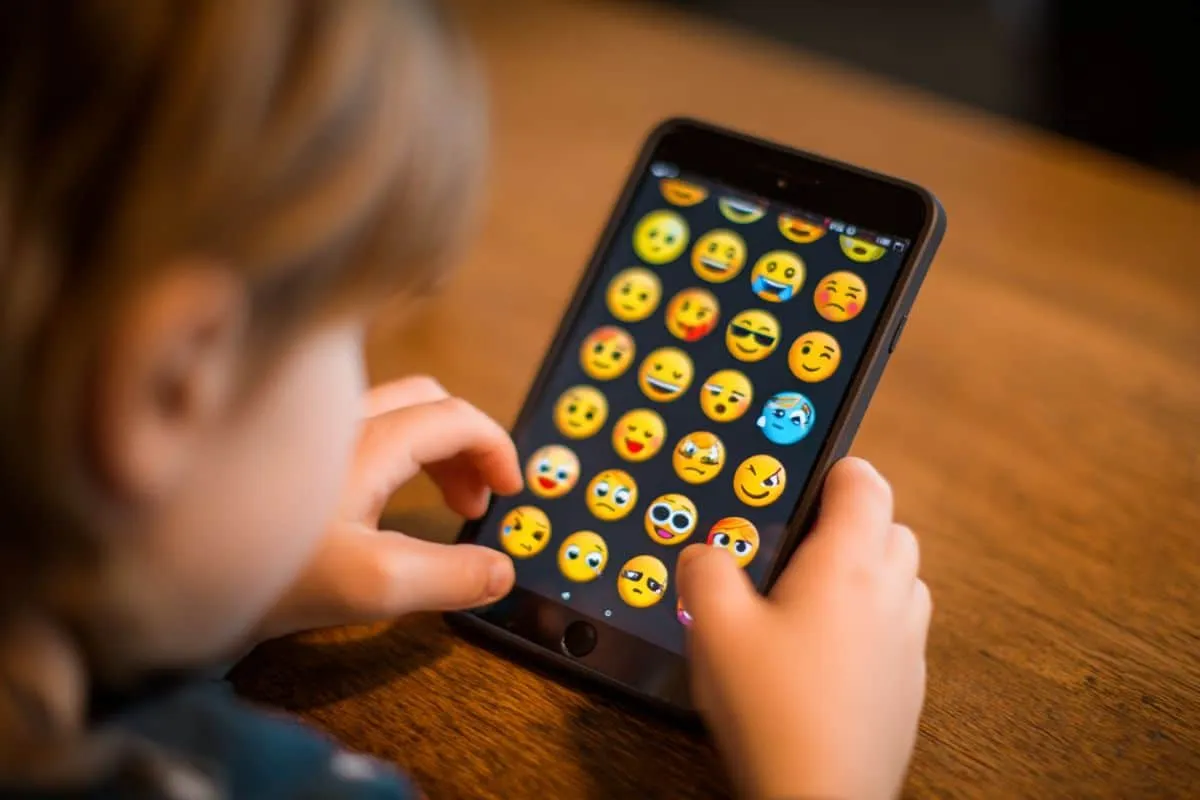
In a significant advancement for early childhood education, researchers have unveiled a novel, emoji-driven screening tool designed to objectively and efficiently assess the social development of preschool-aged children. This innovative digital framework, comprising just nine questions, empowers early childhood educators with a rapid diagnostic instrument suitable for children aged three to five. By substituting complex, time-intensive traditional assessments with a simplified, visually intuitive scale, this project establishes a reliable baseline for identifying developmental delays at a crucial stage. Early detection allows for timely and critical interventions, maximizing the impact during a child’s most formative years.
The significance of early diagnostic assessments cannot be overstated. A child's foundational social skills and vocabulary developed in the preschool years are strong predictors of their subsequent academic performance and behavioral patterns throughout adolescence. Recognizing this, Professor Hermundur Sigmundsson and his team at the Norwegian University of Science and Technology (NTNU), Department of Psychology, have focused on creating a tool that is both scientifically robust and practical for classroom application. The development of this 'Social Skills Scale' aims to bridge the gap between the need for early intervention and the limitations of existing assessment methods.
The Emoji-Based Social Skills Scale
The core of this new evaluation tool is its innovative use of an emoji-based Likert scale. This scale ranges from 1 to 5, where a single, sad face represents the lowest score, a neutral face indicates a mid-range score, and a very happy face signifies the highest score. This visual approach is designed to be intuitive and frictionless for both educators administering the test and, indirectly, for the children being assessed. The framework consists of nine targeted questions that educators can use in real-time to gauge a child’s social competencies. This simplification makes the evaluation process considerably faster and more user-friendly compared to conventional, text-heavy assessment forms.
The development team meticulously tested the scale's psychometric properties. A key aspect of this validation involved assessing its reliability and validity. The study was conducted on a cohort of 127 children in Iceland, ranging from three to five years old, with an average age of 3.8 years. Preschool teachers administered the assessments, providing real-time evaluations. The findings revealed that the scale is well-suited for the target age group, with all individual questions showing positive correlations to the overall score, indicating internal consistency. The item-total correlation coefficients ranged from 0.35 to 0.76, suggesting that the questions effectively measure the intended construct.
Ensuring Reliability and Stability
To rigorously verify the tool’s stability and objectivity, a critical step involved testing its inter-rater reliability. This process ensured that different educators, independently evaluating the same children, would arrive at comparable results. Ten children from the initial cohort were assessed by two separate early childhood educators. The comparison demonstrated a strong agreement between the scores provided by the two independent raters. This was quantitatively measured by a Cronbach's alpha score of 0.89 on the standardized items, a metric widely recognized in behavioral science as indicative of exceptionally high internal consistency and reliability. Such a score suggests that the test’s results are stable and not subject to significant variation based on the individual administering the assessment.
The statistical analysis further supported the scale's robustness. The intraclass correlation coefficient (ICC) between the two raters for this subset of children was 0.89, reinforcing the finding of good reliability for the assessed group of Icelandic children. These promising initial results suggest that the 'Social Skills Scale' holds significant potential for broader application and further development. The research team is encouraged by the data, which indicates that the test can accurately and consistently measure social skills in young children, providing valuable insights for educators and clinicians.
Validation and Future Directions
The empirical validation conducted on the Icelandic cohort provided strong evidence for the tool's effectiveness. The researchers observed that all questions were well-correlated with the total score, and the overall reliability score of 0.89 on the Cronbach scale signifies a high degree of internal consistency. This indicates that the nine questions are not disparate observations but rather form a cohesive measure of social skills. The ability of independent educators to arrive at similar conclusions further bolsters confidence in the tool's objectivity and practical utility in real-world educational settings.
Looking ahead, Professor Sigmundsson and his team are focused on the next steps for refining and expanding the application of the 'Social Skills Scale'. A primary objective is to conduct larger-scale trials involving more diverse and representative groups of children. This will help in establishing comprehensive normative data, ensuring the test's accuracy and applicability across varied cultural and socioeconomic backgrounds. Concurrently, the research team is developing a complementary early-stage vocabulary test specifically designed for toddlers aged 18 to 24 months, addressing another critical area of early childhood development.
Impact Analysis
The introduction of this emoji-based social skills assessment tool has the potential to significantly transform early childhood education and developmental psychology. By offering a rapid, reliable, and user-friendly method for screening, it democratizes access to early diagnostic capabilities. Educators in diverse settings, not just those with specialized training in child psychology, can now more readily identify children who may require additional support. This enhanced ability for early intervention is paramount, as it directly influences a child's long-term educational outcomes and overall well-being. Furthermore, the tool's visual and simplified nature could pave the way for similar innovations in assessing other developmental domains, making the process of identifying and addressing developmental challenges more efficient and effective globally.