Recent pronouncements regarding President Donald Trump's health have ignited a robust debate across social media platforms, with many users expressing skepticism towards official claims of his "excellent health." These reactions come in the wake of a medical examination, following which a memo from the President's physician, Dr. Sean Barbabella, stated that Trump "remains in excellent health, demonstrating strong cardiac, pulmonary, neurological and overall physical function." The assertion has been met with a wave of online commentary, questioning the veracity of the report, particularly given Trump's age and public appearances.
Critics have pointed to various perceived indicators, ranging from physical observations to the timing and content of the health reports themselves. The discourse highlights a broader trend of public engagement with political figures' health status, amplified by the immediate feedback loop of social media. This dynamic raises questions about transparency, public perception, and the role of online commentary in shaping narratives around political leadership.
Skepticism and Public Discourse on Health Assessments
The assertion of "excellent health" for President Trump, especially considering he is the oldest individual ever elected to the presidency and is approaching his 80th birthday, has been a focal point for online criticism. Many social media users have openly doubted the findings, contrasting them with their own observations. One notable point of contention involves physical measurements and appearance. Users have questioned the reported weight and height, with some suggesting discrepancies with visual evidence. For instance, one comment on the platform Bluesky humorously questioned the accuracy of the reported physical data, implying that if such basic metrics are debatable, the broader health assessment might also be suspect.
Further fueling the skepticism are comments referencing perceived signs of physical distress. Mentions of Trump nodding off in public, late-night public statements, and apparent swelling in his ankles have been cited by critics as contradictions to the "excellent health" narrative. Medical professionals, in analyzing these observations, have suggested potential underlying conditions such as Chronic Venous Insufficiency, despite previous official statements indicating no such issues. The disparity between these observations and the official health reports has become a significant talking point, with critics alleging a lack of transparency or an attempt to downplay potential health concerns.
Analysis of Medical Reports and Public Perception
The medical report from President Trump's physician, Dr. Sean Barbabella, asserted that the President "remains in excellent health, demonstrating strong cardiac, pulmonary, neurological and overall physical function." However, this declaration has been scrutinized heavily on social media, with users dissecting various aspects of his recent medical evaluations. Concerns have been raised about the completeness of the information provided, especially in light of observations made by medical analysts and the public. For example, CNN medical analyst Dr. Jonathan Reiner noted severe edema in Trump's ankles, identifying it as potentially indicative of Chronic Venous Insufficiency. This observation was made even though a White House statement three months prior had indicated no edema, leading to questions about the progression or management of such conditions.
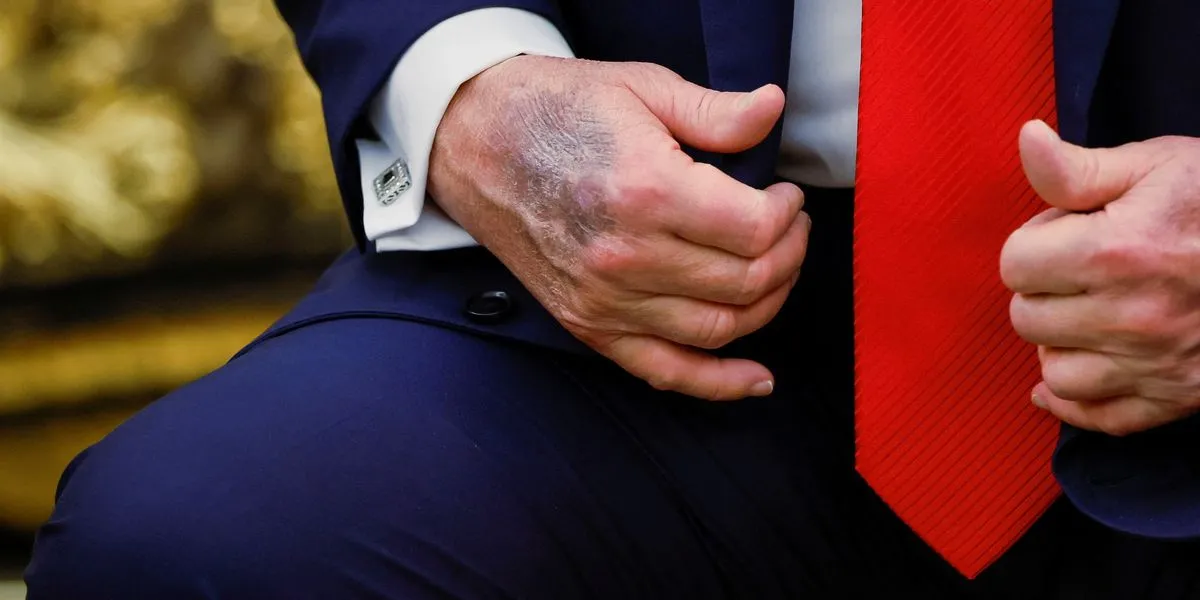
Beyond physical observations like ankle swelling, other elements of Trump's health have come under public scrutiny. Reports and social media commentary have pointed to skin rashes and bruising on his extremities. Medical analyst Dr. Vin Gupta, while acknowledging official explanations such as high-dose aspirin use, has expressed reservations, questioning whether these symptoms might suggest a "bleeding diathesis," a condition indicated by bruising that implies impaired blood clotting. The timing of the release of the medical summary, often late on a Friday, has also been perceived by some critics as an attempt to minimize public attention, further deepening the mistrust and leading to a greater demand for detailed, transparent medical updates.
Social Media's Role in Health Narratives
Social media platforms have become a primary venue for public discourse and critique concerning President Trump's health claims. Platforms like X (formerly Twitter) and Bluesky have seen a surge in commentary, ranging from direct challenges to official statements to more pointedly humorous or critical observations. Users have expressed disbelief, using sarcastic remarks and comparisons to other contexts, such as North Korean propaganda, to highlight their skepticism about the "excellent health" assertion. This immediate and widespread dissemination of opinions underscores the significant influence social media wields in shaping public perception and challenging official narratives.
The debate extends beyond mere skepticism; it touches upon the broader political implications of a presidential candidate's or incumbent's health. Podcasters and commentators have framed the health discussion within wider political analyses, suggesting that perceived physical decline is linked to political standing or strategic decision-making. The public's engagement with these health-related discussions via social media reflects a desire for transparency and a critical approach to information, especially when it pertains to the leadership and well-being of a nation's highest office. The continuous online commentary serves as a real-time referendum on the credibility of official health assessments.
Impact Analysis
The intense public scrutiny and vocal skepticism surrounding President Trump's health assessments, predominantly amplified through social media, have several implications. Firstly, it highlights a growing public demand for transparency in political health reporting, pushing administrations to provide more comprehensive and verifiable information. Secondly, the discourse underscores the power of social media as a platform for citizen journalism and public oversight, capable of challenging official narratives and fostering critical analysis. The persistent questioning of medical reports, even when presented by physicians, indicates a societal trend toward increased skepticism of authority and a reliance on peer-to-peer information sharing and commentary.
Furthermore, this continuous online debate can influence public opinion and voter perception, potentially impacting electoral outcomes. Candidates' health is often implicitly or explicitly linked to their capacity to govern, making health narratives a significant component of political strategy and public perception. The way health information is communicated and received in the digital age, therefore, has tangible consequences for political figures and the electorate alike, necessitating a careful balance between official reporting and public trust.