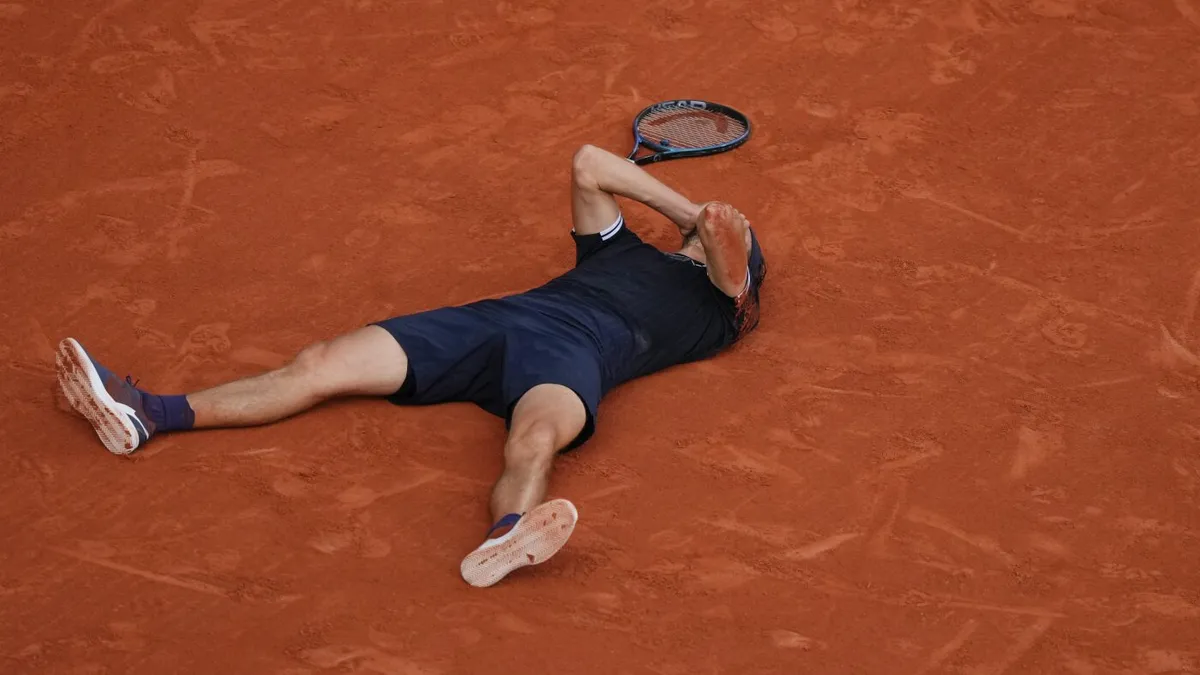
Alexander Zverev has finally broken through the Grand Slam barrier, capturing his first major championship at the French Open on Sunday. In a hard-fought five-set final, the German star defeated Italy's Flavio Cobolli with a final score of 6-1, 4-6, 6-4, 6-7 (5), 6-1. This victory marks a significant milestone for Zverev, who had previously reached four major finals without securing a title.
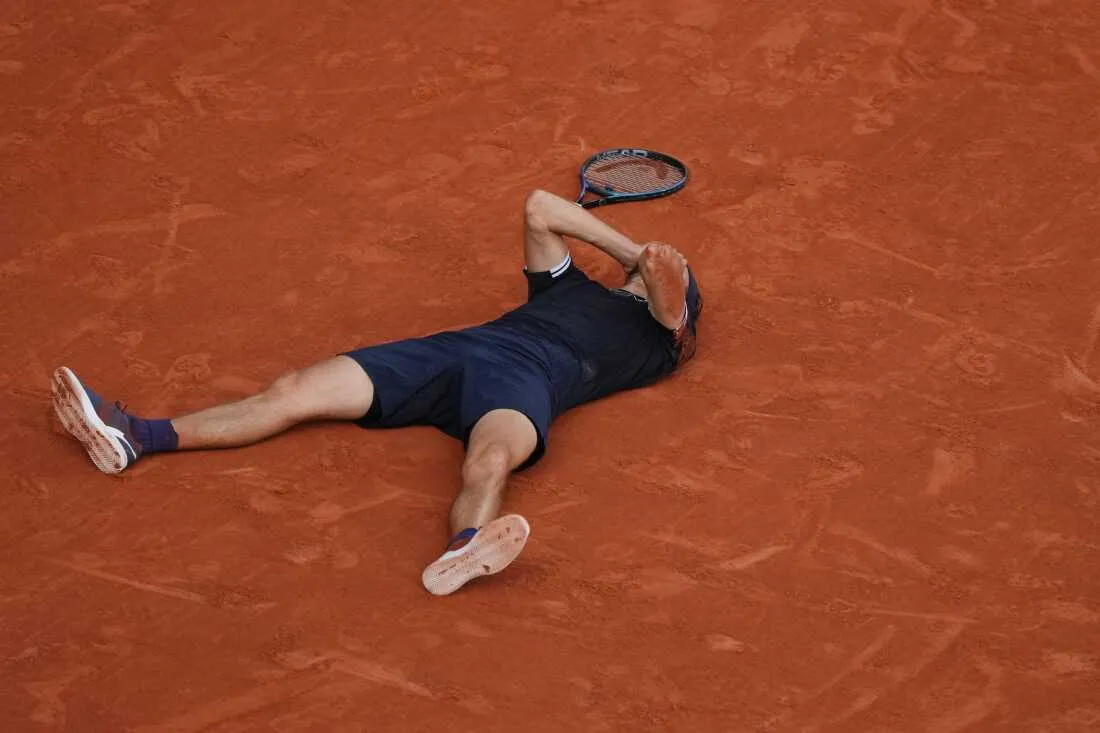
The triumph came after a grueling match that lasted over four hours on the iconic clay courts of Roland Garros. Zverev's emotional celebration, falling to the clay and covering his face in tears, underscored the immense pressure and long-awaited relief of achieving this career-defining moment. He joins an exclusive list of players, including Andre Agassi, Goran Ivanisevic, and Dominic Thiem, who also claimed their first Grand Slam title in their fourth major final appearance.
Zverev's Breakthrough Performance
The path to this title was cleared significantly by the early exits of top contenders Jannik Sinner and Carlos Alcaraz. Sinner, the world No. 1, faced challenges during the tournament, while Alcaraz, the two-time defending champion, withdrew due to a wrist injury. This left Zverev, ranked third in the world, as a strong favorite, a position he ultimately capitalized on.
This French Open title is particularly poignant for Zverev, as it marks his redemption on the Parisian clay. His previous two Grand Slam final appearances at Roland Garros ended in defeat, including a significant loss to Alcaraz in the 2024 final where he held a two-set lead. His earlier Grand Slam final losses in the 2020 US Open and the 2025 Australian Open were also keenly felt, making this victory a testament to his resilience and perseverance.
The Final Showdown Against Cobolli
Flavio Cobolli, the 14th-ranked Italian, was also making his first Grand Slam final appearance. Cobolli had a remarkable run to the final, exceeding expectations and captivating audiences. He aimed to become the first Italian man to win the French Open singles title in 50 years, following in the footsteps of Adriano Panatta's 1976 victory.
The match began with Zverev asserting dominance, securing an early break and dictating play. Despite Cobolli's spirited efforts to rally and the vocal support from his team, Zverev managed to maintain control for much of the contest. While Cobolli showed flashes of brilliance and fought back to force a fourth-set tiebreaker, Zverev's experience and superior fitness ultimately prevailed in the deciding fifth set, where he secured a decisive double break.
Zverev's tactical approach proved effective against Cobolli's powerful game. He anticipated Cobolli's signature wide kick serves and executed precise, angled returns. The German's ability to adapt and counter Cobolli's tactics, such as the famous wrap-around-the-net-post return, demonstrated his focus and preparation for the match.
The match was not without its moments of tension, including a medical timeout for Zverev's leg in the fourth set. However, Zverev regrouped to dominate the decisive fifth set, securing the championship point when Cobolli's overhead attempt sailed long. The victory was sealed, and Zverev could finally celebrate his long-awaited Grand Slam achievement.
Looking Ahead for Zverev
With his maiden Grand Slam title in hand, Alexander Zverev solidifies his status as one of the top players in men's tennis. This victory is expected to provide a significant boost to his confidence and career trajectory as he looks to build on this success in future tournaments.
The win also closes a chapter on past criticisms and challenges Zverev has faced. Notably, in the aftermath of his 2025 Australian Open final appearance, he was subjected to renewed attention regarding past abuse allegations. While one case was resolved and another found insufficient evidence by the ATP Tour, this Grand Slam victory provides a powerful statement of his on-court achievements.
Impact Analysis
Alexander Zverev's victory at the French Open reshapes the narrative around his career, officially cementing him as a Grand Slam champion. This win not only elevates his personal standing in the sport but also adds a compelling new dynamic to the men's tennis landscape. The culmination of years of effort and previous near-misses highlights the importance of mental fortitude and strategic adaptation in elite competition. As the tennis world looks ahead, Zverev's breakthrough signifies a new phase of his career, potentially challenging established hierarchies and inspiring a new generation of athletes facing similar pressures.