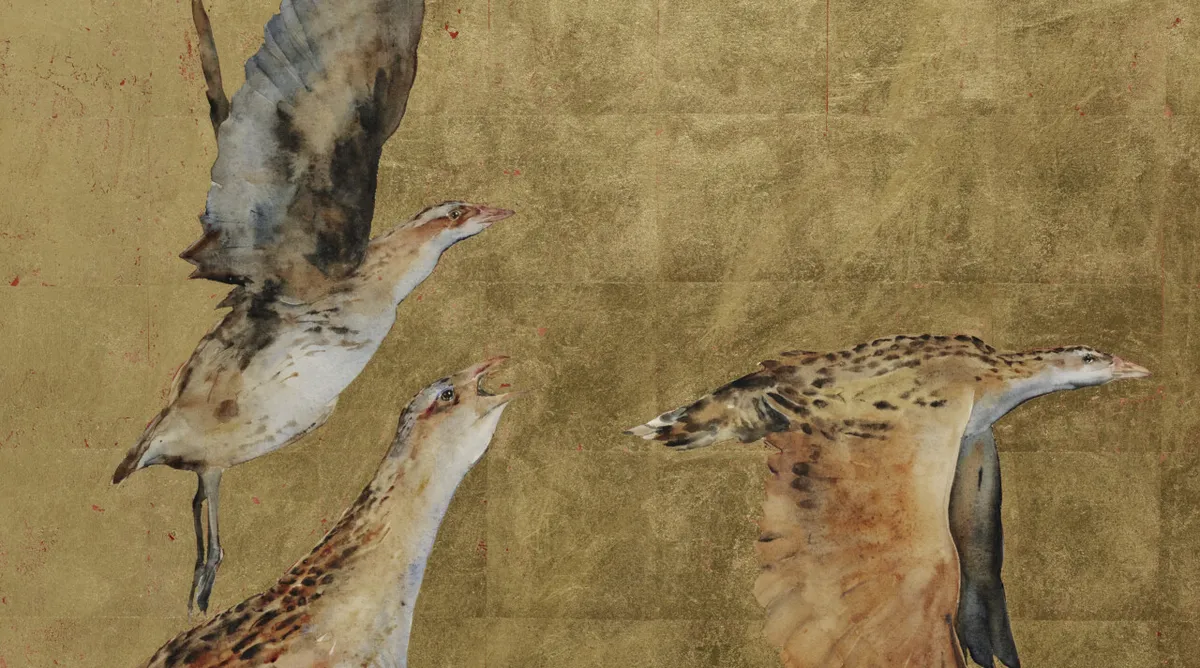
North America has lost an estimated 3 billion birds in the last fifty years, Europe approximately 500 million, and Britain 73 million. Globally, over 60% of bird species are experiencing decline, a trend that has elevated species once considered common, like the "common eider," to conservation statuses previously reserved for icons of endangerment such as the jaguar. This widespread attrition has led to demonstrably quieter dawns and springs, a palpable emptiness in the air, signaling the silencing of an ancient avian orchestra and an almost unimaginable loss of natural abundance.
Historical accounts vividly contrast with the present reality. In August 1861, American naturalist A. S. Packard documented migrating curlews on the south Labrador coastline in numbers so vast they formed flocks "a mile long and nearly as broad," containing an estimated four to five thousand individuals, their collective calls sounding like a gale. Similarly, two decades later, English naturalist Richard Jefferies described the vibrant birdlife at London's periphery, noting the profusion of chiffchaffs, willow wrens, thrushes, blackbirds, chaffinches, greenfinches, wood-pigeons, and turtle-doves, suggesting that "every bush, every tree, almost every clod... seemed to have its songster." These echoes of a richer past underscore the profound absence felt today, a phenomenon often exacerbated by shifting baseline syndrome, which habituates us to increasingly sparser natural environments.
The 'Book of Birds': A New Approach to Avian Appreciation
The challenge of reversing this avian decline is intimately linked to fostering a deeper connection with these creatures. As the adage suggests, we cannot save what we do not love, and love often stems from familiarity and recognition. Noticing birds is the initial step toward naming them, and naming them is fundamental to understanding their existence and their intricate relationships within ecosystems. This knowledge can blossom into wonder, then care, inspiring action that can lead to tangible change. However, this vital chain of connection is fragile and requires continuous reinforcement.
Against this backdrop, 'The Book of Birds' emerges not merely as a field guide, but as an effort to reforge that connection. Drawing inspiration from classic guides like the Reader’s Digest Book of British Birds, the Book of North American Birds, and the works of Thomas Bewick and John James Audubon, this guide poses a different question: not just “What is that bird?”, but “Who is that bird?” Its aim is to facilitate identification while also cultivating empathy and a sense of shared existence. Employing paintings instead of photographs, and integrating metaphor and poetry alongside data, the book seeks to foster relation and a profound appreciation, moving beyond mere classification towards something akin to love.
The Seven Wonders of the Avian World
The structure of 'The Book of Birds' is organized around the “Seven Wonders”: Nest, Egg, Beak, Song, Feather, Flight, and Migration. These elements represent the fundamental components of the everyday miracle that constitutes birdlife. Interspersed between these thematic wonders are entries for 49 specific bird species, presented in seven distinct groups. These birds, ranging from the avocet to the woodcock and the bar-tailed godwit to the yellowhammer, are all currently listed on conservation “Red Lists” or “Amber Lists,” indicating their vulnerable status.
Each of these featured species is depicted as beginning to falter, struggling against environmental pressures, and gradually disappearing from our landscapes—cities, fields, rivers, forests, and coastlines. Their presence is diminishing, marking the slow descent towards the profound silence of extinction. The book endeavors to bring these species back into sharp focus, celebrating their unique essence and the qualities that define them, such as what makes a sparrowhawk a sparrowhawk or a bittern a bittern.
Hope Amidst Decline: Art and Narrative as Restoration
Despite being created in an era marked by significant ecological loss, 'The Book of Birds' is fundamentally a testament to hope. The artistic renditions within the book serve as acts of honor and celebration, while the accompanying narratives are crafted to be read aloud, functioning almost as a form of invocation or a call to remember and cherish these birds.
The loss of birds signifies not only the disappearance of the creatures themselves in their unique splendor but also the erosion of invaluable human cultural and spiritual assets. This includes language, storytelling, beauty, imaginative possibilities, spiritual upliftment, and alternative ways of experiencing the world. Birds act as vital connectors, weaving together disparate parts of the planet—sky and earth, woodland and river, ocean and mountain, and even continents. Their absence leads to a fragmentation of the natural world and a diminishment of our own human experience.
Guidance from Literary Masters
The creation of 'The Book of Birds' over seven years was profoundly influenced by the words of two key writers. Bertolt Brecht's 1939 observation, “In the dark times, will there also be singing? Yes, there will be singing about the dark times,” served as a powerful reminder of the enduring human need for expression and hope even amidst adversity. This was complemented by poet Mary Oliver’s three-part instruction from 2008: “Pay attention. Be astonished. Tell about it.”
These guiding principles underscore the book's mission: to encourage close observation, to cultivate awe at the natural world, and to share these experiences through compelling narratives and art. The project, associated with Atmos, a non-profit media organization dedicated to the intersection of climate and culture, aims to re-enchant people with nature by highlighting human impact, the intelligence of the natural world, and pathways toward healing and preservation.
Impact Analysis
The alarming decline in bird populations represents a critical ecological indicator with far-reaching consequences. Beyond the intrinsic value of biodiversity, avian populations play crucial roles in ecosystem health, including pollination, seed dispersal, and pest control. Their diminishing numbers signal broader environmental distress, impacting agricultural productivity and the stability of natural habitats. The initiative behind 'The Book of Birds' highlights a growing awareness and a proactive approach to conservation, emphasizing that effective action is predicated on deep engagement and appreciation. By reframing ecological data through art and narrative, such projects aim to foster a more profound public connection to nature, which is essential for driving the widespread behavioral and policy changes necessary to mitigate species loss and environmental degradation.