The political landscape in Wisconsin's congressional district is heating up as incumbent Representative Derrick Van Orden faces a significant challenge from challenger Rebecca Cooke. With only months remaining until the election, Cooke has demonstrated considerable momentum, outraising Van Orden for two consecutive quarters. A recent poll further underscores this trend, showing Cooke with a four-point lead in a district that traditionally leans Republican, indicating a potentially tight race.
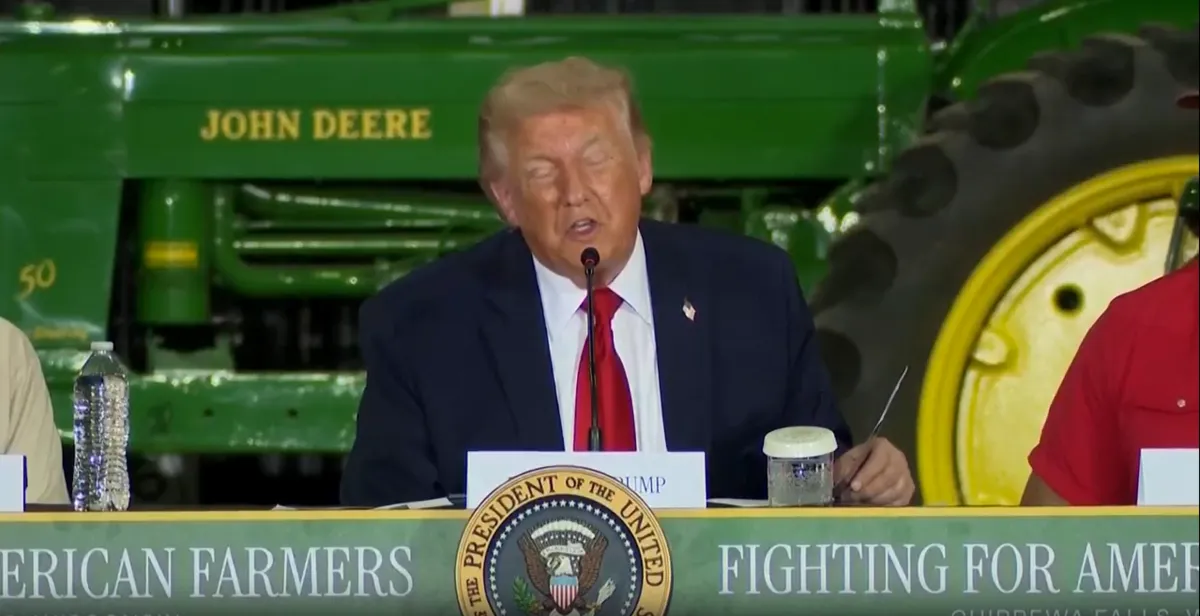
In response to these developments, the Trump administration has increased its engagement in the district. Agriculture Secretary Tom Vilsack and even former President Donald Trump himself have visited the state to rally support for Van Orden. Trump's visit, officially framed as a roundtable discussion on agriculture, aimed to galvanize the Republican base and address concerns within the farming community. However, the event's execution drew scrutiny, with reports suggesting that Trump dominated the conversation, delivering a speech more akin to a campaign rally than a collaborative discussion.
Trump's Agricultural Roundtable and Campaign Rhetoric
The event, held in a large steel pole barn amidst a thunderstorm, was attended by a few hundred supporters. Observers noted that the discussion, intended to focus on agricultural policy and its impact on farmers, largely deviated into broader political talking points. Trump reportedly spoke at length about his administration's past policies and criticized current economic conditions, including high gas prices and trade challenges affecting agricultural exports. This approach has raised questions about the effectiveness of the visit in addressing the specific needs of Wisconsin's farmers and strengthening Van Orden's electoral prospects.
Furthermore, Trump's discourse during the event touched upon national landmarks and political grievances, diverting from the stated agricultural focus. This shift in emphasis has been interpreted by some as a reflection of his broader campaign strategy, prioritizing established talking points over tailored policy discussions. The need for assistance when descending a single step, as captured in social media, also became a point of discussion, raising questions about his physical stamina and readiness for the rigors of campaigning.
Farmer Concerns and Policy Impact
The core purpose of the roundtable was to address the agricultural sector, a vital part of Wisconsin's economy. Farmers have expressed ongoing concerns regarding fluctuating market prices, labor shortages, and the impacts of global trade policies. While visits from high-profile political figures can draw attention to these issues, the tangible benefits and specific policy solutions discussed remain critical for the farming community.
The efficacy of past agricultural policies under the Trump administration, and their perceived impact on current challenges, is a significant talking point. Farmers are looking for clear strategies and actionable support to navigate the complexities of modern agriculture, from input costs to market access. The current administration's approach to agricultural subsidies, environmental regulations, and international trade agreements are all factors that influence farmer livelihoods and the overall health of the sector.
Electoral Dynamics and Voter Sentiment
The poll indicating a lead for Rebecca Cooke highlights a potential shift in voter sentiment within the district. Traditionally Republican-leaning districts can be sensitive to a variety of factors, including national political trends, candidate performance, and specific local issues. The engagement from national figures like former President Trump suggests an awareness of the electoral challenge faced by Van Orden.
The effectiveness of these high-profile visits in swaying undecided voters or energizing the base is a key question leading into the election. For voters, the substance of policy discussions, the candidates' track records, and their vision for the future of agriculture and the district are paramount. The ongoing electoral contest in Wisconsin will be closely watched as an indicator of broader political currents.
Impact Analysis
Donald Trump's visit to Wisconsin, intended to bolster support for Representative Derrick Van Orden, underscored the critical role of agricultural issues in electoral campaigns, particularly in a state with a strong farming presence. The event, however, also brought into focus the persistent challenges in connecting campaign rhetoric with the specific, on-the-ground needs of the agricultural community. The shift from agricultural policy discussions to broader political themes during the roundtable suggests a strategic emphasis on energizing the base with familiar narratives, potentially at the expense of detailed policy engagement.
The four-point lead reported for challenger Rebecca Cooke, in a district favoring Republicans, signals a potentially competitive election. This indicates that voter concerns may extend beyond party affiliation, encompassing economic conditions, policy effectiveness, and candidate viability. The effectiveness of national endorsements and campaign visits in counteracting domestic polling and grassroots momentum remains a key dynamic to observe as the election approaches. The outcome in this district could reflect a wider trend of voters seeking substantive policy solutions and responsive representation.