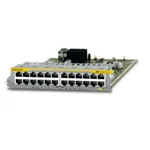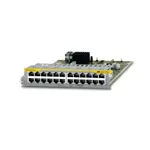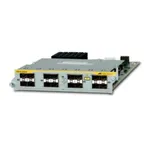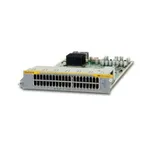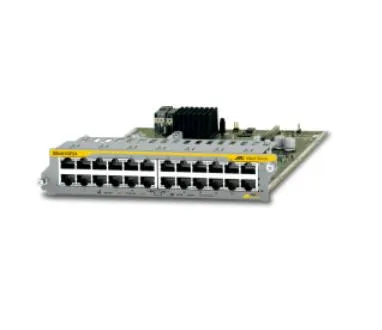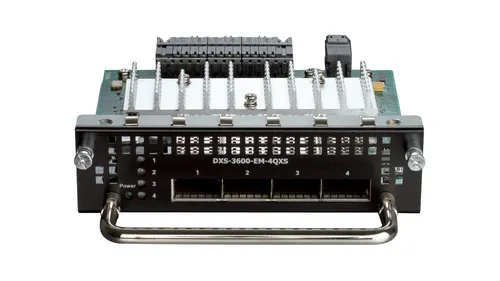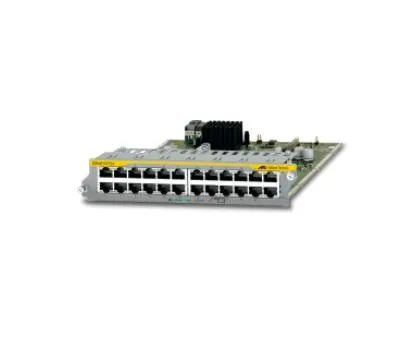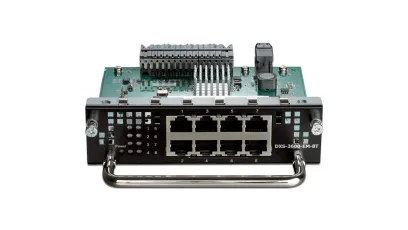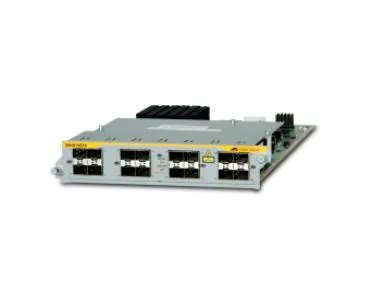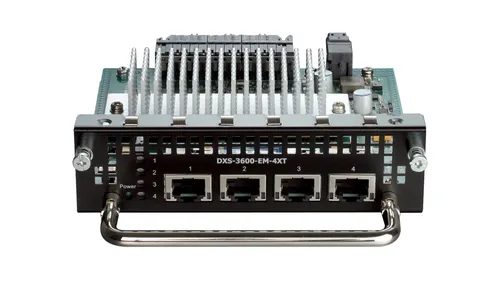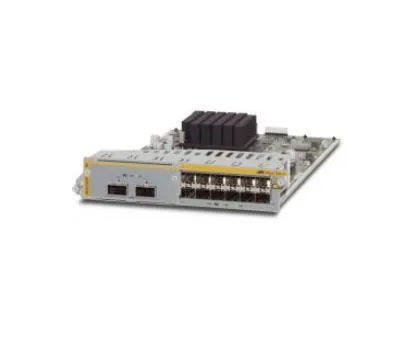


Allied Telesis AT-SBx81XLEM Switch Module
Specifications
Network
Network
| Ethernet interface type |
Gigabit Ethernet
|
|---|---|
| Ethernet LAN data rates |
100,1000 Mbit/s
|
| Flow control support |
Yes
60% have it
|
| Networking standards |
IEEE 802.1D, IEEE 802.1s, IEEE 802.1w, IEEE 802.1x, IEEE 802.3u, IEEE 802.3x, IEEE 802.3z
|
| Jumbo frames support |
Yes
83% have it
|
| Link aggregation |
Yes
61% have it
|
Optical fiber
Optical fiber
| Fiber optic connector |
SFP
|
|---|
Ports & interfaces
Ports & interfaces
| Fiber ports quantity |
12
93% better than others
|
|---|
Performance
Performance
| Quality of Service (QoS) support |
Yes
57% have it
|
|---|---|
| Service level |
3
|
| Queues per port |
8
|
| Access Control List (ACL) |
Yes
88% have it
|
| Security algorithms |
802.1x RADIUS, SSH-2
|
| Compatibility |
Allied Telesis SwitchBlade x8100
|
Power
Power
| Power consumption (typical) |
44
W
27% better than others
|
|---|
Operational conditions
Operational conditions
| Operating temperature (T-T) |
0 - 40 °C
|
|---|---|
| Storage temperature (T-T) |
-25 - 70 °C
|
| Operating relative humidity (H-H) |
5 - 90%
|
| Storage relative humidity (H-H) |
5 - 95%
|
| Operating altitude |
0 - 3048 m
|
Certificates
Certificates
| Safety |
UL60950-1, CAN/CSA-C22.2 No. 60950-1-03, EN60950-1, EN60825-1, AS/NZS 60950.1
|
|---|---|
| Electromagnetic compatibility |
EN55022 class A, FCC class A, VCCI class A
|
| Certification |
EN55024, EN61000-3
UL, cUL, TUV
RoHS
|
Weight & dimensions
Weight & dimensions
| Dimensions (WxDxH) |
207 x 313 x 41 mm
|
|---|---|
| Weight |
1.1
kg
84% better than others
|
Disclaimer: Information on this page may need review. If you notice any discrepancies, please report them

The Allied Telesis AT-SBx81XLEM represents a robust modular switch expansion solution designed for high-density network environments. As a key component within the Allied Telesis ecosystem, this module is engineered to deliver enhanced port density and advanced switching capabilities, making it an ideal choice for enterprise-level data centers, campus networks, and demanding service provider infrastructures. Its integration into the SBx8100 series chassis allows for a scalable and adaptable network fabric, capable of meeting evolving bandwidth requirements and application demands without necessitating a complete hardware overhaul.
Leveraging a high-performance switching architecture, the AT-SBx81XLEM provides a substantial number of ports, facilitating the aggregation of numerous end devices and high-speed uplinks. This module's design emphasizes efficiency and reliability, crucial for maintaining network uptime and performance under heavy load. The Allied Telesis AT-SBx81XLEM aims to simplify network deployment and management while offering the power and flexibility required for complex network designs, solidifying its position as a valuable asset for organizations prioritizing network scalability and operational excellence.
Key Features and Performance
The AT-SBx81XLEM is specifically built to expand the port capacity of the Allied Telesis SBx8100 chassis. While the exact port count and type (e.g., 10/100/1000 Mbps, SFP, SFP+) are critical for specific deployment scenarios, its primary function is to serve as a high-density port aggregator. This means administrators can significantly increase the number of connected devices or network segments from a single chassis, reducing the physical footprint and power consumption compared to deploying multiple standalone switches. The module's internal architecture is optimized for high throughput and low latency, ensuring that data is processed and forwarded efficiently, which is paramount for latency-sensitive applications like VoIP, video conferencing, and real-time data analytics.
Furthermore, the integration within the Allied Telesis management framework allows for unified control and monitoring of all connected modules and the chassis itself. This centralized management approach simplifies configuration, troubleshooting, and firmware updates, leading to reduced operational expenses and improved network visibility. The modular nature of the AT-SBx81XLEM not only provides scalability but also enhances serviceability, as individual modules can be replaced or upgraded with minimal disruption to the overall network operation. This design philosophy aligns with the need for resilient and adaptable network infrastructure in today's fast-paced technological landscape.
Pros & Cons
Pros
What we love about this product
- High Port Density Expansion: Enables significant increase in network connectivity through its modular design within the SBx8100 chassis.
- Scalable Network Fabric: Facilitates growth and adaptation to evolving bandwidth demands without full system replacement.
- Optimized Performance: Engineered for high throughput and low latency, supporting demanding network applications.
- Centralized Management: Integrates seamlessly with Allied Telesis management solutions for simplified control and monitoring.
- Enhanced Serviceability: Modular design allows for easier replacement and upgrades, minimizing network downtime.
Cons
Points to consider before buying
- Chassis Dependent: Functionality is entirely reliant on the presence and compatibility with an Allied Telesis SBx8100 series chassis.
- Limited Standalone Utility: Not designed for standalone deployment; requires a specific chassis for operation.
- Potential Higher Initial Cost: Modular solutions can involve a higher upfront investment compared to fixed-configuration switches, especially when factoring in the chassis.