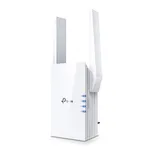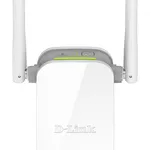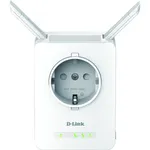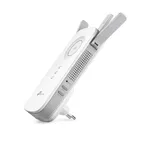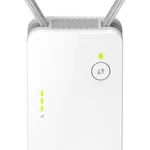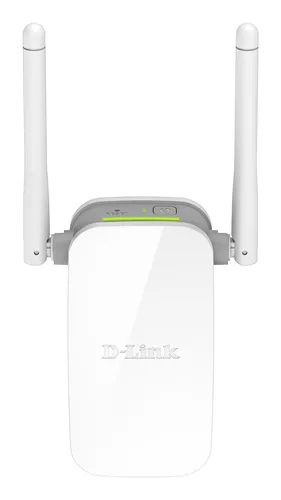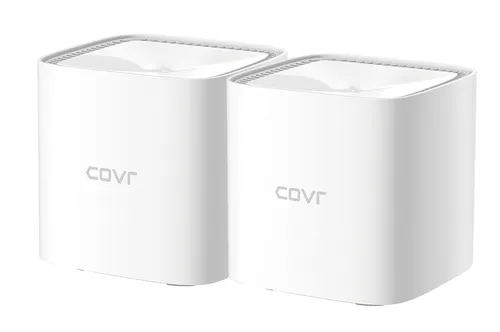


D-Link AC1200 Dual Band Mesh Wi-Fi System
Specifications
Performance
Performance
| Type |
Network transmitter
|
|---|---|
| Data transfer rate |
1200 Mbit/s
|
| Guest access |
Yes
64% have it
|
| Ethernet LAN data rates |
10,100,1000 Mbit/s
|
| BeamForming |
Yes
72% have it
|
| Auto MDIX IEEE |
Yes
93% have it
|
| Auto-negotiation |
Yes
86% have it
|
Antenna
Antenna
| Antennas quantity |
2
|
|---|---|
| Antenna type |
Internal
|
Network
Network
| Cabling technology |
10/100/1000Base-T(X)
|
|---|---|
| Networking standards |
IEEE 802.11a, IEEE 802.11ac, IEEE 802.11g, IEEE 802.11n
|
| Wi-Fi |
Yes
78% have it
|
| Wi-Fi standards |
802.11a, 802.11g, Wi-Fi 4 (802.11n), Wi-Fi 5 (802.11ac)
|
| Wi-Fi data rate (max) |
866 Mbit/s
|
| Wi-Fi band |
Dual-band (2.4 GHz / 5 GHz)
|
| DHCP client |
Yes
56% have it
|
| Security algorithms |
WPA-PSK, WPA2, WPA2-PSK, WPA3
|
Ports & interfaces
Ports & interfaces
| Ethernet LAN (RJ-45) ports |
2
|
|---|---|
| DC-in jack |
Yes
70% have it
|
Design
Design
| Product colour |
White
|
|---|---|
| LED indicators |
Status
|
| Quantity per pack |
1 pc(s)
|
| Country of origin |
Australia
|
| On/off switch |
Yes
88% have it
|
| Certification |
FCC, IC, CE, ErP
|
Management features
Management features
| MDI / DMI-X automatic switchover |
Yes
62% have it
|
|---|
Power
Power
| AC input voltage |
220 - 240 V
|
|---|---|
| AC input frequency |
60
Hz
31% better than others
|
| Power consumption (max) |
8.55
W
75% better than others
|
| Power plug type |
Type C
|
Operational conditions
Operational conditions
| Operating temperature (T-T) |
0 - 40 °C
|
|---|---|
| Storage temperature (T-T) |
-20 - 70 °C
|
| Operating relative humidity (H-H) |
10 - 90%
|
| Storage relative humidity (H-H) |
5 - 90%
|
Weight & dimensions
Weight & dimensions
| Width |
92
mm
51% better than others
|
|---|---|
| Depth |
92
mm
72% better than others
|
| Height |
92
mm
29% better than others
|
| Weight |
197
g
35% better than others
|
Packaging data
Packaging data
| Package width |
150
mm
48% better than others
|
|---|---|
| Package depth |
200
mm
87% better than others
|
| Package height |
250
mm
23% better than others
|
| Package weight |
300
g
21% better than others
|
Certificates
Certificates
| Compliance certificates |
RoHS
|
|---|
Features
Features
| Internal memory |
128
MB
83% better than others
|
|---|---|
| Flash memory |
16
MB
68% better than others
|
Logistics data
Logistics data
| Harmonized System (HS) code |
85176990
81% better than others
|
|---|
Disclaimer: Information on this page may need review. If you notice any discrepancies, please report them

In the ever-expanding landscape of home networking, maintaining seamless and robust Wi-Fi coverage is no longer a luxury but a necessity. The D-Link AC1200 Dual Band Mesh Wi-Fi System emerges as a compelling solution designed to eliminate dead zones and provide consistent, high-speed internet access throughout larger homes or offices. Leveraging dual-band AC1200 technology, this system aims to strike a balance between performance and affordability, making advanced mesh networking accessible to a broader audience.
This system is engineered to simplify network management and enhance user experience. By deploying multiple nodes strategically, it creates a single, unified network that intelligently routes traffic, ensuring devices are always connected to the strongest signal. The AC1200 specification signifies a combined theoretical throughput of up to 1200 Mbps across its 2.4 GHz and 5 GHz bands, which is more than adequate for most daily tasks including streaming HD/4K content, online gaming, video conferencing, and supporting a growing number of connected smart home devices. Its dual-band capability allows for efficient traffic management, dedicating the less congested 5 GHz band for high-bandwidth activities while the 2.4 GHz band ensures broader compatibility and range.
Key Features and Performance Analysis
The core strength of the D-Link AC1200 Mesh Wi-Fi System lies in its mesh architecture. Unlike traditional Wi-Fi extenders that often create separate network names or suffer from performance degradation, a mesh system seamlessly stitches together multiple units into one cohesive network. This means devices can roam between nodes without interruption, maintaining a stable connection as you move around your property. The AC1200 speed rating indicates a dual-band setup with a theoretical maximum of 300 Mbps on the 2.4 GHz band and 867 Mbps on the 5 GHz band. While real-world speeds will be lower due to environmental factors and overhead, this configuration provides a solid foundation for demanding internet usage.
Ease of setup and management is another critical aspect. D-Link typically offers intuitive mobile app interfaces for initial configuration and ongoing control, allowing users to easily monitor connected devices, set up guest networks, and apply parental controls. For a system designed to blanket a home in Wi-Fi, these user-friendly features are paramount. The system’s ability to extend coverage means fewer dropped connections and a more reliable internet experience, particularly in multi-story homes or properties with thick walls that typically impede traditional router signals.
Pros & Cons
Pros
What we love about this product
- Dual-Band AC1200 Speeds: Offers a combined theoretical throughput of up to 1200 Mbps, suitable for streaming, gaming, and multiple devices.
- Mesh Network Architecture: Creates a single, unified Wi-Fi network for seamless roaming and elimination of dead zones.
- Simplified Network Management: Typically managed via an intuitive mobile app for easy setup, monitoring, and control.
- Broad Coverage Extension: Designed to effectively extend Wi-Fi signal to larger areas and overcome structural obstacles.
Cons
Points to consider before buying
- Limited to AC1200 Speeds: While sufficient for many, it does not offer the latest Wi-Fi 6/6E or Wi-Fi 7 speeds for future-proofing or extremely high-demand scenarios.
- Potential for Bandwidth Sharing: In a mesh configuration, backhaul (communication between nodes) shares bandwidth with client devices, potentially impacting peak performance compared to dedicated backhaul solutions.
- May Require Multiple Units for Large Homes: Optimal performance in very large or complex layouts might necessitate purchasing more than the base two-unit system.