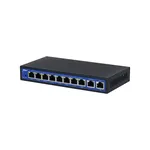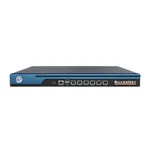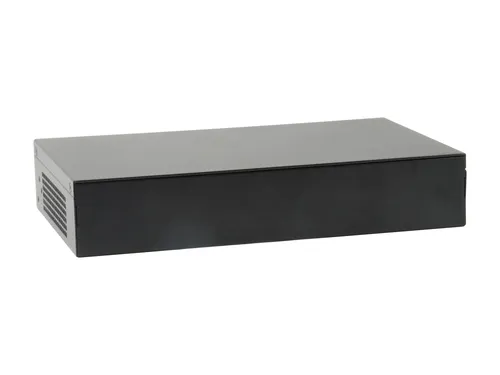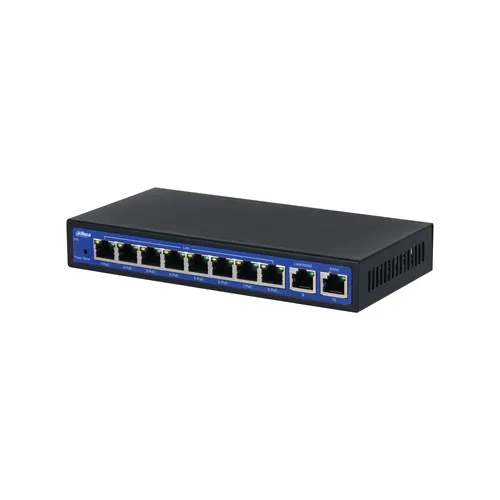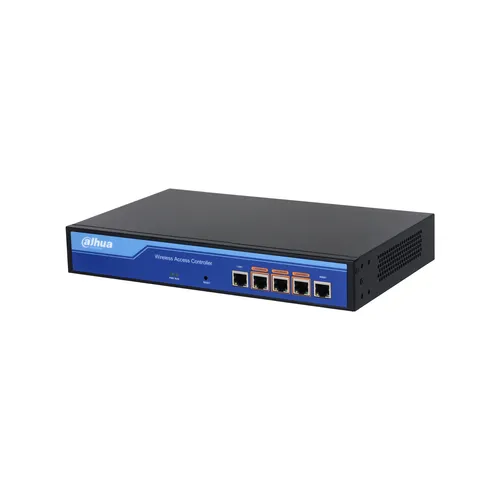


Dahua Technology EAC64 Wireless Access Controller
Specifications
Design
Design
| Product colour |
Black, Blue
|
|---|---|
| LED indicators |
Yes
60% have it
|
| International Protection (IP) code |
IP20
|
Features
Features
| Mean time between failures (MTBF) |
40000 h
|
|---|
Performance
Performance
| Control display unit |
No
5% do not have it
|
|---|---|
| Built-in processor |
Yes
95% have it
|
| Processor frequency |
880
MHz
76% better than others
|
| Number of processors installed |
1
|
| Internal memory |
256
MB
52% better than others
|
| Flash memory |
16
MB
68% better than others
|
Data transmission
Data transmission
| Static route |
Yes
74% have it
|
|---|
Protocols
Protocols
| Routing protocols |
IP
|
|---|---|
| DHCP server |
Yes
64% have it
|
| DHCP client |
Yes
95% have it
|
Network
Network
| Ethernet LAN data rates |
10,100,1000 Mbit/s
|
|---|---|
| Forwarding rate |
500 Mpps
|
| Networking standards |
IEEE 802.11a, IEEE 802.11ac, IEEE 802.11ax, IEEE 802.11b, IEEE 802.11g, IEEE 802.11h
|
| Flow control support |
Yes
84% have it
|
| Load balancing |
Yes
74% have it
|
| Dynamic DNS (DDNS) |
Yes
77% have it
|
| Congestion avoidance & management |
Yes
92% have it
|
| Firewall throughput |
500 Mbit/s
|
| Sessions per second |
128
74% better than others
|
| PPTP/L2TP VPN tunnels (max) |
128
60% better than others
|
| VPN support |
L2TP VPN
PPTP VPN
|
Security
Security
| Access Control List (ACL) |
Yes
55% have it
|
|---|---|
| Security algorithms |
EAP
|
| ICMP attack prevention |
Yes
95% have it
|
| Firewall security |
Yes
95% have it
|
| Network address translation (NAT) |
Yes
65% have it
|
Ports & interfaces
Ports & interfaces
| Ethernet LAN (RJ-45) ports |
5
|
|---|---|
| WAN connection |
Ethernet (RJ-45)
|
Management features
Management features
| Number of managed Wi-Fi Access Points (max) |
64
64% better than others
|
|---|---|
| Web-based management |
Yes
95% have it
|
| Quality of Service (QoS) support |
Yes
69% have it
|
| Reset button |
Yes
83% have it
|
| Syslog |
Yes
66% have it
|
| Concurrent SSL/VPN connections (maximum) |
200000
47% better than others
|
| Maximum number of virtual gateways |
100
80% better than others
|
| Traffic shaping |
Yes
57% have it
|
Power
Power
| Power consumption (typical) |
0.96
W
32% better than others
|
|---|---|
| Power consumption (max) |
12
W
16% better than others
|
| Input voltage |
100 - 240 V
|
| Input frequency |
50/60 Hz
|
| Input current |
2
A
21% better than others
|
| Power over Ethernet (PoE) |
No
25% do not have it
|
Weight & dimensions
Weight & dimensions
| Width |
180
mm
93% better than others
|
|---|---|
| Depth |
294
mm
25% better than others
|
| Height |
44
mm
50% better than others
|
| Weight |
1.42
kg
53% better than others
|
Packaging data
Packaging data
| Package width |
241
mm
62% better than others
|
|---|---|
| Package depth |
325
mm
59% better than others
|
| Package height |
81
mm
19% better than others
|
| Package weight |
1.86
kg
73% better than others
|
Operational conditions
Operational conditions
| Operating temperature (T-T) |
-20 - 55 °C
|
|---|---|
| Storage temperature (T-T) |
-40 - 70 °C
|
| Operating relative humidity (H-H) |
5 - 95%
|
| Storage relative humidity (H-H) |
5 - 95%
|
Sustainability
Sustainability
| Sustainability compliance |
Yes
70% have it
|
|---|
Certificates
Certificates
| Compliance certificates |
CE, Federal Communications Commission (FCC)
|
|---|
Disclaimer: Information on this page may need review. If you notice any discrepancies, please report them

The Dahua Technology EAC64 emerges as a robust wireless access controller designed to streamline the management and deployment of wireless networks in enterprise environments. Its core function lies in centralizing control over multiple Access Points (APs), simplifying configuration, monitoring, and troubleshooting. This is particularly crucial for businesses requiring consistent, high-performance Wi-Fi coverage across various locations, such as offices, retail spaces, or hospitality venues. The EAC64 aims to provide a scalable and efficient solution for network administrators seeking to maintain optimal wireless performance without the complexity of individual AP management.
Leveraging Dahua's expertise in security and network infrastructure, the EAC64 is engineered to support a significant number of APs, making it suitable for growing organizations. Its comprehensive feature set likely includes advanced security protocols to protect the wireless network from unauthorized access and threats, alongside quality of service (QoS) mechanisms to prioritize critical traffic. This focus on centralized management, scalability, and security positions the EAC64 as a compelling option for businesses looking to enhance their wireless network infrastructure with a professional-grade controller.
Key Features and Market Positioning
While specific technical specifications beyond its role as an access controller are not detailed here, the EAC64's value proposition is rooted in its ability to manage a fleet of Dahua APs. This implies features such as zero-touch provisioning, firmware updates pushed centrally, and real-time network status monitoring. For IT departments, this translates to reduced operational overhead and quicker resolution of network issues. In a market crowded with network management solutions, Dahua's offering likely appeals to existing Dahua ecosystem users or those seeking a cost-effective, yet feature-rich, centralized wireless management solution. The emphasis on integration within a broader security and surveillance framework, typical of Dahua products, could also be a significant differentiator.
Pros & Cons
Pros
What we love about this product
- Centralized Management: Enables unified control and configuration of multiple Dahua Access Points, simplifying network administration.
- Scalability: Designed to support a substantial number of APs, accommodating growing network demands.
- Enhanced Security: Likely incorporates robust security features for protecting wireless networks against unauthorized access and cyber threats.
- Simplified Deployment: Facilitates easier setup and maintenance of wireless networks, potentially through features like zero-touch provisioning.
Cons
Points to consider before buying
- Ecosystem Dependency: Primarily designed to manage Dahua Access Points, potentially limiting compatibility with third-party hardware.
- Feature Set Specificity: Detailed technical specifications beyond its controller function are not provided, making direct performance comparisons challenging without further data.
- Learning Curve: Advanced features may require a period of familiarization for network administrators not previously experienced with Dahua's management interface.