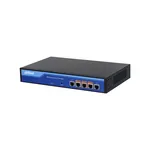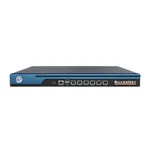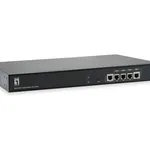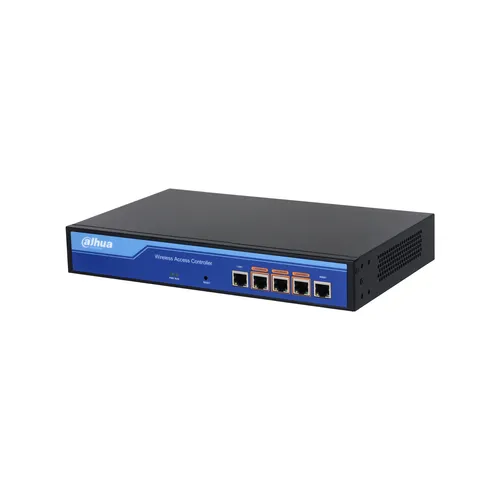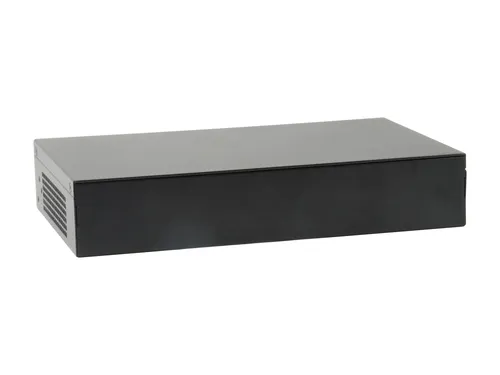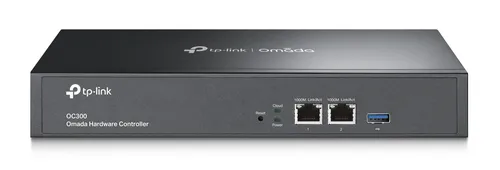


TP-Link Omada OC300 Hardware Controller
Specifications
Design
Design
| Product colour |
Black
|
|---|---|
| Rack capacity |
1U
|
| LED indicators |
Yes
83% have it
|
Performance
Performance
| Control display unit |
No
19% do not have it
|
|---|---|
| Built-in processor |
Yes
58% have it
|
| Processor manufacturer |
ARM
|
| Processor family |
ARM Cortex
|
| Number of processors installed |
1
|
| Internal memory |
2000
MB
81% better than others
|
| Internal memory type |
DDR4
|
| Flash memory |
2
MB
89% better than others
|
Protocols
Protocols
| Supported protocols |
Routing/NAT/Session Limit/Bandwidth Control
VPN (IPSec/L2TP/PPTP/OpenVPN)
RADIUS (Authentication/MAC Auth/Accounting)
802.1x
|
|---|
Network
Network
| Ethernet LAN data rates |
10,100,1000 Mbit/s
|
|---|---|
| VPN support |
VPN (IPSec/L2TP/PPTP/OpenVPN)
|
Security
Security
| Access Control List (ACL) |
Yes
94% have it
|
|---|---|
| MAC address filtering |
Yes
93% have it
|
| Security algorithms |
SNMP, SSH
|
| Network address translation (NAT) |
Yes
58% have it
|
Ports & interfaces
Ports & interfaces
| USB 3.2 Gen 1 (3.1 Gen 1) Type-A ports quantity |
1
|
|---|---|
| Ethernet LAN (RJ-45) ports |
2
|
Management features
Management features
| Web-based management |
Yes
76% have it
|
|---|---|
| Syslog |
Yes
63% have it
|
| Traffic statistics |
Yes
58% have it
|
Power
Power
| Power consumption (typical) |
9
W
53% better than others
|
|---|---|
| Power consumption (max) |
14.8
W
78% better than others
|
| Input voltage |
100 - 240 V
|
| Input frequency |
50/60 Hz
|
Weight & dimensions
Weight & dimensions
| Width |
294
mm
42% better than others
|
|---|---|
| Depth |
180
mm
92% better than others
|
| Height |
44
mm
52% better than others
|
Packaging data
Packaging data
| Package width |
250
mm
62% better than others
|
|---|---|
| Package depth |
400
mm
58% better than others
|
| Package height |
80
mm
40% better than others
|
| Package weight |
1.91
kg
36% better than others
|
Packaging content
Packaging content
| Cables included |
LAN (RJ-45)
|
|---|---|
| Quick installation guide |
Yes
95% have it
|
Operational conditions
Operational conditions
| Operating temperature (T-T) |
0 - 50 °C
|
|---|---|
| Storage temperature (T-T) |
-40 - 70 °C
|
| Operating relative humidity (H-H) |
10 - 90%
|
| Storage relative humidity (H-H) |
5 - 90%
|
Certificates
Certificates
| Certification |
CE, FCC, RoHS
|
|---|
Disclaimer: Information on this page may need review. If you notice any discrepancies, please report them

The TP-Link Omada OC300 Hardware Controller represents a significant step forward for small to medium-sized businesses (SMBs) and enterprise edge deployments seeking centralized, robust network management. Designed to streamline the deployment and administration of Omada access points, switches, and gateways, the OC300 offers a dedicated hardware solution that bypasses the limitations of software-based controllers, ensuring consistent performance and reliability. Its compact form factor and comprehensive feature set make it an ideal choice for organizations that require sophisticated control over their network infrastructure without the complexity often associated with enterprise-grade solutions.
Leveraging the power of the Omada SDN (Software Defined Networking) platform, the OC300 provides a unified interface for managing diverse network devices. This centralized approach simplifies configuration, monitoring, and troubleshooting, allowing IT professionals to maintain optimal network health and security. The controller's ability to support a substantial number of Omada devices (up to 200) and its embedded management capabilities, including local storage for configuration backups and device logs, underscore its suitability for growing businesses. The integration of features like zero-touch provisioning and cloud access further enhances its value proposition, offering both flexibility and powerful control.
Pros & Cons
Pros
What we love about this product
- Centralized Management: Enables unified control and monitoring of up to 200 Omada devices, simplifying network administration.
- Dedicated Hardware Solution: Offers superior reliability and performance compared to software-based controllers, ensuring consistent network operation.
- Rich Feature Set: Supports Omada SDN features including zero-touch provisioning, advanced routing, and comprehensive security policies.
- Local Storage: Includes embedded storage for configuration backups and device logs, enhancing data security and recovery options.
- Cloud Access: Provides convenient remote management capabilities via the Omada cloud, allowing for anytime, anywhere network oversight.
Cons
Points to consider before buying
- Limited to Omada Ecosystem: Functionality is restricted to TP-Link Omada branded networking hardware.
- No Integrated PoE Ports: Requires separate power injectors or PoE switches for powered devices, adding to infrastructure complexity.
- No Onboard Wireless Radio: Cannot act as an access point itself, necessitating separate AP deployments.