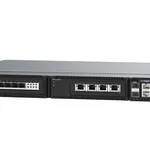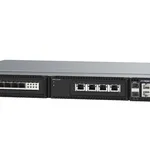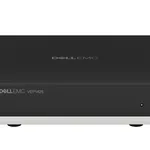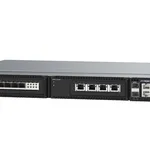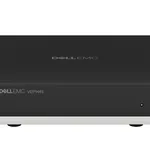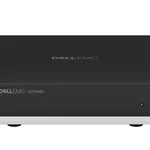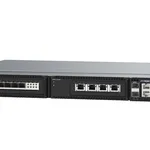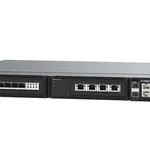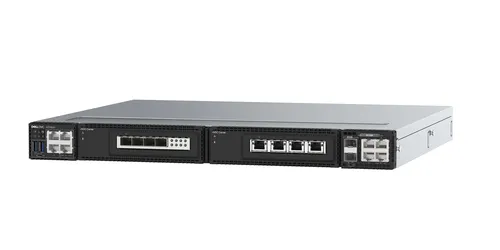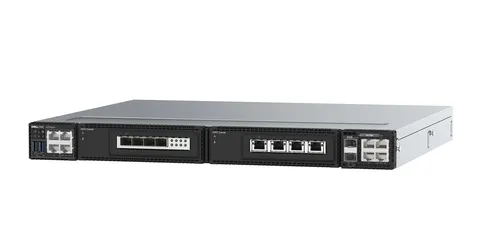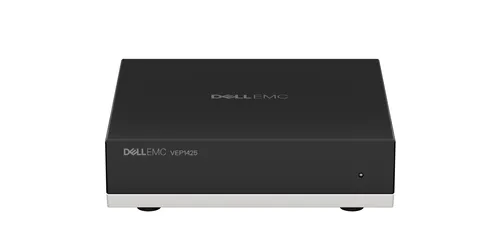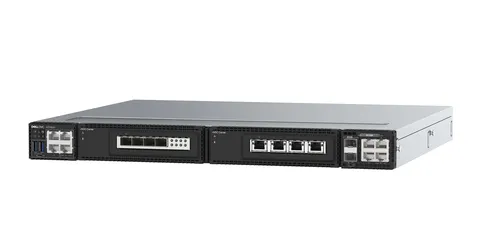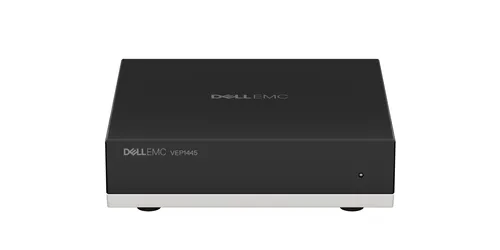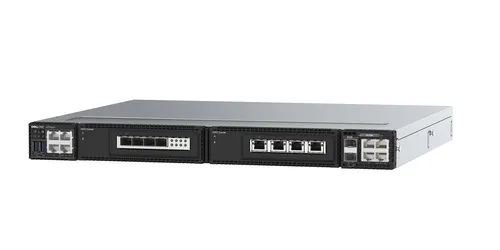


Dell VEP4600 Edge Computing Platform
Specifications
Design
Design
| Chassis type |
Rack-mounted
|
|---|---|
| Rack capacity |
1U
|
| Product colour |
Black, Grey
|
Performance
Performance
| Processor manufacturer |
Intel
|
|---|---|
| Processor family |
Intel® Xeon® D
|
| Processor cores |
16
57% better than others
|
| Internal memory |
32
GB
51% better than others
|
| Maximum internal memory |
128
GB
94% better than others
|
| Storage drive capacity |
240
GB
35% better than others
|
| Storage media |
SSD
|
| SSD form factor |
M.2
|
| Maximum storage capacity |
1.92
TB
42% better than others
|
Network
Network
| Wi-Fi |
No
18% do not have it
|
|---|---|
| Ethernet LAN interface type |
10 Gigabit Ethernet
|
| Ethernet LAN data rates |
10,100,1000 Mbit/s
|
| Copper ethernet cabling technology |
10BASE-T, 100BASE-T, 1000BASE-T
|
| Management protocols |
SNMPv3
|
Ports & interfaces
Ports & interfaces
| Ethernet LAN (RJ-45) ports |
6
|
|---|---|
| 10G Ethernet ports quantity |
2
|
| IPMI LAN (RJ-45) port |
Yes
73% have it
|
| SFP+ module slots quantity |
2
|
| USB 3.2 Gen 1 (3.1 Gen 1) Type-A ports quantity |
2
|
Power
Power
| AC input voltage |
100 - 240 V
|
|---|---|
| AC input frequency |
50 - 60 Hz
|
| Redundant power supply (RPS) support |
Yes
65% have it
|
| Number of redundant power supplies supported |
2
|
Operational conditions
Operational conditions
| Operating temperature (T-T) |
0 - 45 °C
|
|---|---|
| Storage temperature (T-T) |
-40 - 70 °C
|
| Operating relative humidity (H-H) |
5 - 85%
|
| Storage relative humidity (H-H) |
5 - 90%
|
Weight & dimensions
Weight & dimensions
| Width |
434
mm
75% better than others
|
|---|---|
| Depth |
381
mm
16% better than others
|
| Height |
43.7
mm
79% better than others
|
Disclaimer: Information on this page may need review. If you notice any discrepancies, please report them

The Dell VEP4600 represents a robust entry into the specialized field of edge computing platforms, designed for deployment in environments demanding high reliability and performance. This compact yet powerful system is engineered to process data closer to its source, reducing latency and enabling real-time analytics and control for critical applications. Its architecture is optimized for industrial IoT, retail analytics, and telecommunications infrastructure, where efficient data handling at the edge is paramount.
Leveraging a fanless design for enhanced durability and quiet operation, the VEP4600 is well-suited for challenging operational settings. The platform's core capabilities are bolstered by its support for a range of Intel processors, allowing for scalable performance tailored to specific workload requirements. Connectivity is a key strength, featuring multiple Ethernet ports for network segmentation and integration, alongside USB and serial interfaces for peripheral and legacy device support. This versatility ensures the VEP4600 can serve as a central hub for diverse edge deployments, facilitating data aggregation, pre-processing, and secure transmission to cloud or data center environments.
Pros & Cons
Pros
What we love about this product
- Compact and Fanless Design: Ideal for rugged, space-constrained, or noise-sensitive environments, enhancing reliability through reduced moving parts.
- Scalable Intel Processing: Offers flexibility to choose processors that match specific performance needs, from general-purpose tasks to demanding AI inference at the edge.
- Extensive Connectivity Options: Multiple Gigabit Ethernet ports, serial ports, and USB interfaces provide broad compatibility for diverse edge devices and network setups.
- Designed for Edge Workloads: Optimized for real-time data processing, analytics, and control, directly addressing the requirements of IoT and industrial applications.
Cons
Points to consider before buying
- Limited Integrated Graphics: While suitable for edge management, onboard graphics may not be sufficient for visually intensive edge AI inference tasks without a dedicated GPU.
- Potentially High Cost for Customization: Specific configurations and processor choices might lead to a significant investment, especially for smaller-scale deployments.
- No Integrated Wireless Options: Requires external modules for Wi-Fi or cellular connectivity, adding to complexity and potential points of failure.