



Comprehensive Guide to Professional & Fiber Scaling Technologies
Achieving truly professional and scalable network infrastructure requires a holistic approach, integrating various specialized components designed for high performance and reliability. Fiber optics serve as the foundation, providing the necessary bandwidth and reach, but it is the interplay of specific hardware that brings these capabilities to life and extends them across diverse operational landscapes.
Core Components for Advanced Networking
At the heart of any high-speed fiber network are the essential elements that enable light-based data transmission and conversion.
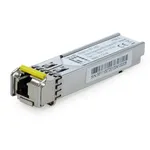
Network Transceiver Modules
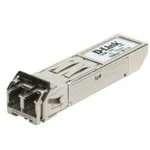
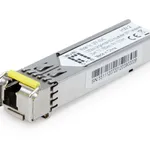
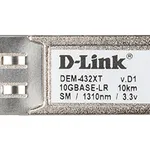
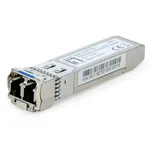
These compact, hot-pluggable devices are indispensable for converting electrical signals to optical signals and vice-versa, facilitating data transmission over fiber optic cables. Ranging from SFP, SFP+, QSFP28, to QSFP-DD, Network Transceiver Modules come in various form factors and speeds, supporting distances from a few meters to hundreds of kilometers. Their selection is critical for matching specific port types, link distances, and desired bandwidths in data centers, enterprise networks, and metropolitan area networks.
Optical Line Terminals (OLTs)
Integral to Passive Optical Networks (PONs), Optical Line Terminals (OLTs) act as the service provider endpoint, connecting the optical distribution network to the core network. OLTs manage traffic between the service provider and numerous Optical Network Units (ONUs) or Optical Network Terminals (ONTs) at the customer premises, enabling efficient, high-speed fiber-to-the-home/business (FTTH/FTTB) deployments. They are fundamental for modern fiber scaling, especially in delivering broadband services.
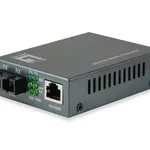
Network Media Converters
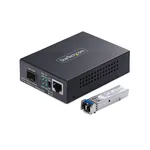
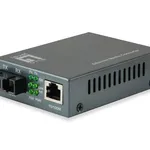
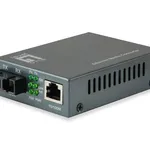
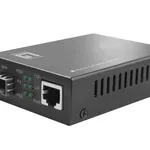
For scenarios requiring the integration of different network media types, such as converting fiber optic signals to copper Ethernet, Network Media Converters are crucial. They bridge the gap between dissimilar cabling types, extending network reach, interconnecting legacy equipment, or providing fiber connectivity to devices that only have copper ports. This flexibility is vital in complex network environments where complete fiber overhauls are not feasible or necessary.
Extending Network Capabilities and Ensuring Continuity
Beyond the core fiber components, professional scaling also involves devices that expand connectivity options, maintain operational readiness, and push computational power closer to the data source.
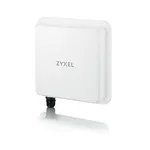
Cellular Network Devices
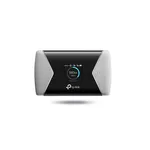
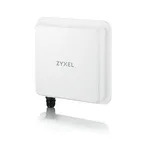
Incorporating Cellular Network Devices allows for robust primary or backup internet connectivity, especially in remote locations or during network outages where fixed-line infrastructure is unavailable or unreliable. These devices leverage 4G LTE or 5G technologies to provide high-speed wireless broadband, ensuring business continuity and expanding network reach for mobile and temporary deployments.
Edge Computing Platforms
The proliferation of IoT and real-time data processing necessitates Edge Computing Platforms. These platforms bring computational power and data storage closer to the source of data generation, reducing latency, conserving bandwidth, and enabling faster decision-making. Fiber infrastructure is often paramount in connecting these distributed edge nodes to central clouds or other edge locations, requiring robust and scalable networking solutions.
Network Equipment Spare Parts
Ensuring maximum uptime and operational efficiency in professional network environments necessitates a well-managed inventory of Network Equipment Spare Parts. Having readily available components like power supplies, fan trays, or interface cards minimizes downtime in the event of hardware failure, supporting continuous operation and protecting against costly service interruptions. This proactive approach is a cornerstone of professional network management.
Touch Panel Interfaces
For localized control, monitoring, and human-machine interaction within complex network setups or industrial environments, Touch Panel Interfaces offer intuitive graphical user interfaces. These displays often provide real-time status updates, configuration options, and diagnostic tools for network devices, edge computing units, or environmental controls, simplifying on-site management and troubleshooting without requiring remote access or complex command-line interfaces.