

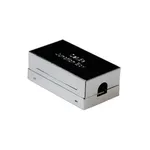
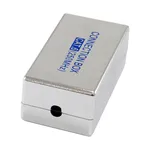
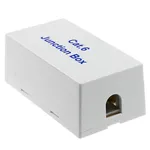
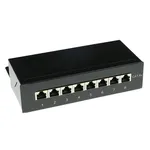
Comprehensive Technical Guide to Network Junction Box Implementation
Understanding Core Functions and Structural Integrity
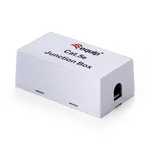
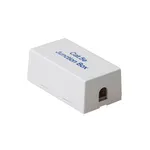
Network junction boxes are more than simple enclosures; they are engineered components vital for the long-term reliability and performance of data networks. Their primary function is to consolidate and protect cable termination points, shielding them from physical damage, environmental stressors, and electromagnetic interference. This protection is paramount in industrial settings, outdoor deployments, or any location where exposed cabling could compromise network uptime and data integrity.
The structural integrity of a junction box is determined by its design and the materials used. For indoor commercial environments, flame-retardant ABS or PVC plastics are common, offering good insulation and impact resistance. Outdoor or industrial applications demand more robust materials like polycarbonate (PC) for enhanced UV and impact resistance, or stainless steel for superior corrosion protection against harsh chemicals and extreme temperatures. These material choices directly influence the box's lifespan and its ability to maintain environmental sealing.
Environmental Resilience and Ingress Protection (IP/NEMA)
A critical specification for network junction boxes is their Ingress Protection (IP) rating, defined by IEC standard 60529. This two-digit code quantifies the level of protection against solids (dust) and liquids (water). For example, an IP65 rating signifies complete protection against dust ingress and protection against low-pressure water jets from any direction. For submersion or more aggressive washdown scenarios, IP67 or IP68 might be necessary. In North America, NEMA ratings often complement or supersede IP ratings, providing additional criteria for corrosion, ice formation, and hazardous locations. Careful selection based on the specific operational environment is crucial to prevent premature component failure due to environmental factors.
Connectivity Architecture and Cable Management
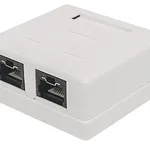
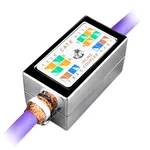
Effective network junction boxes must facilitate organized and secure connectivity. This involves provisions for various cable types, including copper (e.g., Cat5e, Cat6, Cat6a) and fiber optic cables. Internal mounting rails, DIN rails, or dedicated slots for keystone jacks, fiber adapters, or splice trays are essential. The design must accommodate proper cable bend radius to avoid signal attenuation and ensure compliance with TIA/EIA standards. Furthermore, cable entry and exit points, often achieved via cable glands or knockouts, must provide secure strain relief to prevent cables from being pulled out and maintain the box's environmental seal. Modularity in design allows for future expansion or reconfigurations, minimizing downtime and upgrade costs.
Grounding, Shielding, and Electromagnetic Compatibility
In networks utilizing shielded twisted pair (STP) cables, or in environments with high electromagnetic interference (EMI), proper grounding of the junction box is non-negotiable. Metal junction boxes typically incorporate a grounding stud or bar, which must be connected to the building's electrical ground system to effectively dissipate induced currents and protect against EMI/RFI. Even plastic boxes may have internal metallic components for shielding that require grounding. Neglecting proper grounding can lead to common-mode noise, data corruption, and potential damage to connected equipment. The box itself can act as a Faraday cage, enhancing overall electromagnetic compatibility when correctly installed and grounded.
Installation Best Practices and Maintenance Considerations
Installation ease and future maintainability are key practical considerations. Junction boxes should offer straightforward mounting options, whether surface-mount to walls, pole-mount, or flush-mount. Internal space should be ample enough to allow technicians comfortable access for termination, testing, and troubleshooting without excessive cable congestion. Clear labeling provisions for individual ports and circuits are vital for documentation and efficient fault isolation. Selecting boxes with durable, easily accessible latches or screw-down covers simplifies maintenance. Considering these aspects during the planning phase ensures a robust, scalable, and manageable network infrastructure over its entire operational lifecycle.