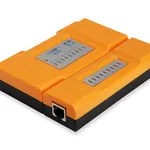
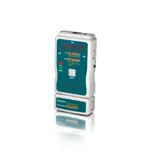
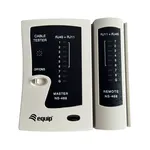
In the intricate world of network infrastructure, reliable cable testing is not merely a convenience; it's a fundamental necessity. The Equip Cable Tester emerges as a dedicated tool for network professionals and IT technicians, aiming to streamline the often complex process of verifying cable integrity. Its design focuses on delivering essential diagnostic capabilities without unnecessary complexity, making it an accessible yet effective solution for a range of common networking challenges. Whether you're setting up a new network, troubleshooting intermittent connectivity issues, or performing routine maintenance, a dependable cable tester can save significant time and prevent costly errors.
This device is engineered to identify open circuits, shorts, crossed pairs, and other common wiring faults in standard network cabling. By providing clear indicators for these issues, it allows technicians to quickly pinpoint problems and implement corrective actions. The emphasis on core functionality suggests a practical approach to cable verification, suitable for environments where rapid and accurate fault detection is paramount. Understanding its specifications and intended use case is key to appreciating its value proposition within the competitive landscape of network diagnostic tools.
Key Features and Functionality
The Equip Cable Tester is built around the core requirement of testing common network cable types, primarily focusing on RJ45 connectors used in Ethernet networks. Its primary function is to perform continuity tests, ensuring that each conductor within the cable is correctly connected from end to end. This includes the detection of:
- Open Circuits: Where a conductor is broken and no signal can pass.
- Short Circuits: Where two or more conductors are unintentionally connected.
- Miswires/Crossed Pairs: When conductors are connected to the wrong pins, leading to signal degradation or complete failure.
The tester typically operates by sending a signal through one end of the cable and detecting its passage and pin assignment at the other. This process is usually visualized through a series of LEDs, with each LED corresponding to a specific pin on the connector. A sequential lighting pattern often indicates a correctly wired cable, while deviations from this pattern highlight the specific fault. This straightforward diagnostic approach makes it easy for users to interpret test results quickly.
Market Positioning and Value
Within the IT hardware market, cable testers range from basic continuity checkers to sophisticated network analyzers. The Equip Cable Tester appears to position itself in the essential tools segment, offering robust functionality for standard cable verification without the advanced features, and associated costs, of higher-end devices. This makes it an attractive option for small to medium-sized businesses, home users setting up their own networks, or field technicians who require a reliable tool for day-to-day cable diagnostics. Its value lies in its focused utility and presumed ease of use, addressing the most frequent cabling problems encountered in network installations.