

-
-
- External Hard Drives
- SSDs
- Optical Drive
- USB Flash Drives
- Memory Cards
- Network Attached Storage (NAS)
- Floppy Drives
- Media Duplicators
- Storage Device Parts
- Backup Storage Devices
- Storage Backup Batteries
- USB Flash Drive Cases
- Memory Card Cases
- Storage Drive Cases
- Storage Drive Docking Stations
- Personal Cloud Storage
- Card Readers
- Disk Arrays
-
-
- Compare Electronics
- Blog Electronics
- Wiki Electronics
- Brands
- News
- Versus Wizard
- Electronics
- Modems & Network Equipment
- UPS & Power
- PoE Adapters Brand SilverNet
PoE Adapters Brand SilverNet
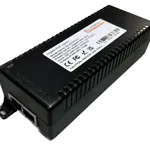
Specifications, pros & cons, and live price list of 1 PoE Adapters models from SilverNet.
-
Product colourBlack
-
Weight185 g
-
Manual-
-
Ethernet interface typeGigabit Ethernet
-
Ethernet LAN (RJ-45) ports2
-
Power consumption (max)-
In the rapidly evolving landscape of network infrastructure, reliable and high-performance Power over Ethernet (PoE) solutions are paramount. The SilverNet 48G PoE+ Injector emerges as a robust contender, designed to deliver consistent power and data connectivity to a wide array of network devices. This injector is engineered to meet the demands of modern applications, from powering advanced IP cameras and wireless access points to facilitating VoIP phones and other PoE-enabled equipment. Its adherence to the IEEE 802.3at (PoE+) and 802.3af (PoE) standards ensures broad compatibility and efficient power delivery, making it a versatile choice for both enterprise-level deployments and sophisticated home networks.
The core strength of the SilverNet 48G lies in its ability to provide up to 60W of power per port, significantly exceeding the standard 30W offered by many PoE+ injectors. This higher power budget is crucial for devices with greater energy requirements, such as high-density Wi-Fi 6 access points or PTZ (Pan-Tilt-Zoom) cameras. Coupled with its Gigabit Ethernet support, the 48G ensures that data throughput is not compromised by the power delivery function, offering a seamless experience for bandwidth-intensive applications. The unit's design emphasizes ease of integration into existing network setups, providing a straightforward solution for upgrading power capabilities without necessitating a complete overhaul of network hardware.
Key Features and Performance Metrics
The SilverNet 48G distinguishes itself with its support for both 802.3at and 802.3af standards, allowing it to power both high-demand and legacy PoE devices. The 60W maximum power output per port is a significant advantage, offering substantial headroom for future-proofing network infrastructure. Gigabit Ethernet connectivity ensures that data speeds are maintained at 1000 Mbps, preventing bottlenecks that can occur with Fast Ethernet solutions. The injector's robust construction and adherence to industry standards suggest a focus on reliability and longevity, essential qualities for network components that operate continuously.