Network Transceiver Modules

Technical specifications, key pros & cons, and real-time price comparison of 10 Network Transceiver Modules models.
Filters
Brand
Price Range
Up to
User Rating
Sort by:
0.0
(1)
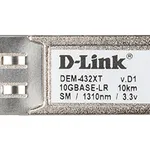
  • Product colour
    Silver
  • Weight
    21 g
  • Quantity per pack
    1 pc(s)
  • RX sensitivity
    -
  • Wavelength
    -
  • Power consumption (typical)
    1 W
0.0
(1)
0.0
(1)
  • Product colour
    Silver
  • Weight
    19 g
  • Quantity per pack
    1 pc(s)
  • RX sensitivity
    -25 dB
  • Wavelength
    -
  • Power consumption (typical)
    1 W
0.0
(1)
0.0
(1)
  • Product colour
    Silver
  • Weight
    20 g
  • Quantity per pack
    1 pc(s)
  • RX sensitivity
    -
  • Wavelength
    1310 nm
  • Power consumption (typical)
    0.8 W
0.0
(1)
0.0
(1)
  • Product colour
    Silver
  • Weight
    19 g
  • Quantity per pack
    1 pc(s)
  • RX sensitivity
    -25 dB
  • Wavelength
    -
  • Power consumption (typical)
    1 W
0.0
(1)
0.0
(1)
  • Product colour
    Gold, Metallic
  • Weight
    18 g
  • Quantity per pack
    -
  • RX sensitivity
    -
  • Wavelength
    850 nm
  • Power consumption (typical)
    -
0.0
(1)
0.0
(1)
  • Product colour
    Gold, Metallic
  • Weight
    19.5 g
  • Quantity per pack
    -
  • RX sensitivity
    -
  • Wavelength
    1310 nm
  • Power consumption (typical)
    -
0.0
(1)
0.0
(1)
  • Product colour
    Blue, Silver
  • Weight
    40 g
  • Quantity per pack
    1 pc(s)
  • RX sensitivity
    -
  • Wavelength
    1310 nm
  • Power consumption (typical)
    -
0.0
(1)
0.0
(1)
  • Product colour
    Metallic
  • Weight
    13.6 g
  • Quantity per pack
    -
  • RX sensitivity
    -
  • Wavelength
    1310 nm
  • Power consumption (typical)
    -
0.0
(1)
0.0
(1)
  • Product colour
    Silver
  • Weight
    19 g
  • Quantity per pack
    1 pc(s)
  • RX sensitivity
    -25 dB
  • Wavelength
    -
  • Power consumption (typical)
    1 W
0.0
(1)
0.0
(1)
  • Product colour
    Beige, Metallic
  • Weight
    40 g
  • Quantity per pack
    1 pc(s)
  • RX sensitivity
    -
  • Wavelength
    850 nm
  • Power consumption (typical)
    -
0.0
(1)

Advanced Concepts in Network Transceiver Modules

The performance and application of network transceiver modules are underpinned by sophisticated technological advancements and adherence to rigorous industry standards. Optical transceivers leverage various laser technologies, including **Vertical-Cavity Surface-Emitting Lasers (VCSELs)**, which are cost-effective and energy-efficient for short-reach multimode applications like SR and SR4. For longer single-mode distances, **Distributed Feedback (DFB) lasers** offer stable, narrow-linewidth emission, crucial for LR and ER modules. Very high-speed and long-distance requirements often utilize **Electro-absorption Modulated Lasers (EMLs)**, which provide superior dispersion tolerance. The advent of **Coherent Optics** has revolutionized ultra-long-haul and metro networks, employing complex modulation schemes such as QPSK and 16QAM combined with digital signal processing to compensate for fiber impairments, extending reach and increasing data rates significantly. Furthermore, **PAM4 (Pulse Amplitude Modulation 4-level)** encoding is a critical technique that doubles bandwidth efficiency by transmitting two bits per symbol, enabling higher speeds like 50G or 100G per lane over existing infrastructure, significantly reducing the need for more fiber strands. Interoperability is ensured through adherence to **Multi-Source Agreement (MSA)** standards, which define common form factors, electrical interfaces, and optical specifications for devices like SFP, QSFP+, QSFP28, OSFP, and QSFP-DD modules. These MSAs facilitate a competitive market and guarantee that modules from different vendors can function together. **IEEE 802.3 Ethernet Standards** are fundamental, dictating specific electrical and optical characteristics for various Ethernet speeds (e.g., 802.3ae for 10GbE, 802.3bm for 100GbE, 802.3bs for 200/400GbE), covering aspects such as link budgets, dispersion limits, and maximum transmission distances for different media. Additionally, standards from organizations like the **Optical Internetworking Forum (OIF)** contribute to advanced optical networking solutions, including coherent interfaces. Module durability and long-term reliability are paramount for network uptime. **Thermal management** is critical, as high-speed transceivers generate substantial heat; efficient heat dissipation through integrated heat sinks and proper system airflow is necessary to maintain operational parameters and extend lifespan. **Electrostatic Discharge (ESD) protection** is integrated to safeguard sensitive internal circuitry from static electricity during handling and operation. Reliability is quantified by **Mean Time Between Failures (MTBF)**, a statistical measure predicting the operational time between inherent failures, with higher values indicating greater product robustness. **Digital Diagnostic Monitoring (DDM/DOM)** is a standard feature providing continuous, real-time access to key operational parameters, including temperature, supply voltage, laser bias current, and transmitted/received optical power. This enables proactive network management, facilitating early detection of performance degradation or potential failures before they impact service, allowing for predictive maintenance and enhanced troubleshooting capabilities. For deployments in harsh environments, modules require enhanced **environmental robustness**, often adhering to industrial-grade specifications to withstand extreme temperatures, humidity, and vibration, ensuring reliable operation outside typical data center conditions.