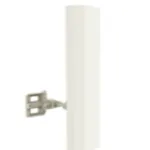
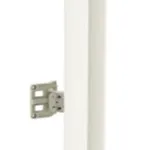
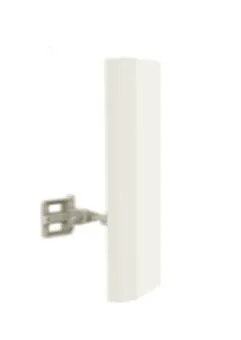
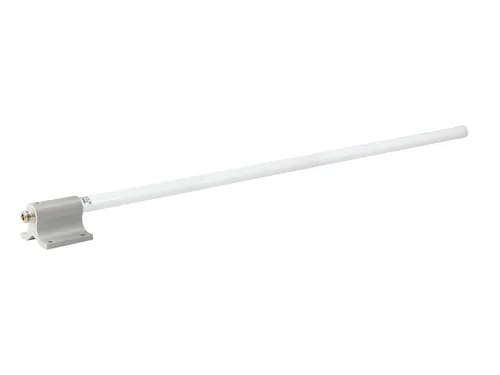
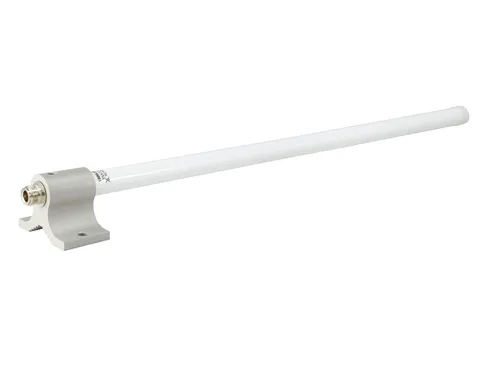
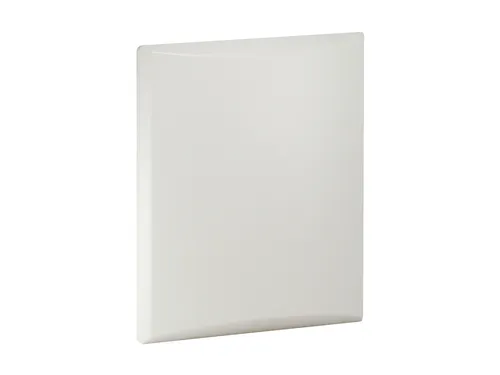
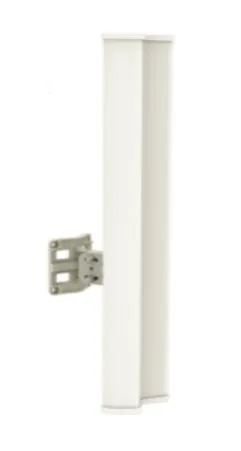
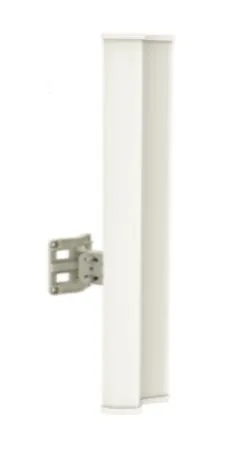
SilverNet OAN5812 Omnidirectional Antenna
Specifications
Performance
Performance
| Frequency band |
4.9 - 6 GHz
|
|---|---|
| Networking standards |
IEEE 802.11a, IEEE 802.11ac, IEEE 802.11b, IEEE 802.11g, IEEE 802.11n
|
| Horizontal beam width |
360°
|
| Vertical beam width |
7°
|
| Antenna gain level (max) |
12 dBi
|
Features
Features
| Antenna type |
Omni-directional antenna
|
|---|---|
| Antenna connector type |
N-type
|
| Connector gender |
Female
|
| Polarization |
Dual polarization
|
| Voltage Standing Wave Ratio (VSWR) |
1.5
|
| Product colour |
White
|
| Waterproof |
Yes
78% have it
|
| Survival wind speed |
241.4 km/h
|
| Wind load |
150
68% better than others
|
| Maximum operating distance |
1000
m
90% better than others
|
| Mounting |
Wall/Pole
|
| Purpose |
Outdoor
|
| Type of clamp |
U-bolt
|
Certificates
Certificates
| Compliance certificates |
RoHS
|
|---|---|
| Certification |
CE, RoHS
|
Weight & dimensions
Weight & dimensions
| Width |
110
mm
38% better than others
|
|---|---|
| Depth |
73
mm
43% better than others
|
| Height |
590
mm
36% better than others
|
| Weight |
1.8
kg
51% better than others
|
Packaging data
Packaging data
| Package width |
105
mm
24% better than others
|
|---|---|
| Package depth |
900
mm
55% better than others
|
| Package height |
810
mm
29% better than others
|
| Package weight |
1.54
kg
56% better than others
|
| Package type |
Box
|
Packaging content
Packaging content
| Quantity per pack |
1 pc(s)
|
|---|---|
| Mounting kit |
Yes
58% have it
|
| Mounting brackets included |
Yes
76% have it
|
| Bolts included |
Yes
58% have it
|
Logistics data
Logistics data
| UK Trade Tariff code |
85177100
41% better than others
|
|---|---|
| Country of origin |
United Kingdom
|
Disclaimer: Information on this page may need review. If you notice any discrepancies, please report them

The SilverNet OAN5812 represents a focused solution within the network antenna market, designed for users requiring broad, consistent signal coverage. As an omnidirectional antenna, its primary strength lies in its ability to broadcast and receive radio signals in all horizontal directions equally, making it an ideal choice for environments where precise directional pointing is impractical or unnecessary. This characteristic is crucial for extending the range of wireless networks, ensuring that devices connected to the network maintain a stable signal regardless of their position relative to the access point or router.
While the provided specifications for the OAN5812 are concise, its designation as an omnidirectional model from SilverNet suggests a commitment to reliable performance in standard wireless networking applications. Such antennas are commonly employed to enhance the reach of Wi-Fi networks in homes, offices, or public spaces, overcoming signal obstructions and dead zones. The design principles behind omnidirectional antennas focus on creating a donut-shaped radiation pattern, effectively covering a 360-degree horizontal area while minimizing signal strength directly above and below the antenna itself. This makes it particularly well-suited for ceiling or wall-mounted installations aiming for pervasive coverage.
Pros & Cons
Pros
What we love about this product
- Omnidirectional Coverage: Provides 360-degree horizontal signal dispersion, ideal for broad area network coverage without precise alignment.
- Network Extension: Designed to enhance the range and stability of existing wireless networks, improving connectivity for multiple devices.
- Brand Reputation: SilverNet is recognized in the networking hardware space, suggesting a level of quality and reliability in their product offerings.
Cons
Points to consider before buying
- Limited Directionality: Lacks the focused signal strength of directional antennas, which may be less suitable for point-to-point links or long-distance targeted communication.
- Potential for Interference: Broadcasting in all directions can sometimes lead to increased susceptibility to interference from multiple sources compared to a directional antenna.