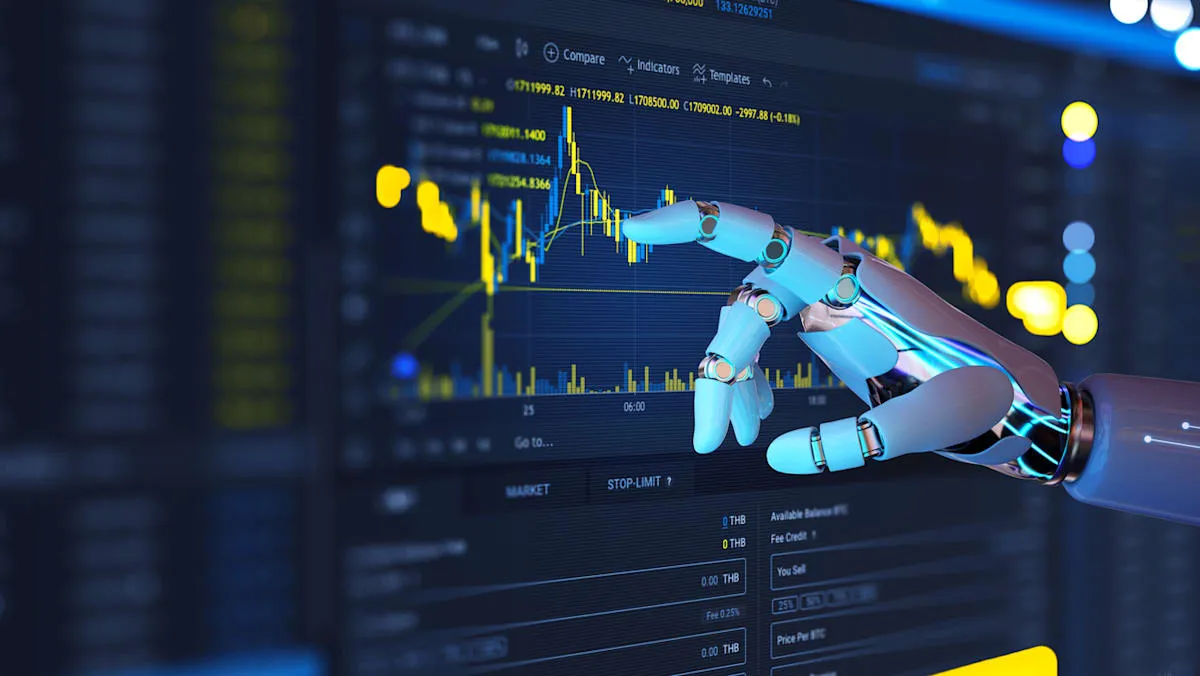
The rapid advancement of artificial intelligence has moved beyond theoretical discussions into practical, impactful applications, particularly in the financial sector. A recent personal account from a computational hydrologist highlights the alarming ease with which sophisticated AI trading platforms can be developed. Within a mere six days, using readily available AI coding tools like Anthropic’s Claude Code, a functional platform capable of connecting to multiple exchanges, ingesting diverse data streams, performing market analysis, estimating probabilities, and executing trades was constructed. This platform, which integrates complex functionalities such as risk management, portfolio tracking, and order routing, underscores a significant shift in technological accessibility and capability. What once required substantial capital and specialized teams can now be achieved by individuals with minimal prior trading experience, raising profound questions about market stability and the future of finance.
The implications of this accelerated development are already becoming evident. Data from prediction markets indicates a substantial presence of AI-driven accounts, with a significant percentage of active wallets reportedly operated by bots. This trend is not confined to niche markets; AI coding agents are projected to contribute a substantial portion of public code repositories, suggesting a widespread integration into various technological stacks. The reliance on a limited number of foundational AI models, such as Claude and OpenAI's GPT, for these trading agents means a potential for synchronized decision-making and amplified market reactions. The ease with which these powerful tools can be deployed by individuals, bypassing traditional regulatory frameworks, presents a critical challenge for financial institutions and regulators worldwide.
The Democratization of Algorithmic Trading
The accessibility of advanced AI tools has dramatically lowered the barrier to entry for creating sophisticated trading systems. Tools like Claude Code enable users to generate complex code through natural language prompts, drastically reducing development time and the need for deep programming expertise. This democratization means that individuals, regardless of their background in finance, can potentially build and deploy autonomous trading agents. The author’s personal experience, transitioning from hydrology to building a trading platform in under a week, exemplifies this paradigm shift. This contrasts sharply with the past, where developing similar capabilities demanded significant financial investment, specialized infrastructure, and highly skilled teams.
The widespread adoption of these AI coding agents is evidenced by industry surveys, with a significant majority of developers regularly utilizing them. Projections suggest that AI-generated code will constitute a substantial portion of public code contributions, indicating a fundamental change in software development workflows. In financial markets, this translates into an exponential increase in autonomous trading agents. This rapid proliferation, powered by a common set of foundational AI models, increases the likelihood of synchronized behavior across a multitude of agents, a phenomenon that could significantly impact market dynamics and stability.
Systemic Risks and 'Model Monocultures'
The proliferation of AI trading agents, particularly those based on a limited set of foundation models, poses significant systemic risks. Financial regulators and international bodies, including the Financial Stability Board and the Bank of England, have voiced concerns about the potential for increased market correlations and amplified stress events due to AI adoption. The concept of a 'model monoculture' — where a large number of agents rely on similar algorithms and data — could lead to herd behavior on an unprecedented scale. When thousands of agents, operating independently but drawing from the same AI models, reach similar conclusions simultaneously, their collective actions can create self-fulfilling prophecies, turning minor market fluctuations into severe crises.
The Financial Policy Committee of the Bank of England has noted that while systemic risk from advanced AI like generative or agentic AI has not yet fully materialized, it is poised to increase rapidly. A critical blind spot identified is the focus on regulated financial institutions, while the deployment of AI trading agents by individuals and unregulated entities remains largely unmonitored. These unregulated actors lack the oversight, circuit breakers, and capital requirements that govern traditional financial firms, making their collective behavior a significant unknown variable in market stability assessments.
The Unseen Influence of Unregulated Agents
Traditional financial oversight frameworks are ill-equipped to monitor the burgeoning population of autonomous AI trading agents developed by individuals. Regulatory bodies typically rely on surveys and reporting from established financial institutions, assuming that the key market participants are regulated entities with compliance obligations. However, the new wave of AI traders consists of software engineers, data scientists, and individuals from diverse backgrounds who operate outside these established frameworks. Their actions, while potentially impactful, are invisible to current monitoring systems, creating a significant gap in understanding and managing systemic risk.
The shift from high-frequency trading, which required substantial infrastructure and expertise, to accessible AI-driven trading highlights this change. Today, an individual can deploy a competitive autonomous trading system with relatively modest resources. This drastically lower barrier to entry means the number of AI agents in financial markets is set to grow exponentially. As these agents increasingly participate in markets like foreign exchange, equities, and credit, their collective, correlated actions, stemming from shared AI model architectures, will amplify market volatility and potentially lead to widespread instability.
Navigating the Future of AI in Finance
The scenario of an AI-driven sovereign funding crisis, triggered by thousands of agents reacting to ambiguous economic news in a synchronized manner, illustrates the potential consequences of this technological shift. Even a genuinely ambiguous economic event could be amplified into a full-blown crisis if AI agents, thinking alike, collectively downgrade risk assessments. This rapid, automated response can outpace the slower, deliberative processes of human regulators and central banks, leading to market dislocations that are not necessarily reflective of underlying economic fundamentals.
The current crisis dynamics differ from historical events like the 1997 Asian financial crisis or the 2010 European sovereign debt crisis, which were driven by slower-moving human herd behavior. Agentic AI herds operate at machine speed, leaving little room for intervention and creating a system with concentrated correlation risk that no single entity designed or governs. Adapting existing financial infrastructure and regulatory frameworks to manage AI-driven volatility is crucial.
Recommendations for Mitigation
Addressing the risks posed by autonomous AI trading agents requires a multi-faceted approach. Firstly, AI development companies should be mandated to monitor and disclose the extent of their models' use in autonomous financial trading. Their access to API call data provides unparalleled insight into the scale and behavior of these AI agents. Secondly, financial exchanges should implement correlation-aware circuit breakers, designed to detect and pause trading when order flow is excessively influenced by agents using similar underlying AI models, moving beyond simple price-based triggers.
Thirdly, a coordinated international framework for mandatory registration of all autonomous trading systems, irrespective of their capital deployed, is essential. Recognizing that even small-scale bots contribute to correlation risk is key. Finally, small, open economies should proactively build resilience by increasing reserves, securing emergency liquidity facilities, and developing contingency plans for market disconnections during AI-driven cascades. While global systemic reform is challenging, preparing for potential failures is a critical step. The author, drawing parallels to hydrological phenomena, warns that the current trends indicate a rising tide of AI influence in finance, with profound implications for global financial stability.
Impact Analysis
The democratization of AI-powered trading tools presents a significant inflection point for global financial markets. The ability for individuals, with minimal financial expertise, to deploy sophisticated autonomous trading agents capable of competing with institutional players fundamentally alters the market landscape. This shift introduces unprecedented systemic risks, primarily stemming from the potential for correlated behavior among AI agents trained on similar foundation models. Regulators face the challenge of adapting oversight mechanisms designed for human traders to the speed and scale of AI-driven activity. Without proactive measures, including enhanced AI model transparency, correlation-aware market safeguards, and international regulatory coordination, the increased reliance on these agents could lead to heightened volatility, amplified market crises, and a potential loss of human control over financial stability. The future trajectory points towards a greater prevalence of machine-vs-machine trading, necessitating a rapid evolution of financial infrastructure and governance to manage these emerging risks.