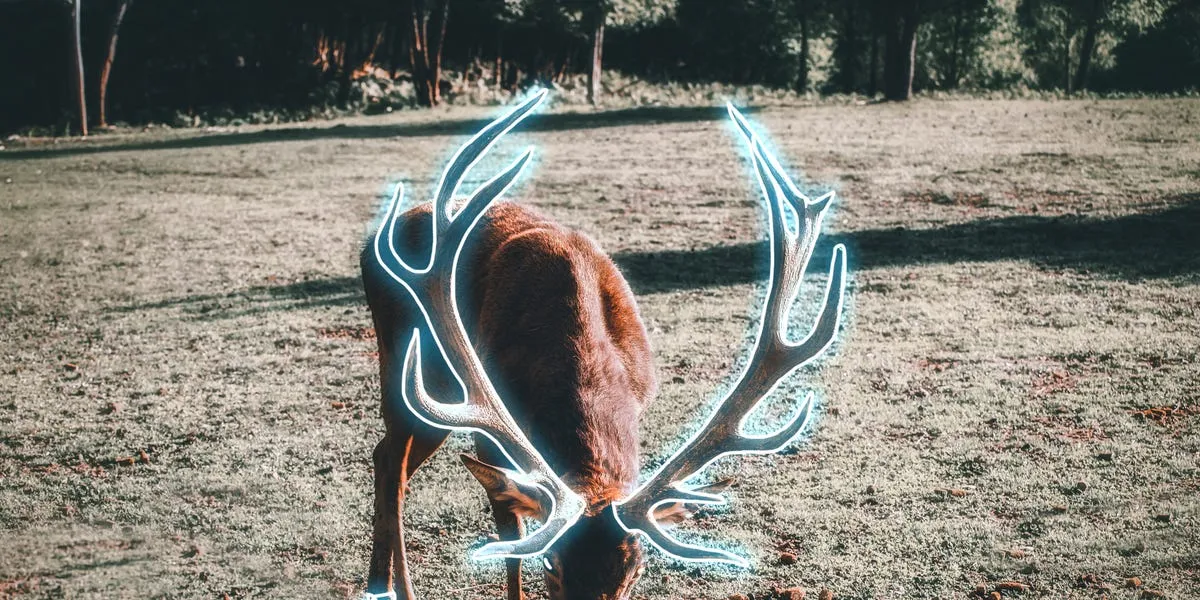
Human vision, limited to the narrow band of the visible spectrum (approximately 380 to 750 nanometers), perceives only a fraction of the electromagnetic radiation that exists. This perspective, however, is anthropocentric. Many animal species possess visual capabilities that extend beyond our own, allowing them to perceive and interact with their environment in ways we can only imagine. The white-tailed deer (Odocoileus virginianus) is one such species, boasting eyes particularly sensitive to blue light, which grants them vision into the ultraviolet (UV) part of the spectrum—a range entirely invisible to humans.
This enhanced visual acuity plays a crucial role in the deer's reproductive behaviors. A recent study conducted by researchers at the University of Georgia (UGA) has illuminated how UV light serves as a communication channel for white-tailed deer, particularly during the crucial breeding season. By examining various 'signposts' left by deer, the study found that these markings possess photoluminescent properties, effectively acting as visual beacons in their environment.
UV Communication in White-Tailed Deer
The research team meticulously analyzed 146 distinct signposts, comprising 109 antler rubs and 37 urine-marked scrapes, across an 800-acre area. Their investigation, published in the journal Ecology and Evolution, revealed that these markings exhibit a glow under UV light. This phenomenon, known as photoluminescence, is thought to attract other deer, creating a sophisticated communication network. These visual cues, combined with olfactory signals, form a complex 'communication hub' that is integral to deer social dynamics.
Gino D’Angelo, a co-author of the study, explained that when deer rub their antlers on trees, they deposit glandular secretions. Similarly, when they create scrapes, secretions from glands located between their toes are also left behind. These 'signatures,' as D’Angelo described them, are intended to be detected by both smell and sight, with the UV glow adding a significant visual dimension that was previously underestimated.

The Science of Photoluminescence in Deer Markings
While bioluminescence, the production of light through chemical reactions within an organism, is well-documented in species like anglerfish, photoluminescence is a different process. It requires an external light source, such as UV radiation from the sun, to interact with a substance. The substance absorbs the UV light and then re-emits it at a longer wavelength, pushing it into the visible spectrum. In the case of deer antler rubs, it is hypothesized that the photoluminescence arises from the interaction of forehead gland secretions with the tree's sap.
The UV glow observed on urine-marked scrapes is attributed to compounds within the deer's urine itself. Daniel DeRose-Broeckert, a graduate research associate at UGA’s Deer Lab and another co-author, highlighted that while the existence of such a glow had been speculated, this study was the first to directly connect it to deer communication. He emphasized that deer vision is vastly different from ours, with UV light becoming more dominant during the twilight hours of dawn and dusk when the sun's visible light is less intense.

Synergy of Senses: Vision and Olfaction
The significance of these UV markings extends beyond mere visual attraction. They are understood to work in concert with the potent olfactory cues deer leave behind. This dual sensory signaling—visual through the UV glow and chemical through glandular secretions and urine—provides potential mates with comprehensive information about an individual's breeding status, fitness, and identity. The combination of these sensory inputs creates a rich tapestry of communication that is largely imperceptible to humans.
This discovery underscores the complexity of animal sensory systems and their evolutionary adaptations. Understanding how different species perceive and interact with their environment, especially through sensory modalities beyond human capability, offers profound insights into the natural world. The UV communication system of white-tailed deer exemplifies how evolution can harness subtle environmental factors, like specific light wavelengths, to facilitate critical biological functions such as reproduction.

Impact Analysis
The findings on UV communication in white-tailed deer have broader implications for our understanding of animal behavior, ecology, and sensory biology. From an ecological perspective, it enhances our knowledge of inter-species communication and territorial marking, crucial for population dynamics and habitat management. For wildlife conservationists and researchers, this highlights the importance of considering species-specific sensory worlds when developing monitoring or interaction strategies.
Furthermore, this research opens avenues for exploring similar UV signaling in other animal species. It challenges the human-centric view of perception and emphasizes that what is invisible to us may be a vital part of another organism's reality. The study serves as a reminder of the vast, often hidden, complexities within the natural world and the ongoing need for scientific inquiry to reveal them.