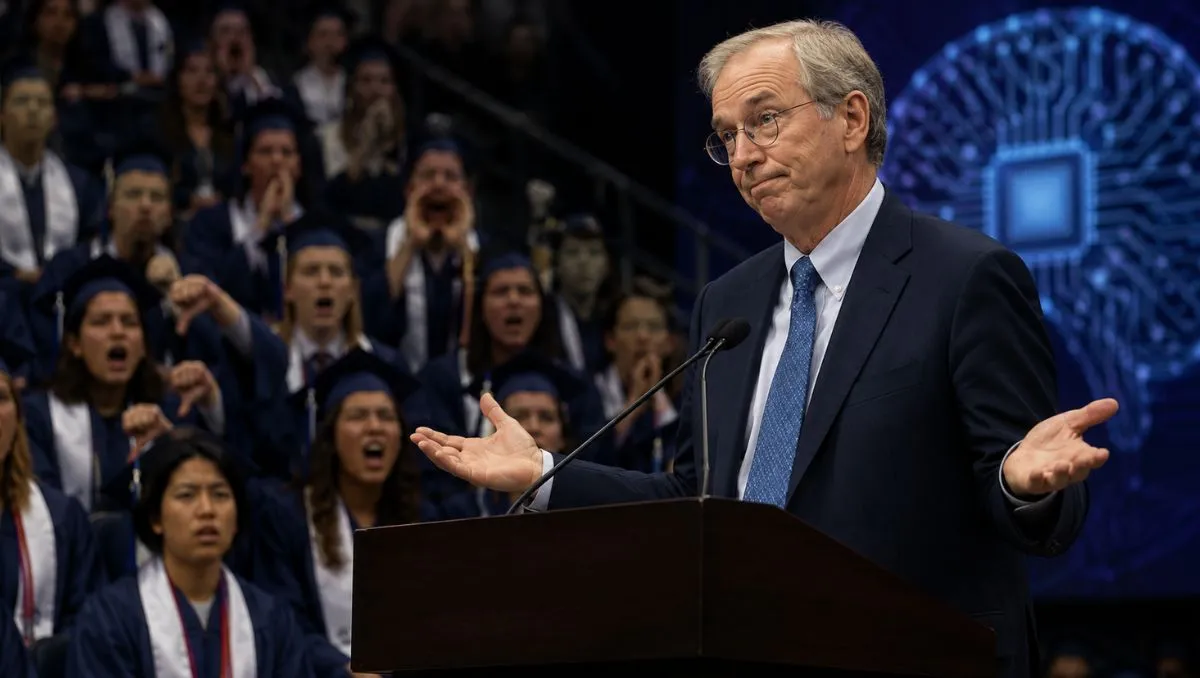
A recent commencement speech at the University of Arizona took a pointedly discordant turn when former Google CEO Eric Schmidt, invited to address the graduating class, was met with persistent boos from the audience whenever artificial intelligence was mentioned. Viral footage captured the crowd's audible displeasure, with jeers repeatedly disrupting Schmidt's remarks, as reported by Business Insider. This public display of dissent underscores a growing undercurrent of skepticism and apprehension towards AI, even as the technology sector vigorously champions its adoption and integration into various facets of life and industry.
The incident at the University of Arizona serves as a potent microcosm of broader societal anxieties surrounding AI's rapid advancement. Beyond the immediate concerns about job displacement, particularly for entry-level positions amidst widespread layoffs and increased automation, the boos directed at Schmidt highlight a palpable unease among younger demographics entering a volatile job market. This audience, comprised of graduates on the cusp of their professional journeys, clearly voiced a sentiment that many feel but may not have the platform to express so directly.
Widespread Public Apprehension Regarding AI's Societal Impact
The negative reception encountered by Eric Schmidt during his commencement address at the University of Arizona reflects a significant and growing public unease surrounding artificial intelligence. While Schmidt, a prominent figure in the tech industry, attempted to articulate the importance of AI and encourage students to actively participate in shaping its future, the audience's reaction suggested a deeply ingrained apprehension. This sentiment is particularly pronounced among younger individuals and recent graduates who are increasingly concerned about AI's potential to automate jobs, displace human workers, and fundamentally alter the employment landscape.
The repeated interruptions during the speech underscore a critical disconnect between the enthusiastic promotion of AI by industry leaders and the lived anxieties of those who may be most affected by its widespread implementation. Many students and emerging professionals fear that advanced AI systems could render their skills obsolete, exacerbating existing economic disparities. The aggressive push by tech companies towards AI adoption, often coupled with significant workforce reductions, has amplified these concerns, creating an atmosphere where discussions about AI are met with suspicion rather than optimism.
Navigating AI Integration Amidst Public Mistrust
Eric Schmidt, acknowledging the palpable anxiety in the auditorium, attempted to address the crowd's concerns directly. He conceded that the fear surrounding AI was understandable and implored the students to engage with the technology constructively, rather than outright rejecting it. His message aimed to reframe AI not as an inevitable force of disruption, but as a tool that can be guided and shaped by human input and ethical considerations. Schmidt’s plea for engagement sought to bridge the gap between technological advancement and public perception.
Despite Schmidt's efforts to placate the audience and steer the conversation toward proactive engagement, the boos persisted, demonstrating the depth of the students' apprehension. This persistent negative reaction forced Schmidt to pause multiple times, visibly affecting his delivery. The situation highlighted the profound challenge faced by technologists and policymakers in building public trust around AI. It suggests that mere assurances from industry leaders may not be sufficient to allay fears, necessitating more transparent dialogue and demonstrable efforts to mitigate potential negative societal consequences.
Broader Context and Allegations
While the focus of the viral clips and subsequent discussion centered on the audience's reaction to AI, reports from Business Insider and other outlets suggest that the protest against Schmidt may have been multifaceted. According to some accounts, certain student advocacy groups had encouraged attendees to express their dissent through turning their backs and booing, not solely in response to AI, but also in protest against sexual assault allegations previously made against Schmidt by a former girlfriend, Michelle Ritter. This alleged context adds a layer of complexity to the incident, indicating that the negative reception might have stemmed from a confluence of concerns, including ethical conduct and personal accountability, in addition to the technological anxieties.
Schmidt's legal team has reportedly denied these allegations, characterizing them as baseless and fabricated. News reports indicate that the legal proceedings related to these allegations have been directed toward arbitration. However, the potential for these additional controversies to have influenced the audience's reaction, or at least contributed to the overall atmosphere of dissent, cannot be entirely discounted when analyzing the full scope of the commencement ceremony's disruptions.
Impact Analysis
The public outcry against Eric Schmidt at the University of Arizona commencement speech serves as a critical indicator of the escalating societal concerns regarding artificial intelligence. This incident moves beyond a simple protest; it represents a vocalization of deep-seated fears about job security, economic equity, and the ethical trajectory of technological development. For AI developers, policymakers, and educators, this event underscores the urgent need for more robust public engagement strategies and clearer ethical frameworks. Failing to address these anxieties could lead to widespread resistance against AI adoption, potentially hindering innovation and its benefits while exacerbating social divisions.
Furthermore, the incident highlights the importance of transparency and accountability within the technology sector. When public figures associated with major tech companies face scrutiny, whether for their views on technology or past personal conduct, the public's response can be amplified. This emphasizes the need for continuous dialogue, not only about the capabilities of AI but also about the values and ethical principles guiding its creation and deployment. Building genuine trust requires demonstrating a commitment to societal well-being that extends beyond technological prowess.