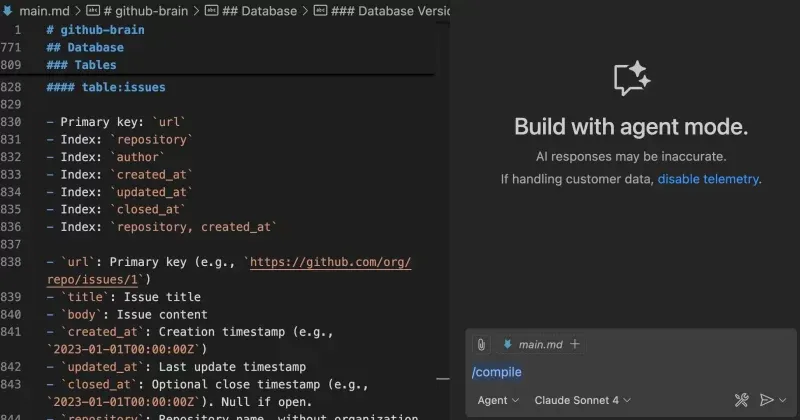
In a move that could fundamentally alter the landscape of software development, GitHub has introduced Spec Kit, an experimental open-source toolkit designed to bring structure and foresight to AI-assisted coding. This innovative tool champions a "spec-first" development methodology, compelling developers to meticulously define specifications, technical blueprints, and task breakdowns before any artificial intelligence agent begins to generate code. This approach directly combats the often unpredictable and error-prone nature of unguided AI code generation, aiming for more robust and predictable software outcomes.
Spec Kit is engineered to integrate seamlessly with a wide array of over 30 AI coding tools, including prominent agents like GitHub Copilot, Claude Code, and Gemini CLI. Its functionality is accessible through intuitive command-line interface (CLI) commands and simple slash commands, making it relatively easy for developers to adopt this new workflow into their existing development environments without a steep learning curve.
The Mechanics of Spec Kit's Spec-Driven Development
The core of Spec Kit's operation lies in its structured initialization process, typically initiated with a command such as `specify init`. This command sets up the foundational framework for project specifications. Developers are then guided to document project requirements with a high degree of granularity. The objective is to provide AI agents with sufficiently detailed instructions so that they can generate code predictably, minimizing the incidence of logical errors, architectural drift, and unintended consequences that frequently arise when AI models are given vague prompts.
This detailed specification process is crucial for ensuring that the AI-generated code aligns precisely with the intended functionality and design of the software. By externalizing these detailed plans, developers create a clear contract between human intent and AI execution, thereby enhancing the reliability and maintainability of the codebase. The toolkit aims to augment developer capabilities by providing a structured way to harness AI power responsibly.
Community Engagement and Iterative Development
GitHub has openly characterized Spec Kit as an experimental initiative, emphasizing its commitment to fostering a collaborative environment for exploring the future of AI in coding. Since its initial release on September 2, 2025, the project has undergone continuous development, marked by significant milestones such as version 0.9.5, which launched in early June 2026. This iteration reflects substantial input from the developer community, indicating a dynamic development cycle driven by user feedback and ongoing refinement.
The reception from the developer community has been varied. Supporters have lauded Spec Kit for introducing much-needed structure and predictability into AI-driven development workflows, leading to improved code quality and reduced debugging time. Conversely, some critics have raised concerns regarding the potential for increased token consumption, as feeding detailed specifications into AI models naturally leads to longer prompts and consequently, higher computational costs. Furthermore, there are discussions around the possibility of slower development cycles and the long-term challenges associated with maintaining projects structured under this spec-first paradigm.
Broader Implications Beyond Code Generation
Spec Kit is currently offered as a free and open-source tool, with no immediate plans for monetization, aligning with GitHub's ethos of supporting the open-source ecosystem. However, the economic implications of increased token consumption warrant careful observation. If spec-driven workflows prove to significantly inflate the compute costs associated with AI coding tools, this could substantially alter the economic calculus for teams and organizations, particularly those operating at a large scale or with tight budgets. 
The success and adoption of Spec Kit could encourage further innovation in developer tooling, pushing AI towards more disciplined and verifiable code generation. This could pave the way for more sophisticated AI assistants that not only write code but also adhere to strict architectural guidelines and compliance standards, fundamentally reshaping how software is developed and deployed in the coming years.
Impact Analysis
The introduction of Spec Kit by GitHub represents a significant step towards more disciplined and controllable AI-driven software development. By formalizing the process of specification before code generation, it addresses key challenges such as AI hallucination and architectural drift. For developers, this could mean more reliable AI assistance, though potentially at the cost of increased computational expenses and a need for more upfront planning. The long-term impact will likely depend on the balance between the efficiency gains from structured AI coding and the costs associated with this methodology. Organizations will need to weigh these factors to determine the suitability of spec-driven development for their specific needs and workflows.