

Technical Deep Dive into Halogen Lamp Operation and Applications
The Halogen Cycle: Enhancing Incandescent Technology
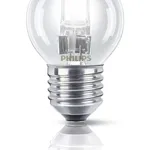
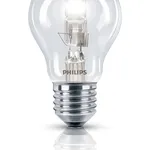
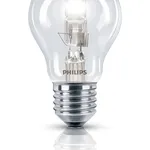
Halogen lamps represent a significant evolution of the incandescent light bulb, primarily distinguished by their use of a halogen gas within the bulb's envelope. The fundamental principle involves a tungsten filament heated to incandescence by an electric current. However, unlike traditional incandescent bulbs where evaporated tungsten atoms deposit on the inner surface of the glass, causing blackening and filament thinning, halogen lamps employ a regenerative chemical process known as the halogen cycle. This cycle begins when tungsten atoms, evaporated from the hot filament, combine with the halogen gas (typically iodine or bromine) to form a tungsten halide compound. Because the envelope is made of quartz, it can withstand much higher temperatures than standard glass. As the tungsten halide compound circulates within the hot bulb, it eventually encounters the extremely hot filament. At this high temperature, the tungsten halide dissociates, redepositing the tungsten back onto the filament and releasing the halogen gas to continue the cycle. This continuous redeposition significantly extends the filament's lifespan, maintains constant lumen output throughout the bulb's life, and allows the filament to operate at higher temperatures for increased luminous efficacy and a whiter light output.
Advantages of Halogen Lighting Systems
Despite the rise of LED technology, halogen lamps offer several distinct advantages that make them suitable for specific applications. Foremost among these is their exceptional Color Rendering Index (CRI), typically a perfect 100, meaning they reproduce colors with remarkable accuracy and vibrancy. This makes them ideal for retail display lighting, art galleries, and any setting where accurate color perception is paramount. Halogen bulbs also provide instant full brightness upon switching on, without any warm-up delay. Their compact size, particularly for capsule and reflector types, allows for versatile fixture designs and discreet lighting solutions. Furthermore, virtually all halogen lamps are fully dimmable with standard incandescent dimmers, offering seamless control over light intensity and mood without flicker or complex compatibility issues.
Operational Considerations and Types
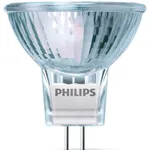
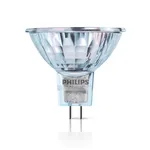
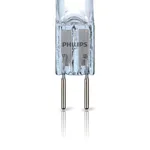
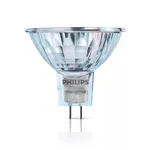
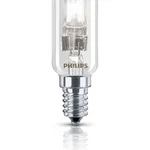
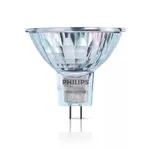
While offering significant benefits, halogen lamps do have specific operational considerations. Due to their high operating temperature, they generate considerable heat, necessitating careful handling and proper ventilation in fixtures. The quartz envelope is also sensitive to oils from human skin; touching the bulb with bare hands can leave residue that creates hot spots, potentially leading to premature failure. Different types of halogen lamps cater to various applications. Line voltage halogens, such as GU10, G9, and certain PAR lamps, operate directly on mains voltage (e.g., 120V or 230V). Low voltage halogens, like MR16 and AR111, operate on 12V or 24V and require an external transformer to step down the mains voltage. These low-voltage systems often allow for more compact reflectors and precise beam control. Capsule halogens are small, unfrosted bulbs often used in decorative fixtures, range hoods, and desk lamps.
Energy Efficiency and the Transition
In terms of energy efficiency, halogen lamps are considerably more efficient than traditional incandescents, offering up to 30% savings while producing the same light output. However, they are still significantly less efficient than modern LED lighting solutions, which can achieve efficiencies 5-10 times greater. This disparity, coupled with regulatory pushes towards more sustainable lighting, has led to the phasing out of many halogen lamp types in various regions globally. Despite this transition, their unique combination of superior color rendering, instant light, full dimmability, and precise beam control ensures that halogen technology maintains a niche in specialized lighting applications where these attributes are critical and cannot be fully replicated by current LED alternatives.