

Deep Dive: The Engineering Behind Frozen Treat Dispensing Systems
The Thermodynamics of Slushie Production
Refrigeration Cycle and Mix Management
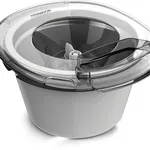
Slushie machines operate on the fundamental principles of a vapor-compression refrigeration cycle, identical to those found in commercial freezers, albeit optimized for specific slush-point temperatures. A hermetically sealed compressor pressurizes a gaseous refrigerant, which then flows to a condenser, typically air-cooled by a fan, where it dissipates heat and transitions into a high-pressure liquid. This liquid then passes through an expansion valve, undergoing a rapid pressure drop that causes a significant temperature reduction. The now cold, low-pressure liquid refrigerant enters the evaporator coil, which is either directly submerged within or tightly wrapped around the stainless steel slushie bowl. Here, it absorbs latent heat from the sugar-water mixture, causing the refrigerant to vaporize and simultaneously chilling the mixture to its specific freezing point. Concurrently, a continuously rotating auger or paddle system, driven by a dedicated motor, is paramount. Its primary function is to mechanically agitate the mixture, preventing the formation of solid, unmanageable ice blocks and instead fostering the growth of micro-crystals that define the homogeneous, semi-frozen slush consistency. The auger's design, material (often food-grade polycarbonate), and precise rotational speed directly influence the final product's texture, ranging from fine granules to slightly coarser ice crystals. Sophisticated temperature sensors and micro-controller-based algorithms meticulously manage the mixture's viscosity, dynamically adjusting the refrigeration cycle to prevent either over-freezing, which can damage the auger, or under-freezing, which results in a watery product. Modern units often incorporate digital displays for precise temperature control and diagnostic readouts.
Engineering Precision in Snow Cone Machines
Blade Technology and Ice Processing
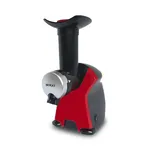
Snow cone machines are fundamentally precision-engineered ice shredders, designed to create a specific, absorbent ice texture rather than simply crushing ice. The core component is a set of hardened, food-grade stainless steel blades, typically featuring multiple cutting edges, mounted within a robust shaving head. The motor's rotational speed, which can range from 1000 to over 2000 RPM in commercial-grade units, is critical for achieving the desired ice consistency. Higher RPMs, coupled with sharp blades, yield finer, fluffier snow. Commercial units frequently employ powerful direct-drive motors, which minimize power loss and enhance durability and efficiency under continuous, heavy-duty operation. The blades are meticulously engineered to precisely shave blocks or cubes of ice, creating fine, aerated flakes that readily absorb flavored syrups, a critical differentiator from the dense, crunchy texture of conventionally crushed ice. The hopper design is equally crucial, engineered to ensure a consistent, safe feed of ice to the blades while often incorporating essential safety interlocks that immediately halt operation if the lid is opened, protecting the operator. The overall efficiency of the ice-shaving process is significantly influenced by factors such as blade angle, the maintained sharpness of the cutting edges, and the stability of the ice block feed, all contributing to minimal ice waste and optimal flake production. Integrated drainage systems, comprising durable drip trays and strategically placed runoff channels, are essential for managing melted ice and maintaining hygienic operating conditions, especially in high-volume commercial settings. Construction materials, usually impact-resistant plastics and stainless steel, are selected for longevity and ease of sanitation.