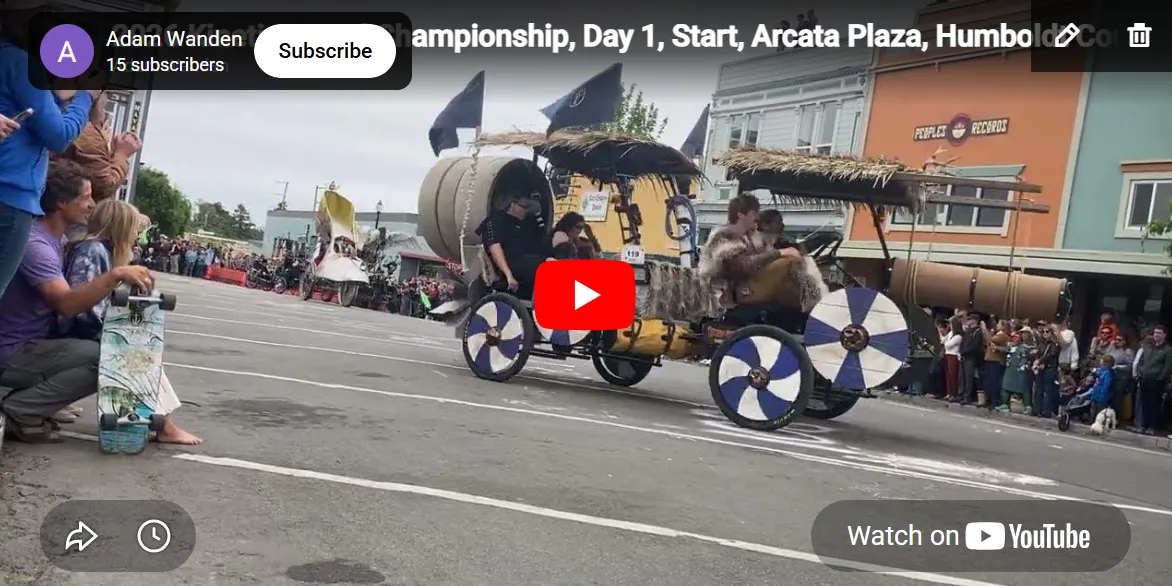
Nestled in the artsy coastal town of Arcata, California, roughly 100 miles south of the Oregon border, a unique event transforms the typically serene landscape into a vibrant arena of human-powered ingenuity. The Kinetic Grand Championship, often referred to as the Arcata Kinetic Sculpture Race, is an annual spectacle that defies conventional racing. It's a rigorous, three-day triathlon of the art world, challenging competitors to design, construct, and pilot extraordinary, all-terrain, amphibious vehicles across a demanding 50-mile course.
This extraordinary event demands more than just speed; it requires a fusion of mechanical engineering, artistic vision, and sheer human endurance. Participants must navigate a course that includes paved roads, challenging sand dunes, and open waterways, pushing their custom-built machines—known as "Kinetics"—to their absolute limits. The requirement for amphibious capability adds a significant layer of complexity, ensuring that only the most thoughtfully engineered creations can succeed.
The Kinetic Grand Championship: A Celebration of Human Power and Creativity
The Kinetic Grand Championship is a testament to the power of community and creative expression, drawing participants and spectators from far and wide. This event is not an isolated phenomenon; similar races occur across the United States and internationally, including the da Vinci Days Graand Kinetic Challenge in Oregon, the Baltimore Kinetic Sculpture Race, the Key West Kinetic Sculpture Parade, and even the Canberra Kinetic Sculpture Race in Australia. Each race showcases unique interpretations of human-powered vehicles, but all share a common thread: the transformation of imaginative concepts into functional, albeit eccentric, machines.
These custom-built vehicles, or Kinetics, are more than just modes of transport; they are kinetic sculptures that embody the spirit of their creators. The range of designs is astonishing, from colossal riding teeth to intricate, fire-breathing dragons. The engineering required to make these elaborate contraptions traverse diverse terrains, including water, is immense. This fusion of art and engineering is what defines the Kinetic Grand Championship, making it a captivating display of what can be achieved when imagination meets technical prowess.
A Grueling Three-Day Course: From Plaza to Finish Line
The Arcata Kinetic Grand Championship is renowned for its demanding three-day route, testing the mettle of both pilots and their machines. The race commences at noon on the Arcata Plaza, marking the start of an epic journey. The first day's challenge involves pedaling to the coast, braving the formidable Samoa Dunes, and concluding in the city of Eureka. This initial leg sets a demanding tone, requiring significant effort and strategic navigation.
Day two elevates the challenge with an aquatic component. Competitors launch their amphibious vehicles directly into the waters of Humboldt Bay, embarking on a crucial float segment. Following the water crossing, they face a substantial land haul to reach Crab Park. The third and final day presents the ultimate test, featuring a difficult crossing of the Eel River before the triumphant finish line in the picturesque downtown of Ferndale. Along this arduous path, teams like the Feisty Boys exemplify the race's spirit with their rallying cry, “No! Sleep! Till Ferndale!!!!”
The Rules of Engagement and the Pursuit of Glory
Central to the Kinetic Grand Championship are its strict rules, designed to emphasize human power and the integrity of the design. Every component of the machine must be propelled by its human pilots. The use of any form of motor is strictly forbidden, ensuring that the race remains a pure test of human effort and mechanical efficiency. Furthermore, the same core vehicle must be utilized across all terrains—land, sand, and water—without significant modification, underscoring the importance of versatile design and robust construction.
The rewards at the Kinetic Grand Championship extend beyond mere victory. While the ultimate prize is the title of “Grand Champion,” the race also celebrates creativity and perseverance through various subjective awards. The coveted “Mediocre Award,” for instance, honors teams that demonstrate exceptional humor and resilience, particularly in the face of inevitable mechanical failures. This focus on spirit and ingenuity, alongside performance, makes the Kinetic Grand Championship a unique celebration of both engineering achievement and artistic endeavor.
Historical Roots and Enduring Community Spirit
The origins of the Kinetic Grand Championship trace back to 1969, initiated by Arcata-based metal sculptor Hobart Brown. His creation of a five-wheeled “pentacycle” from his son’s tricycle and his subsequent challenge to local artists sparked the inception of this unique race. Since its humble beginnings, the event has evolved into a cherished tradition, deeply embedded within the community fabric. Its continuation year after year is a testament to its enduring appeal as a celebration of engineering, artistic expression, and collective spirit.
Today, the race remains a fiercely community-driven event, embodying a passion for innovation and a commitment to creative spectacle. It serves as a vibrant platform for artists and engineers to showcase their talents, pushing the boundaries of what is possible with human-powered technology. The Kinetic Grand Championship continues to inspire awe and wonder, solidifying its place as a beloved and iconic celebration of ingenuity and fun.