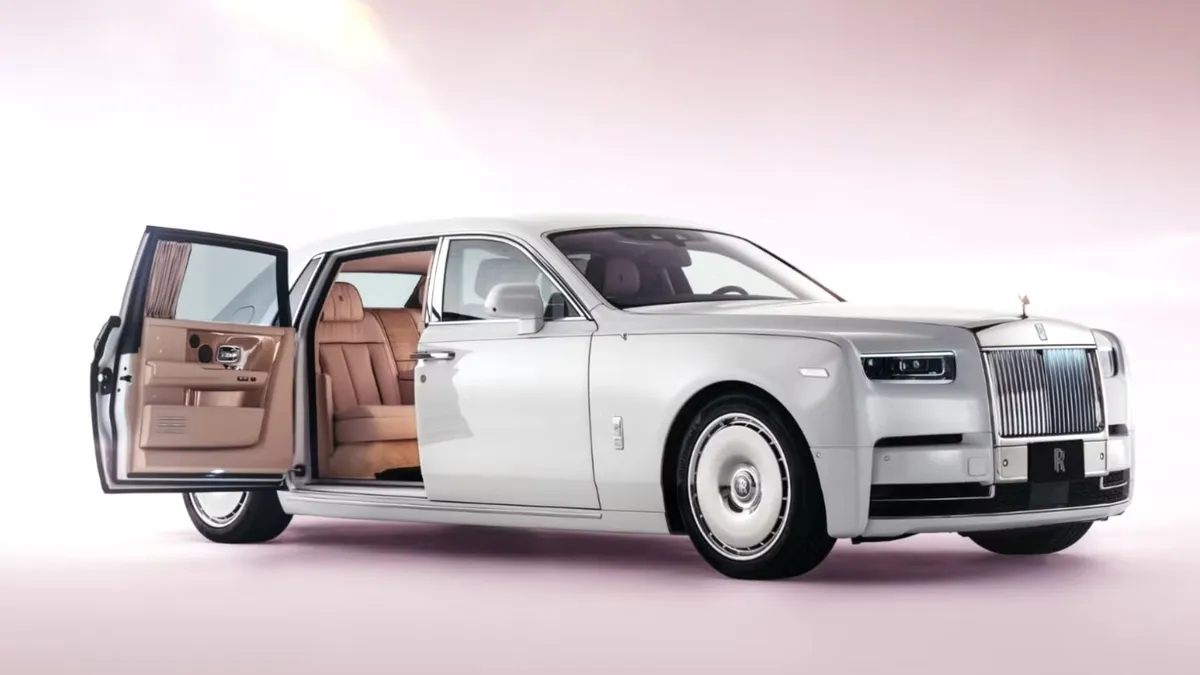
Suicide doors, also referred to as rear-hinged, coach, or clamshell doors, represent a stylistic flourish deeply rooted in automotive history, a legacy inherited from the horse-drawn carriage era. This design, characterized by doors that swing open from the rear, was once a prominent feature, particularly favored by European manufacturers before the 1960s. American automakers also adopted this style, with notable examples including certain 1960s Lincolns and the iconic Tucker 48. While the prevalence of suicide doors diminished significantly, the design has not entirely vanished. Rolls-Royce continues to incorporate coach doors across its entire model range, finding them particularly suitable for passengers requiring an especially graceful or unimpeded entry, aligning with the marque's opulent image. Ferrari has also recently featured coach doors on its Purosangue SUV. For the average consumer, the last widely accessible vehicle featuring such doors was likely the Mazda MX-30 electric SUV, which was discontinued in the U.S. in 2022. Earlier departures included the BMW i3 in 2021, the Toyota FJ Cruiser in 2014, and the Mini Cooper Clubman with its distinctive half-door layout. The Mazda RX-8 and Honda Element also bid farewell in 2011, both featuring unique clamshell door configurations.
The question remains: why did this once-popular design element largely disappear from mainstream automotive production? While visually striking, the distinctive moniker "suicide doors" hints at the inherent safety concerns that contributed to their decline. The rear-hinged mechanism presented significant risks, especially in an era preceding widespread seatbelt adoption. Even a slight unlatching could lead to the door being forced open by aerodynamic forces during forward motion, leaving occupants vulnerable and without recourse in emergencies. Even when parked, a collision involving an open rear-hinged door could result in the door swinging back onto the occupant rather than detaching, posing a serious injury hazard.
Evolution of Automotive Safety and Door Design
Beyond the direct safety risks associated with their opening mechanism, the disappearance of suicide doors is also intrinsically linked to advancements in vehicle safety structures and evolving crashworthiness standards. A primary concern is the structural integrity compromised by the absence of a B-pillar – the vertical support typically situated between the front and rear doors. This pillar is crucial for reinforcing the vehicle's roof structure and for absorbing energy during side-impact collisions. As highlighted by reports from outlets like the Los Angeles Times, vehicles such as the Honda Element, which featured a pillarless design with its clamshell doors, received poor ratings in side-impact tests from organizations like the Insurance Institute for Highway Safety (IIHS). This structural deficit directly impacts passenger safety, a factor that has become paramount in modern automotive design and regulatory compliance.
Contemporary vehicles that still employ coach doors, such as the Rolls-Royce Phantom, often incorporate a substantial B-pillar. While this enhances safety, it can somewhat impede the fluidity of ingress and egress, which is often a key appeal of the coach door design. Automakers are, however, exploring innovative engineering solutions to reconcile the aesthetic and functional benefits of pillarless coach doors with stringent safety requirements. Genesis, for instance, has indicated plans for future models, potentially including the GV90, that aim to achieve this balance, demonstrating a renewed interest in this classic door style, albeit adapted for the demands of 21st-century safety standards. This ongoing development underscores the challenge of integrating historical design elements with contemporary safety engineering.
Reasons for the Shift Away from Suicide Doors
The decision by manufacturers to largely abandon suicide doors is multifactorial, encompassing safety regulations, manufacturing complexities, and changing consumer preferences. The inherent instability of rear-hinged doors, particularly at speed or in the event of partial unlatching, posed a significant liability and safety concern that manufacturers could no longer overlook. As vehicle safety standards became more rigorous, especially following the establishment of organizations like the NHTSA and IIHS and their stringent crash-testing protocols, designs that compromised structural integrity or occupant safety were systematically phased out. The absence of a robust B-pillar in many classic suicide-door configurations made achieving high safety ratings incredibly difficult, if not impossible, under current standards.
Furthermore, the manufacturing process for suicide doors can be more complex and costly compared to conventional front-hinged doors. Integrating the necessary reinforcement and ensuring smooth operation and secure latching mechanisms while maintaining structural integrity adds engineering challenges. Consumer preferences have also evolved; while the dramatic flair of suicide doors might appeal to a niche market, the practicality and ease of use offered by traditional door designs, coupled with enhanced safety features, have become the norm for the vast majority of drivers. The trend towards SUVs and crossovers, which often prioritize passenger space and accessibility, has also favored more conventional door layouts that facilitate easier entry and exit for families and a wider range of occupants.
Impact Analysis
The widespread abandonment of suicide doors by the automotive industry signifies a pivotal shift towards prioritizing safety and structural integrity above purely aesthetic or historical design choices. This transition reflects the increasing influence of regulatory bodies and consumer demand for vehicles that meet stringent safety performance standards. While niche applications and luxury marques continue to explore innovative ways to integrate coach doors, their return to mainstream automotive design remains unlikely without significant engineering breakthroughs that can satisfy both safety mandates and mass-production viability. The legacy of suicide doors serves as a historical benchmark, illustrating the evolution of automotive design from stylistic expression to a more safety-conscious and technologically advanced approach.