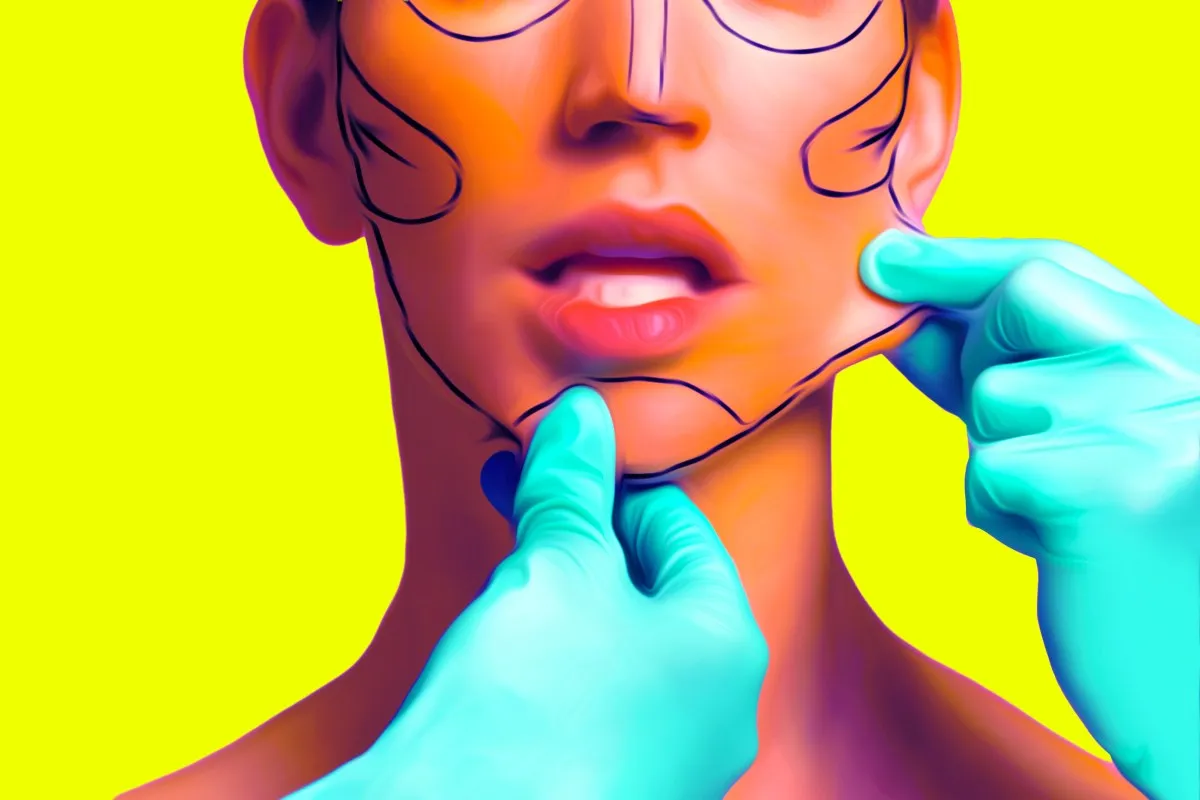
The increasing prevalence of artificial intelligence in everyday life is beginning to manifest in unexpected and, some argue, concerning ways. Plastic surgeons are reporting a growing trend of patients presenting with requests to emulate the features seen in AI-generated images of themselves. These digitally altered personas often feature exaggerated, cartoonish attributes such as impossibly large eyes, fuller lips, and sharply defined jawlines, a phenomenon one dermatologist described as akin to the 'Bratz doll' aesthetic. This trend signals a complex interplay between rapidly advancing AI technology, evolving beauty standards, and the inherent human desire for self-enhancement, potentially exacerbating pre-existing insecurities.
This phenomenon is not entirely unprecedented, drawing parallels to the impact of digital filters on platforms like Snapchat and the pervasive influence of social media influencers on self-perception. However, the sophisticated and customizable nature of AI image generation, coupled with the persuasive capabilities of AI chatbots that can validate these altered appearances, presents a unique challenge. Unlike static filters, AI can generate personalized and seemingly attainable idealizations, making it more potent in shaping user expectations and potentially fostering an unhealthy reliance on artificial perfection. The perceived intelligence and validation from an AI can lend significant weight to these unrealistic aspirations.
The Rise of AI-Driven Beauty Standards
Patient Expectations and Surgical Realities
The divergence between AI-generated ideals and surgical capabilities is creating significant challenges for cosmetic surgeons. A survey conducted by Beth Israel Deaconess Medical Center highlighted that patients who utilized AI for photo retouching exhibited notably higher expectations for their surgical outcomes. This often leads to patient-surgeon disconnects, where the patient's desired outcome, heavily influenced by AI, is medically or realistically unachievable. Surgeons find themselves navigating conversations where patients insist on transformations that defy biological limitations, such as a woman in her 70s requesting to look like her much younger granddaughter.
This situation places plastic surgeons in a difficult position, as their professional judgment and expertise are increasingly being questioned or overridden by digitally fabricated ideals. The ability of AI to create highly personalized and idealized versions of oneself can foster a sense of disconnect from one's actual appearance, leading to potentially unrealistic demands. The allure of achieving a digitally perfected image, validated by AI, can overshadow the practical considerations and inherent risks associated with surgical procedures.
AI as a Tool for Simulation vs. Expectation Setting
Some professionals in the field are exploring the potential of AI as a tool to manage patient expectations more effectively. The idea is to leverage specialized AI applications that can simulate surgical outcomes with greater accuracy, providing a more realistic preview of potential results. Proponents suggest that such tools could facilitate more informed consultations, helping patients understand the feasible limits of cosmetic procedures. This approach aims to bridge the gap between a patient's desires and what can be safely and realistically achieved through surgery.
However, the integration of AI into surgical planning is not without its own set of risks and ethical considerations. Over-reliance on AI, which is still a developing technology prone to errors and biases, could compromise the surgeon's critical judgment and the patient's safety. The challenge lies in finding a balance where AI serves as an assistive tool rather than a definitive guide, ensuring that human expertise remains paramount in patient care and decision-making. The development of AI tools must prioritize realistic simulations over the creation of unattainable ideals.
The Psychological Impact of AI on Self-Perception
The pervasive influence of AI in shaping aesthetic ideals raises broader questions about its psychological impact. AI's capacity to prey on insecurities and present hyper-idealized versions of reality can contribute to body dysmorphia and unhealthy beauty standards. Unlike previous digital manipulations, AI offers a level of customization and perceived validation that can be particularly insidious, especially for individuals vulnerable to external pressures regarding appearance.
The term 'AI psychosis,' while not a formal diagnosis, reflects a growing concern about how artificial intelligence might warp perceptions and fuel mental health challenges. When individuals begin to perceive AI-generated realities as superior or even attainable goals, it can lead to significant distress and dissatisfaction with their actual selves. This necessitates a critical examination of how AI technologies are designed and deployed, particularly in contexts that directly influence self-esteem and body image.
Impact Analysis
The increasing demand for AI-inspired aesthetics in plastic surgery highlights a significant cultural shift driven by technology. This trend has profound implications for the cosmetic surgery industry, forcing practitioners to confront patients with digitally manufactured expectations that may be medically impossible to fulfill. It also raises critical ethical questions about the role of AI in shaping beauty standards and potentially exacerbating mental health issues related to body image. As AI technologies become more sophisticated and integrated into visual media, the challenge for healthcare professionals will be to educate patients about realistic outcomes while navigating the complex psychological landscape influenced by artificial perfection.