Businesses today are grappling with an unprecedented array of complex challenges, driven by rapidly evolving market dynamics, technological advancements, and shifting consumer behaviors. From the pervasive influence of artificial intelligence to the ongoing recalibration of work environments, organizations are under constant pressure to adapt and innovate. A recent survey of 556 senior executives and C-suite leaders in the U.S. reveals that, on average, leaders are simultaneously confronting more than three significant strategic hurdles. This multifaceted environment necessitates a proactive and strategic approach to leadership and organizational transformation. The findings underscore a critical juncture where agility, foresight, and robust leadership strategies are paramount for sustained success and competitiveness in the global marketplace.
The research, conducted in partnership with Leadership Contract Inc. and detailed in the 'Leaders Under Pressure: A Visual Guide for Leading Strategic Shifts' guide, paints a clear picture of the current corporate landscape. It highlights that the challenges are not isolated incidents but rather interconnected forces requiring holistic solutions. Understanding these pressures is the first step for leaders aiming to steer their organizations through uncertainty, foster resilience, and capitalize on emerging opportunities. The data suggests a profound need for leadership development focused on strategic execution, change management, and fostering an adaptive organizational culture.
The Evolving Business Landscape and Its Top Challenges
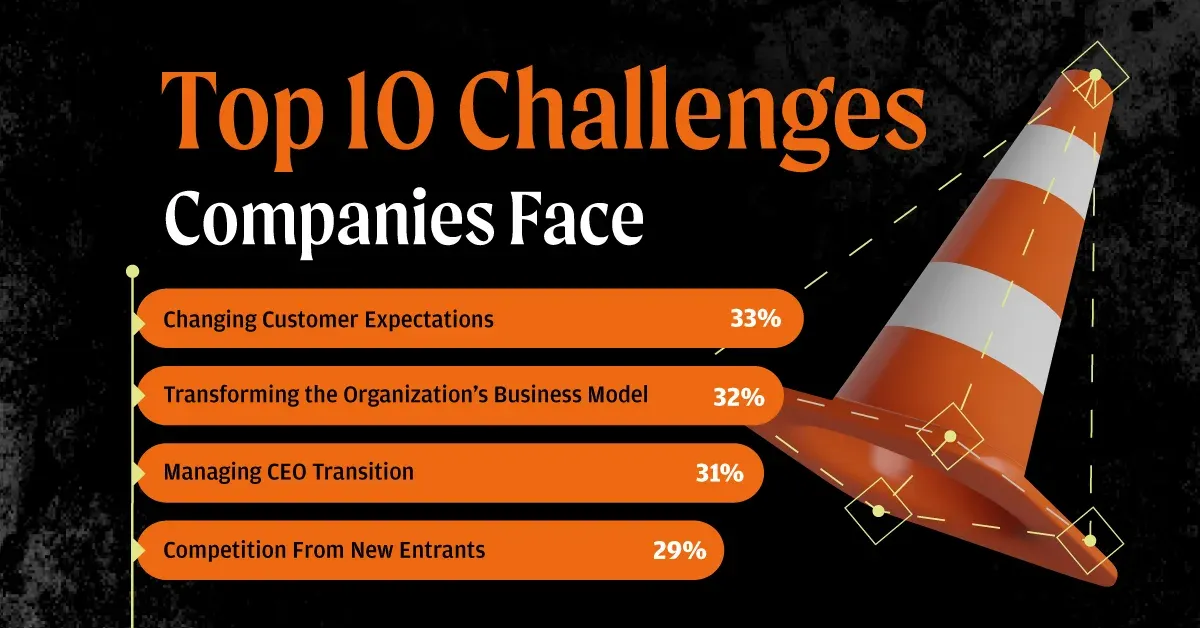
The paramount concern for businesses today, as identified by a significant majority of respondents, is the challenge posed by changing customer expectations. Consumers now demand a level of personalization, responsiveness, and accessibility that was previously uncommon. This includes expectations for 24/7 service, seamless omnichannel experiences, and highly tailored product or service offerings. Meeting these heightened demands requires a deep understanding of customer data, agile operational frameworks, and a customer-centric culture embedded throughout the organization.
Close on its heels, transforming the organization’s business model emerges as the second most pressing challenge. The rapid acceleration of digital technologies, particularly artificial intelligence (AI), necessitates a fundamental re-evaluation of how businesses create, deliver, and capture value. This transformation involves not only adopting new technologies but also reconfiguring core processes, organizational structures, and value propositions to remain competitive and relevant in a digitally driven economy. Failure to adapt can lead to obsolescence, as new market entrants leverage these technologies to disrupt established players.

Navigating Leadership Transitions and Workforce Dynamics
The complexities extend to internal organizational dynamics, with managing CEO transition ranking as the third most significant challenge. As the global population ages and experienced leaders approach retirement, a wave of leadership changes is anticipated. Ensuring a smooth and strategic succession process is vital to maintaining organizational momentum, preserving institutional knowledge, and upholding strategic direction. A poorly managed transition can lead to instability, loss of focus, and a decline in performance, making proactive succession planning a critical imperative for boards and executive teams.
Furthermore, the shift towards a hybrid world of work continues to present unique challenges for organizations. Balancing employee flexibility with the need for collaboration, maintaining company culture, and ensuring equitable employee experiences across remote and in-office settings are ongoing concerns. Successfully implementing hybrid work models requires deliberate strategies for communication, technology integration, performance management, and fostering a sense of belonging among a dispersed workforce.
Competition, Growth, and Global Expansion
In an increasingly dynamic marketplace, competition from new entrants is a persistent threat. Innovative startups and established players alike are constantly seeking to capture market share through disruptive technologies, novel business models, or superior customer engagement strategies. Companies must remain vigilant, continuously monitoring competitive landscapes and investing in innovation to stay ahead of emerging threats and opportunities. This requires a culture that embraces change and rewards strategic risk-taking.
Driving accelerated growth remains a core objective for many organizations, yet achieving it in the current environment is fraught with challenges. This includes navigating economic uncertainties, meeting evolving customer demands, and optimizing resource allocation. Similarly, pursuing international expansion presents a complex set of challenges, including understanding diverse market regulations, cultural nuances, and geopolitical risks. Each of these strategic goals requires meticulous planning, robust execution capabilities, and a deep understanding of global market dynamics.
Talent, Disruption, and Post-Merger Integration
The challenges also encompass human capital and strategic integrations. Talent acquisition, retention, and development continue to be a critical concern, as organizations compete for skilled employees in a tight labor market. Building a strong employer brand, offering competitive compensation and benefits, and fostering a supportive work environment are essential for attracting and retaining top talent. Moreover, navigating market or industry disruption requires foresight and adaptability, as unforeseen technological shifts or economic downturns can rapidly alter competitive landscapes.
Finally, post-merger and acquisition integration presents a significant operational and strategic hurdle. Successfully integrating acquired companies requires careful planning to align cultures, systems, and processes, while also realizing expected synergies and mitigating risks. A flawed integration can lead to diminished value, operational inefficiencies, and employee dissatisfaction, underscoring the need for robust M&A integration strategies.
The Imperative of Leadership Accountability
A stark finding from the research highlights a critical disconnect: while 34% of leaders acknowledge feeling overwhelmed and incapable of leading change, robust leadership accountability is identified as a key enabler of organizational success. The gap between the pressures leaders face and their perceived capacity to manage them represents a significant business risk. Leadership Contract Inc.’s framework, which outlines 30 specific leadership behaviors, provides a roadmap for enhancing accountability at all organizational levels. This includes individual, team, and enterprise-wide accountability mechanisms designed to drive strategic execution and performance.
Organizations that cultivate stronger leadership accountability demonstrate a greater capacity to navigate strategic shifts, adapt to market disruptions, and ultimately achieve superior performance outcomes. This emphasis on accountability is not merely about individual responsibility but about embedding a culture where leaders are empowered and expected to drive change effectively, even amidst complex and challenging circumstances. The research suggests that fostering such a culture is a decisive factor in an organization's ability to thrive in the current business environment.