



Deep Dive into Carbonation System Engineering and Performance
Core Carbonation System Technologies
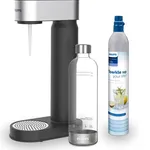
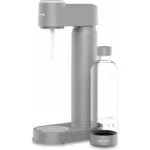
The technical foundation of soda and sparkling water makers revolves around their CO2 injection mechanisms. These can be broadly categorized into manual and automated electric systems. Manual units typically employ a direct mechanical linkage, often a lever or push-button, which physically actuates a valve to release CO2 from a pressurized cylinder into the water. The consistency and intensity of carbonation are directly correlated with the user's interaction—duration and force of valve activation. Critical components in these systems include high-pressure rated seals, usually constructed from medical-grade silicone or durable elastomers, designed to create an impervious seal between the carbonation nozzle and the bottle mouth, preventing gas escape during injection. An integrated pressure relief valve is also essential, serving as a safety mechanism to prevent over-pressurization and bottle rupture.
Electric models elevate this process with enhanced precision and automation. These units integrate microcontrollers, solenoid valves, and pressure sensors to manage CO2 flow with high accuracy. Users can often select predefined carbonation levels, and the system autonomously injects CO2 until the desired dissolved gas concentration or internal bottle pressure is achieved. Some advanced electric systems may incorporate a 'burst' or 'pulse' injection method to optimize CO2 absorption. The power source for these devices can vary from simple AC adapters to rechargeable battery packs, offering flexibility in placement and reducing reliance on fixed power outlets. Regardless of manual or electric, the integrity of the CO2 regulator and the internal piping is paramount for consistent pressure delivery and system longevity.
Optimizing Gas Dissolution and Bubble Dynamics
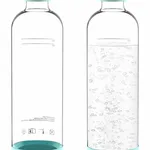
Effective carbonation is governed by the principles of gas solubility, primarily Henry's Law, which states that the solubility of a gas in a liquid is directly proportional to the partial pressure of the gas above the liquid. For optimal CO2 dissolution, two primary factors are critical: temperature and pressure. Colder water significantly enhances CO2 solubility, which is why manufacturers universally recommend pre-chilling water before carbonation. The higher the pressure exerted during injection, the more CO2 molecules are forced into solution. The design of the carbonation nozzle plays a subtle yet significant role; some nozzles are engineered to create extremely fine CO2 bubbles, maximizing the surface area for gas-liquid interaction and accelerating dissolution. Others might feature a multi-port diffuser to ensure even distribution throughout the water column. After carbonation, releasing the pressure causes the dissolved CO2 to rapidly come out of solution, forming the effervescent bubbles characteristic of sparkling water. Understanding these physicochemical principles allows for troubleshooting issues such as inadequate fizz or rapid degasification, often attributable to warm water, insufficient pressure, or compromised bottle seals leading to premature CO2 escape.