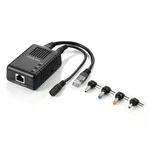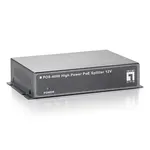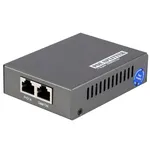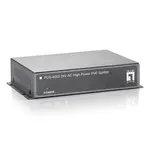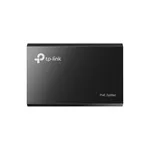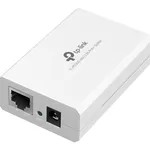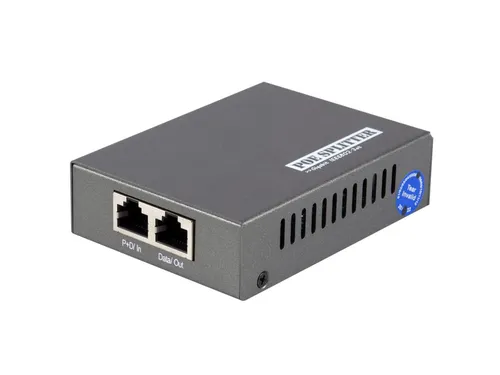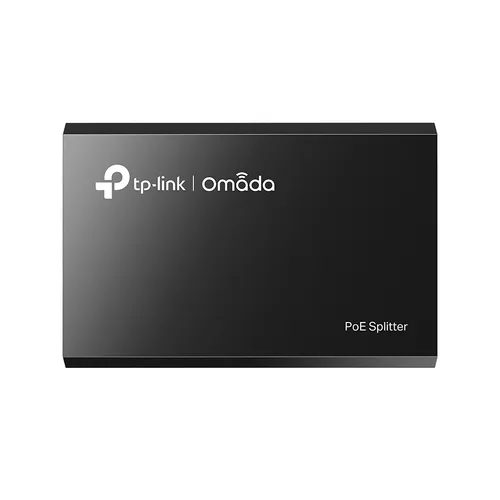


TP-Link Omada Gigabit PoE Splitter (10/100/1000 Mbps) - 802.3af/at Compatible
TP-Link Omada Gigabit PoE Splitter (10/100/1000 Mbps) - 802.3af/at Compatible
No stores registered at this time
Contact Us
Specifications
Features
Features
| Networking standards |
IEEE 802.3, IEEE 802.3ab, IEEE 802.3af, IEEE 802.3u
|
|---|---|
| Power over Ethernet (PoE) |
Yes
76% have it
|
| Product colour |
Black
|
| LED indicators |
Power
|
| Plug and Play |
Yes
73% have it
|
Ports & interfaces
Ports & interfaces
| Ethernet LAN (RJ-45) ports |
2
|
|---|---|
| RJ-45 input ports |
1
|
| RJ-45 output ports |
1
|
| DC-out jack |
Yes
57% have it
|
Operational conditions
Operational conditions
| Operating temperature (T-T) |
0 - 40 °C
|
|---|---|
| Storage temperature (T-T) |
-40 - 70 °C
|
| Operating relative humidity (H-H) |
10 - 90%
|
| Storage relative humidity (H-H) |
5 - 90%
|
Certificates
Certificates
| Certification |
FCC, CE
|
|---|
Weight & dimensions
Weight & dimensions
| Width |
80.8
mm
19% better than others
|
|---|---|
| Depth |
54
mm
93% better than others
|
| Height |
24
mm
81% better than others
|
Packaging content
Packaging content
| Quick installation guide |
Yes
67% have it
|
|---|---|
| Quantity per pack |
1 pc(s)
|
Packaging data
Packaging data
| Package type |
Box
|
|---|
Power
Power
| Input voltage |
5, 9, 12 V
|
|---|
Disclaimer: Information on this page may need review. If you notice any discrepancies, please report them

In the ever-evolving landscape of network infrastructure, particularly within enterprise and prosumer environments, the efficient delivery of both data and power over a single Ethernet cable is paramount. The TP-Link Omada PoE Splitter emerges as a critical component for extending the reach and flexibility of Power over Ethernet (PoE) deployments. Designed to seamlessly integrate into existing Omada SDN (Software Defined Networking) ecosystems and compatible with standard 802.3af/at PoE protocols, this device allows network administrators to power non-PoE devices, such as IP cameras, access points, or IoT sensors, from a distance where direct PoE injection is not feasible or cost-effective. Its robust design and adherence to industry standards underscore TP-Link's commitment to providing reliable and scalable networking solutions.
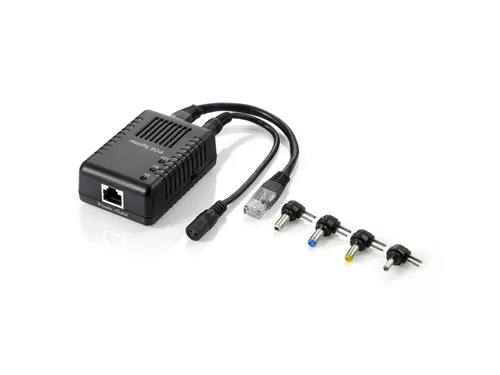
This Gigabit PoE Splitter is engineered to intelligently separate the electrical current from the data signals carried over an Ethernet cable, delivering a stable power output to connected devices while ensuring uninterrupted data transmission. With support for Gigabit Ethernet speeds (10/100/1000 Mbps), it eliminates potential bottlenecks, ensuring that high-bandwidth applications and devices receive the performance they require. The ability to derive power from a PoE-enabled switch or injector up to 100 meters away offers significant advantages in terms of installation flexibility and reducing the need for local power outlets, thereby simplifying cabling and enhancing aesthetic integration in various deployment scenarios. This makes it an indispensable tool for modernizing network setups and optimizing device placement.
Pros & Cons
Pros
What we love about this product
- Gigabit Ethernet Support: Ensures full 10/100/1000 Mbps data speeds, preventing bottlenecks for high-bandwidth devices.
- 802.3af/at Compatibility: Works with a wide range of standard PoE switches and injectors, offering broad interoperability.
- Flexible Power Output: Capable of splitting PoE power to deliver to non-PoE devices, enabling diverse deployment options.
- Extended Reach: Facilitates powering devices up to 100 meters away from the PoE source, reducing infrastructure limitations.
Cons
Points to consider before buying
- Requires PoE Input: This is a splitter, not a PoE injector; it necessitates a PoE-enabled source to function.
- Fixed Voltage Output: Typically offers a fixed DC voltage output, which might not be compatible with all specific device power requirements without an adapter.
- Potential Power Budget Limitation: The total power available is dependent on the upstream PoE source, which could limit the types or number of devices that can be powered simultaneously.