Chimeric antigen receptor (CAR) T-cell therapy, a revolutionary treatment that has demonstrated significant success in combating B-cell cancers, is now showing considerable promise in the realm of autoimmune diseases. These conditions arise when the immune system, specifically B cells, mistakenly targets the body's own healthy tissues instead of foreign invaders. The inherent ability of CAR T-cell therapy to precisely eliminate targeted B cells has led researchers and clinicians to explore its potential in eradicating the self-attacking B cells characteristic of various autoimmune disorders.
The fundamental principle of CAR T-cell therapy involves genetically modifying a patient's own T cells to express a CAR, a synthetic receptor that enables these T cells to recognize and bind to specific antigens on target cells. In the context of autoimmune diseases, the target is typically a particular type of B cell that is responsible for producing autoantibodies. By engineering T cells to identify and destroy these aberrant B cells, the therapy aims to reset the immune system and halt the autoimmune process. Initial investigations and early clinical trials are yielding encouraging outcomes, suggesting a paradigm shift in the management of chronic autoimmune conditions.
Advancing CAR T-Cell Therapy for Autoimmunity
The exploration of CAR T-cell therapy for autoimmune diseases gained significant traction following its success in oncology. A landmark study conducted by a German research team reported positive results in 2021 when applying this therapy to a woman suffering from lupus, a systemic autoimmune disease. This pioneering work paved the way for subsequent research and development efforts aimed at translating the efficacy observed in cancer treatment to a wider range of autoimmune conditions.
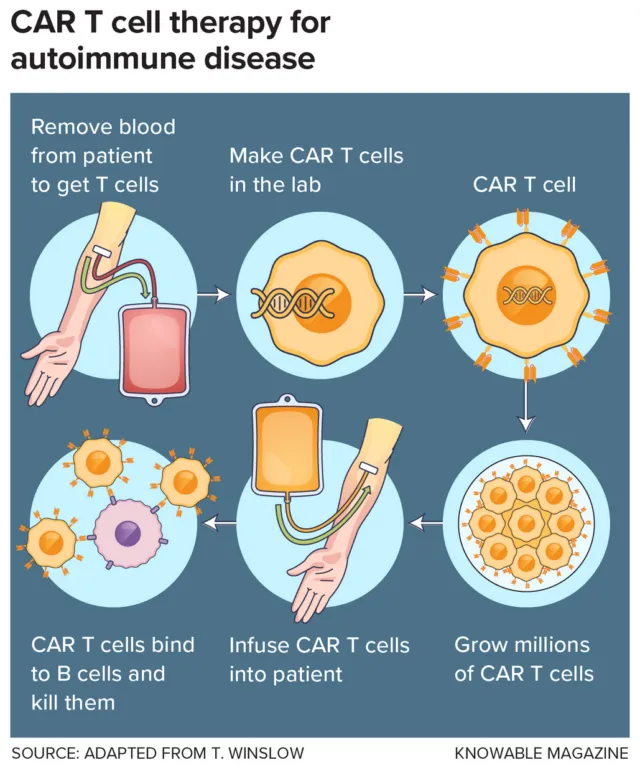
The adaptation of CAR T-cell therapy for autoimmune disorders involves careful consideration of the specific B-cell populations to be targeted and the potential risks associated with modulating the immune system so profoundly. Researchers are refining the CAR constructs and treatment protocols to ensure both efficacy and safety. The goal is to achieve a sustained remission of autoimmune symptoms by durably eliminating the pathogenic B cells without compromising the overall immune defense against infections.
Stiff Person Syndrome: A Promising Case Study
Dr. Amanda Piquet, an autoimmune neurologist at the University of Colorado Anschutz, has been at the forefront of evaluating CAR T-cell therapy for stiff person syndrome (SPS), a rare and debilitating autoimmune neurological disorder characterized by progressive muscle stiffness and painful spasms. As there are currently no FDA-approved treatments for SPS, the prospect of a novel therapeutic approach like CAR T-cell therapy is particularly significant.
A clinical trial conducted by Kyverna Therapeutics has provided encouraging preliminary results for SPS. The study, which involved a single dose of CAR T-cell therapy in 26 participants, demonstrated notable improvements in mobility. Prior to treatment, many patients exhibited a slow, impaired gait, with a significant number relying on assistive devices. Post-treatment follow-up revealed that the majority of patients experienced enhanced walking speed and a reduced need for mobility aids. Furthermore, the company reported that by their later follow-up appointments, all participants had discontinued other immunotherapy treatments, highlighting the potential of CAR T-cell therapy as a standalone intervention.
Understanding the Risks and Side Effects
While the therapeutic potential of CAR T-cell therapy for autoimmune diseases is substantial, it is crucial to acknowledge the inherent risks and complexities associated with manipulating the immune system. In its earlier applications for cancer treatment, CAR T-cell therapy was associated with severe side effects, primarily due to cytokine release syndrome (CRS). CRS occurs when the engineered T cells become overactivated and release excessive amounts of inflammatory cytokines, leading to systemic inflammation.
Symptoms of CRS can range from high fever and low blood pressure to more severe neurological complications, such as confusion and drowsiness, if the inflammation affects the brain. Medical professionals managing CAR T-cell therapy must be vigilant in monitoring patients for these potential adverse events and have strategies in place to mitigate them. Ongoing research is focused on developing safer CAR T-cell constructs and refining management protocols to minimize these risks, thereby enhancing the therapeutic window for both cancer and autoimmune disease applications.
Impact Analysis
The progression of CAR T-cell therapy into the autoimmune disease landscape represents a significant advancement in medicine. If validated through further extensive clinical trials, this approach could offer a curative or long-lasting remission strategy for a range of debilitating conditions that currently have limited treatment options. The ability to selectively eliminate the immune cells responsible for attacking the body's own tissues holds the potential to fundamentally change how autoimmune diseases are managed, moving beyond symptom control to address the underlying immunological dysregulation. This could dramatically improve the quality of life for millions of patients worldwide and reduce the long-term healthcare burden associated with chronic autoimmune disorders.