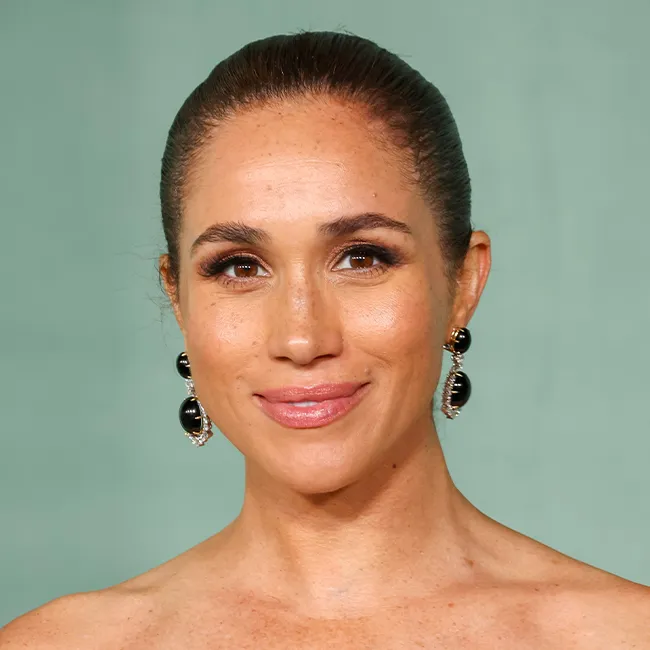
Meghan Markle's team has issued a defense regarding her decision to share images of her children, Prince Archie and Princess Lilibet, on social media. This comes in the wake of reports suggesting a divergence in views between the Duchess and Prince Harry on the matter of their children's public exposure. While Prince Harry is reportedly more inclined towards safeguarding their children from the media spotlight, influenced by his own upbringing, Meghan is understood to favor a more open approach, believing it strengthens their public profile and connection.
The core of the defense rests on the methodology of sharing. Unlike some public figures who fully display their children, Meghan's strategy involves carefully obscuring their faces in photographs. This approach, her spokesperson argues, aligns with her broader advocacy for children's digital privacy and agency in an increasingly online world. The recent sharing of photos of Princess Lilibet for her birthday has reignited the public discussion on this sensitive topic.
Meghan Markle's Approach to Sharing Children's Images
The recent sharing of Princess Lilibet's images for her fifth birthday on Instagram sparked considerable discussion, with the comment section disabled. While fans and critics debated the decision, particularly in light of Prince Harry's known preference for privacy, Meghan's spokesperson provided a statement to clarify their position. They emphasized a deliberate distinction between sharing personal moments and the complete "exposure" of children to public scrutiny, a common concern among high-profile families.
The spokesperson highlighted specific techniques used to protect the children's identities, such as capturing photos from the side or behind, or using digital elements like emojis to obscure their faces. These methods, they contended, are central to the Duchess's message about balancing family life with the need for privacy in the digital age. This approach was also linked to a recent speech given by Meghan in Geneva, where she addressed the potential impacts of social media on children.
Defense of Obscuring Children's Faces
Meghan's spokesperson articulated that "The Duchess has always been clear that there is a distinction between sharing moments from her life and exposing her children to public scrutiny." This statement directly addresses concerns that sharing images, even with obscured faces, contradicts the family's broader calls for privacy. The strategy is presented not as a contradiction, but as a nuanced approach to digital engagement.
Further elaborating on the rationale, the spokesperson stated, "By obscuring their faces, she is demonstrating the very principle she advocates for: giving children privacy, agency, and protection in an increasingly digital world." This frames the act of sharing images with obscured faces as a proactive measure to uphold the children's digital rights and personal boundaries, rather than a compromise of privacy. The reference to Geneva underscores her commitment to raising awareness about these issues on a global stage.
Prince Harry's Stance on Children's Privacy
Reports have frequently surfaced suggesting that Prince Harry holds a more reserved view on publicizing his children. Drawing from his own experiences with intense media attention during his childhood alongside his brother, Prince William, Harry is understood to prioritize shielding Archie and Lilibet from similar pressures. This personal history appears to significantly influence his perspective on the family's media presence and the level of detail shared about their lives.
While the exact nature and extent of any disagreements remain private, the ongoing narrative suggests a dynamic where Meghan's engagement with public platforms and Harry's emphasis on safeguarding are navigated differently. The spokesperson's statement appears to bridge this perceived gap by framing Meghan's actions as consistent with a protective stance, albeit executed through a different communication strategy. The goal, as presented, is to maintain a connection with the public while ensuring the children's fundamental right to privacy is respected.
Broader Implications for Public Figures and Digital Privacy
The situation involving Meghan Markle and Prince Harry highlights a growing tension faced by public figures balancing personal lives with public engagement in the digital era. The debate over sharing children's images, even partially, underscores the complexities of digital footprint management and the evolving understanding of privacy for minors. As more of life is lived online, the strategies for protecting children's identities and well-being become increasingly critical topics of discussion.
Meghan's spokesperson's defense, emphasizing the distinction between sharing and exposing, offers a perspective on how public figures might navigate these challenges. It suggests that a mindful approach, incorporating methods to protect identity, can allow for connection without compromising core privacy principles. This case serves as a relevant example in the ongoing conversation about digital citizenship, parental responsibility, and the rights of children in the public eye.