In contemporary higher education, a persistent narrative frames universities as personalized service providers, where the primary objective is student benefit—ranging from academic enrichment and career advancement to personal development. This perspective often prioritizes efficiency, suggesting that any task that can be streamlined or expedited should be. Consequently, actions with seemingly negligible individual impact, such as the disposal of dining hall items in dormitory trash cans, can become normalized. This mindset reflects a broader transactional view of education, where accountability for minor transgressions is diffused due to a lack of immediate, identifiable harm.
The current academic year has presented significant challenges to American higher education, exposing a confluence of academic, political, and demographic pressures. Issues such as widespread AI-facilitated cheating, diminished student attention spans attributed to digital media consumption, and rampant grade inflation are creating an environment of academic concern. Simultaneously, a decline in public trust, mishandled campus protests, and recent governmental funding cuts and policy threats further destabilize the sector. Compounding these issues is the demographic shift, with declining high school graduate numbers signaling a contraction in the student population, leading to an increasing rate of college closures.
The Evolving Role and Challenges of Higher Education Institutions
The landscape of American higher education is undergoing a profound transformation, marked by a series of interconnected challenges that question its traditional structures and effectiveness. Academic integrity is under scrutiny due to the pervasive use of artificial intelligence for completing assignments, leading to concerns about the authenticity of student work and the erosion of genuine learning. The digital age has also been linked to a noticeable decrease in students' sustained attention spans, impacting their ability to engage deeply with complex material. Furthermore, the practice of grade inflation has become widespread, potentially devaluing academic credentials and diminishing the rigor associated with higher education.
 The political climate surrounding higher education has also become increasingly volatile. A general decline in public trust has eroded confidence in the value and purpose of universities. Recent events on campuses, including protests and encampments, have been met with criticism regarding institutional responses, highlighting the complex balancing act between academic freedom and public order. Moreover, shifts in government policy, such as proposed research funding cuts and other administrative directives, introduce further uncertainty and can directly impact the operational capacity and research output of academic institutions.
Deep Springs College: A Unique Educational Philosophy
Emphasizing Self-Reliance and Community Labor
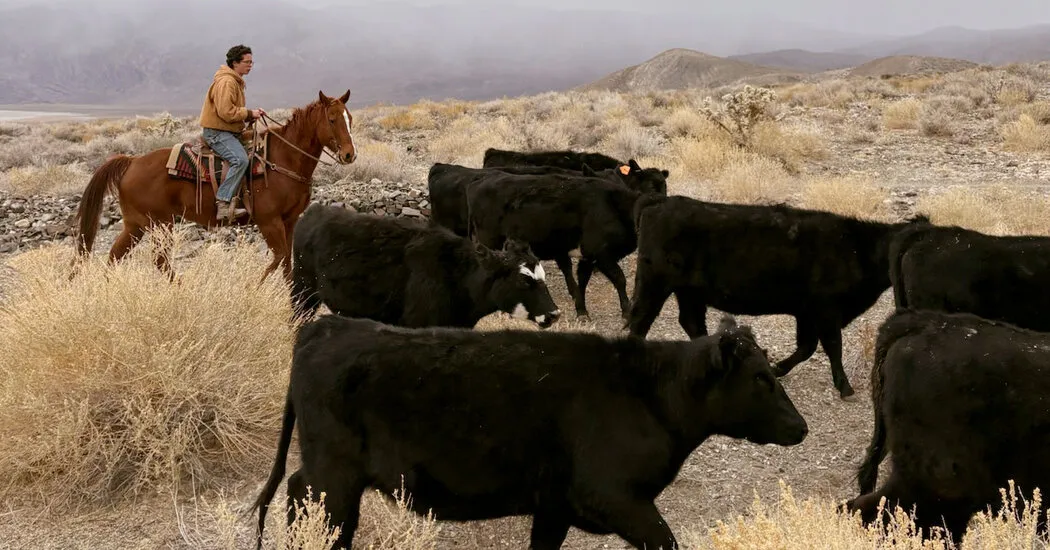
Deep Springs College stands apart as an institution that actively challenges the prevailing model of higher education by embedding principles of self-reliance and communal labor into its very structure. Unlike institutions that prioritize passive consumption of educational services, Deep Springs requires its students to actively participate in the practical operation of the college. This hands-on approach means students are not merely recipients of knowledge but are integral to the functioning of the campus, engaging in a diverse range of tasks that are essential for daily life and the agricultural operations of the college.
The educational philosophy at Deep Springs is deeply rooted in the belief that learning is most profound when integrated with practical application and shared responsibility. Students are expected to contribute significantly to the running of the ranch and farm, tasks that often include everything from irrigation and livestock management to carpentry and maintenance. This communal labor is not seen as a mere extracurricular activity but as a core component of the curriculum, fostering a sense of ownership, accountability, and a tangible understanding of the resources and efforts required to sustain a community. This immersive experience cultivates a unique skillset and a deep appreciation for the interconnectedness of academic pursuits and practical realities.
Curriculum and Experiential Learning
The academic program at Deep Springs is deliberately small, designed to offer a rigorous liberal arts education over two years, culminating in an associate's degree. The curriculum focuses on cultivating critical thinking, analytical reasoning, and strong writing skills, preparing students for transfer to four-year institutions. Small class sizes and close interaction with faculty are hallmarks of the academic experience, encouraging in-depth discussion and intellectual exploration.
Complementing the academic rigor is the college's unique emphasis on experiential learning. The mandatory participation in the college's labor program provides students with invaluable practical skills and a profound understanding of community dynamics. This duality of academic challenge and practical contribution creates a holistic educational environment. Students learn to manage their time effectively between demanding studies and their labor responsibilities, developing discipline, problem-solving abilities, and a strong work ethic that are transferable to any future endeavor.
Preparing Students for Future Challenges
The unconventional educational model at Deep Springs College aims to equip students with a unique set of competencies that go beyond traditional academic achievements. By living and working in a close-knit community, students develop exceptional interpersonal skills, learn to navigate complex social dynamics, and cultivate a deep sense of responsibility towards their peers and their environment. The inherent challenges of balancing rigorous academic work with demanding physical labor foster resilience, adaptability, and a mature approach to problem-solving.
Graduates of Deep Springs often report a distinct advantage when they transition to larger universities, not only academically but also in their personal development. The self-sufficiency and practical wisdom gained at Deep Springs enable them to approach their studies and future careers with a unique perspective. This experiential foundation prepares them to be not just knowledgeable individuals but also engaged citizens and effective leaders, capable of contributing meaningfully to society in a variety of fields. The college's approach inherently cultivates a sense of purpose and a commitment to collaborative effort, essential qualities for addressing the multifaceted challenges of the modern world.
The Broader Implications of Alternative Educational Models
Rethinking Value in Higher Education
The success and distinctiveness of institutions like Deep Springs College prompt a broader re-evaluation of what constitutes value in higher education. In an era where rising tuition costs and concerns about graduate employability are paramount, alternative models that demonstrate efficacy through holistic development and practical skill acquisition offer compelling alternatives. Deep Springs' emphasis on community, labor, and self-governance suggests that valuable learning experiences can be decoupled from the traditional lecture-and-exam format.
This model challenges the consumerist approach to education, where students are viewed as customers demanding services, and instead fosters a sense of shared purpose and contribution. The tangible outcomes – self-reliance, strong work ethic, and community engagement – represent a different, yet equally valid, measure of educational success. By integrating academic learning with practical, communal responsibilities, Deep Springs offers a potent counter-narrative to the notion that higher education's sole purpose is individual career advancement, highlighting its potential to cultivate well-rounded, responsible individuals prepared for a complex world.
Addressing the 'Demographic Cliff' and College Sustainability
The concept of sustainability for educational institutions is becoming increasingly critical, particularly in light of the projected 'demographic cliff'—a significant decline in the number of college-age individuals. Institutions that can offer unique value propositions and demonstrate operational efficiency are better positioned to weather these demographic shifts. Deep Springs, with its integrated labor model, inherently reduces its operational costs and reliance on external funding for certain functions.
Furthermore, the appeal of an educational experience that offers profound personal growth and practical skills, beyond the traditional academic pathway, may attract students seeking a more meaningful and formative university experience. As traditional enrollment numbers are expected to decline, colleges that can provide a distinct and enriching educational journey, such as the one offered at Deep Springs, might find a resilient niche. This approach not only ensures institutional sustainability but also provides a vital alternative for students looking for an education that shapes character as much as intellect.
Cultivating Essential Skills for the Future Workforce
The skills fostered at Deep Springs College—critical thinking, problem-solving, collaboration, and resilience—are precisely those identified as essential for the future workforce. In a rapidly evolving global economy, adaptability and the capacity for continuous learning are paramount. The college's experiential learning model, where students actively contribute to the functioning of their community, inherently develops these in-demand competencies.
By engaging in hands-on work and shared decision-making, students at Deep Springs learn to manage resources, overcome practical challenges, and work effectively in teams. This hands-on application of knowledge, combined with rigorous academic study, prepares graduates to enter the workforce with a distinct advantage. They are not only equipped with theoretical understanding but also with the practical wisdom and interpersonal skills necessary to thrive in complex professional environments, making them valuable assets to employers seeking versatile and capable individuals.
Impact Analysis
The model exemplified by Deep Springs College offers a powerful commentary on the current state and future direction of higher education. Its emphasis on communal labor, self-governance, and holistic development provides a stark contrast to the increasingly commodified and individualized approach prevalent in many institutions. As universities grapple with declining trust, affordability issues, and the need to demonstrate tangible value, the principles underpinning Deep Springs—integrating practical experience with intellectual rigor—present a compelling case for a more integrated and purpose-driven educational paradigm. The institution's ability to thrive despite its unconventional methods suggests that alternative educational structures can indeed foster profound learning and prepare students effectively for the complexities of modern life, potentially influencing pedagogical approaches and institutional design across the sector.