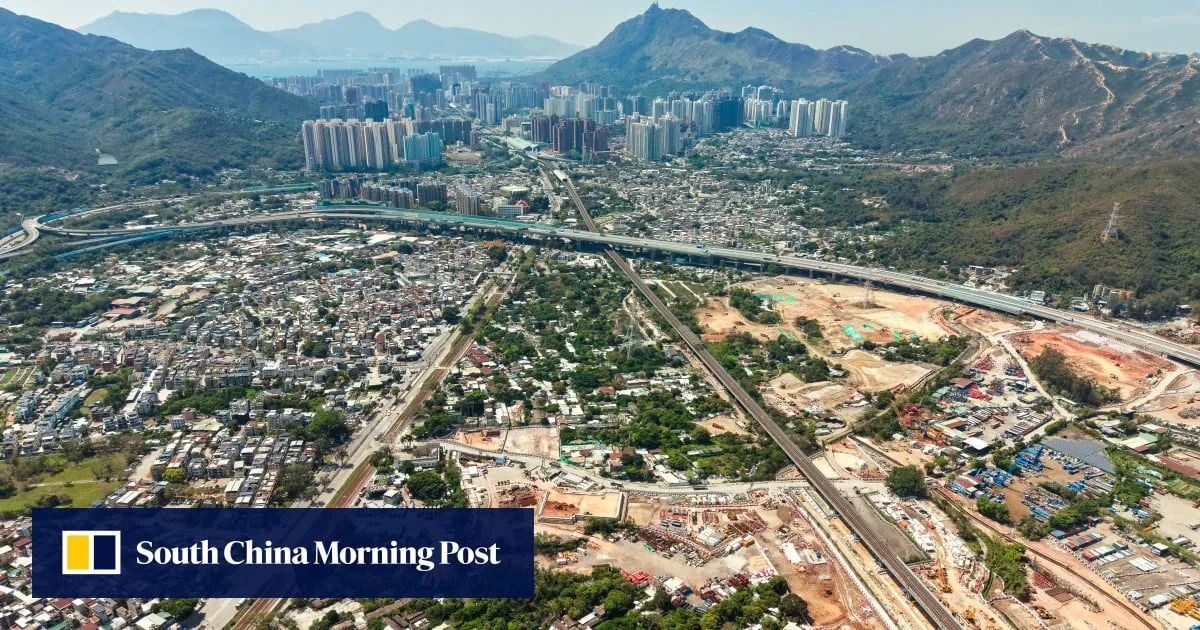
Hong Kong's upcoming university town, a key component of the Northern Metropolis initiative, is strategically planning to reserve undeveloped land. This foresight aims to harness future opportunities presented by evolving social dynamics and rapid technological advancements. Education Secretary Christine Choi Yuk-lin highlighted that the university town will be designed with distinctive Hong Kong characteristics, emphasizing its role in national integration efforts. This forward-thinking approach underscores the city's commitment to fostering innovation and adapting to global changes.
The initiative follows extensive research, with a government working group undertaking visits to international science and technology parks in China, South Korea, Germany, and Switzerland between March and May. These excursions were crucial for gathering insights into best practices for developing similar advanced educational and research hubs. The goal is to create a world-class environment that not only benefits Hong Kong but also contributes to the broader national development agenda.
Strategic Land Allocation for Future-Proofing
The decision to reserve vacant land within the proposed university town is a cornerstone of its development strategy. This proactive measure allows for flexibility and adaptability, ensuring that the infrastructure and facilities can evolve alongside emerging trends in education, research, and technology. Secretary Choi articulated that the government's approach will involve carefully considering Hong Kong's unique strengths and contextualizing international examples to suit local conditions. This adaptive strategy is vital for creating a sustainable and dynamic educational ecosystem.
The university town is slated to be a significant part of the larger Northern Metropolis megaproject, which encompasses a vast 30,000-hectare area envisioned as a major economic engine and residential hub. By integrating advanced educational facilities with robust infrastructure and strategic land reserves, Hong Kong aims to position itself as a leader in innovation and talent development, capable of responding effectively to the unpredictable nature of future societal and technological shifts.
International Benchmarking and Local Adaptation
The working group's international study tour provided invaluable data on successful models of university towns and technology parks worldwide. Visits to cutting-edge facilities allowed the team to observe firsthand how these environments foster collaboration between academia, industry, and government. The insights gained are intended to inform the design and operational framework of the Hong Kong university town, ensuring it incorporates global best practices while retaining its unique local identity.
Choi emphasized the importance of adapting these global experiences to Hong Kong's specific context. This means not only replicating successful elements but also innovating and tailoring solutions that align with the city's existing strengths, its role in the Greater Bay Area, and its national strategic objectives. The university town is envisioned as a nexus of innovation, contributing to both local economic growth and China's broader technological advancement goals.
Integration into the Northern Metropolis Framework
The university town's development is intricately linked with the broader Northern Metropolis plan. This ambitious megaproject aims to create a new major economic and residential hub, integrating seamlessly with mainland China. The university town will serve as an intellectual and innovation anchor within this vast development, attracting top-tier academic institutions, research bodies, and technology companies.
By strategically allocating land and fostering an environment conducive to research and development, Hong Kong seeks to create a vibrant, forward-looking community. This initiative is expected to enhance the city's competitiveness in the global knowledge economy and reinforce its position as a key node in national innovation networks. The reservation of land ensures that this vital component of the Northern Metropolis can adapt and thrive amidst continuous change.