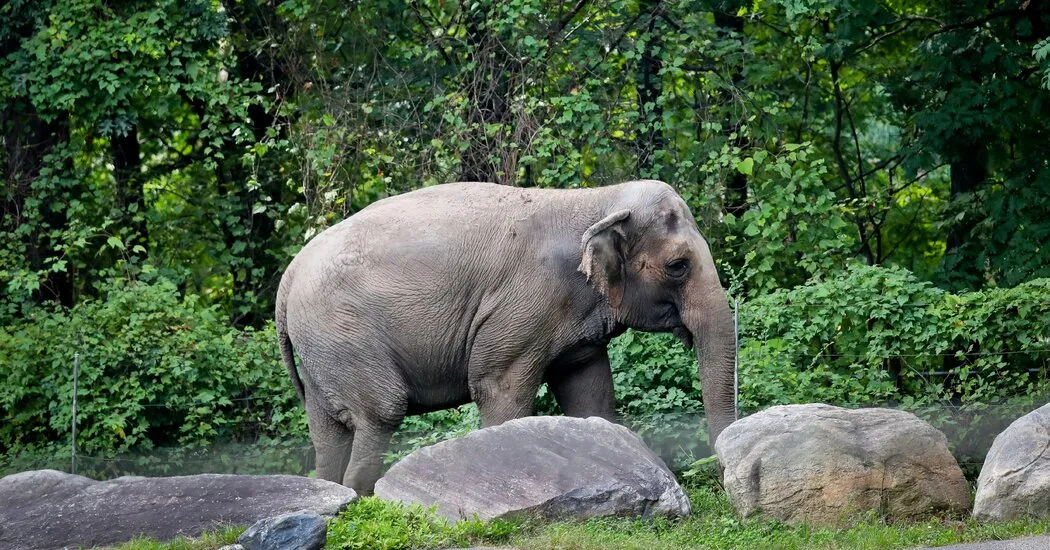
Happy, a 55-year-old Asian elephant, has been euthanized at the Bronx Zoo. She had been a resident of the zoo since 1977 and was notably involved in a legal dispute concerning animal rights, specifically whether she was entitled to a fundamental human right. Her death occurred on Tuesday following a period of hospice care, the zoo announced late Wednesday.
Zoo officials stated that the decision to euthanize Happy was made after ongoing assessments of her health and quality of life indicated a significant decline due to age-related conditions, including a reduction in kidney or liver function. Craig Piper, the interim director of the Bronx Zoo, issued a statement explaining the difficult decision in light of her progressive health issues.
The Legal Battle for Happy's Autonomy
The case of Happy gained significant public attention due to the legal challenge brought forth by the Nonhuman Rights Project. This organization argued that Happy was being illegally confined at the zoo and advocated for her transfer to an elephant sanctuary. Their core argument centered on extending the legal principle of habeas corpus, traditionally used to protect human liberty, to highly autonomous and cognitively complex animals like elephants.
Nearly four years prior to her death, New York's highest court ruled against the Nonhuman Rights Project. The court, by a 5-to-2 vote, rejected the argument that Happy was entitled to the protections of habeas corpus, effectively ending the legal pursuit to move her to a sanctuary. This ruling marked a significant moment, as it was considered the first case of its kind in the English-speaking world to reach such a high judicial level, setting a precedent in the complex intersection of animal welfare and legal rights.
Happy's Life and Legacy at the Bronx Zoo
Happy arrived at the Bronx Zoo in 1977, where she spent the majority of her long life. Her advanced cognitive abilities and complex social behaviors had long been recognized by elephant experts. The zoo had previously housed multiple elephants in Happy's enclosure, but she became the sole inhabitant of the exhibit in 2006. Her solitary existence became a focal point for animal welfare advocates who questioned the ethical implications of keeping such an intelligent and social animal in isolation.
During her time at the zoo, Happy demonstrated remarkable intelligence, including behaviors like using mirrors to recognize herself, a trait shared by only a few other animal species. These displays of cognitive capacity fueled the debate surrounding her confinement and the definition of animal rights. While the legal battle concluded with the court's decision, Happy's story brought critical attention to the welfare of elephants in captivity and sparked broader conversations about animal sentience and the ethical responsibilities of zoos.
Euthanasia Decision and Animal Welfare Considerations
The decision to euthanize Happy was made with the primary consideration being her welfare. The zoo's veterinary team and staff closely monitored her health, particularly in her later years. The hospice care initiated prior to her death indicates a commitment to ensuring her comfort and dignity during her final days.
This difficult decision underscores the complex ethical considerations involved in managing the health of aging animals in zoological settings. The zoo emphasized that the euthanasia was performed humanely, aligning with veterinary best practices for end-of-life care. Happy's case highlights the ongoing challenges in balancing conservation efforts, public education, and the ethical treatment of individual animals within zoological institutions.
Impact Analysis
Happy's passing marks the end of an era for the Bronx Zoo and a significant chapter in the discourse on animal rights and welfare. While the legal challenge did not result in her transfer to a sanctuary, the case undeniably elevated public awareness and legal debate surrounding the personhood and rights of non-human animals. It forced a societal reckoning with the ethical implications of keeping highly intelligent species in captive environments, prompting re-evaluation of standards and practices within the zoo community.
The legal precedent set by the habeas corpus case, though not in favor of the animal rights activists, has undoubtedly spurred further advocacy and potential legislative changes in animal welfare laws across different jurisdictions. Happy's story will likely continue to influence discussions on animal sentience, the definition of confinement, and the moral obligations humans have towards complex sentient beings, potentially leading to more sophisticated approaches to animal care and ethical governance in zoos and sanctuaries worldwide.